


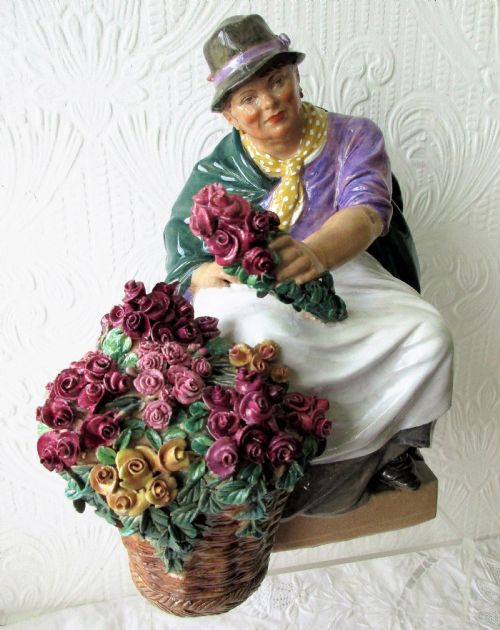
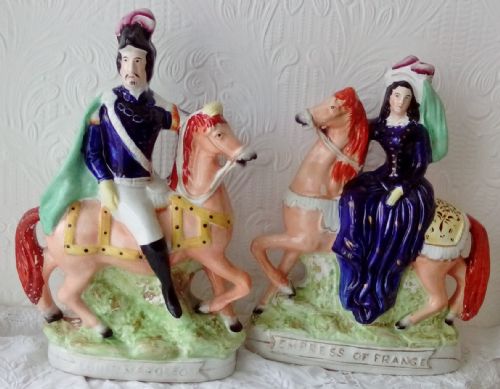
Antique Pottery Statue
An antique pottery statue brings character and history indoors, offering sculptural presence modelled in clay, earthenware, porcelain, and terracotta across many centuries.
Antique Pottery Statue
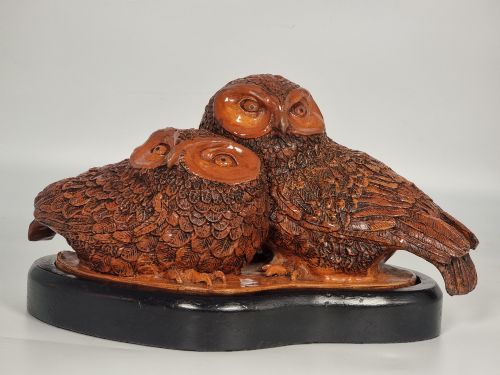
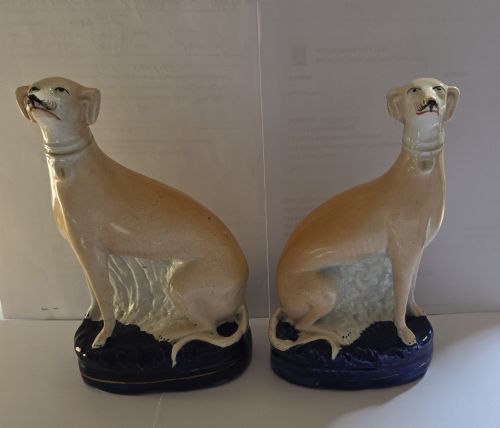
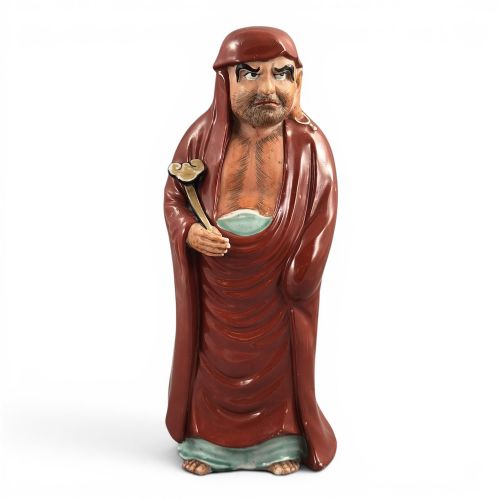
When you search for an antique pottery statue, you encounter a diverse gathering of figurative ceramics spanning centuries, from ancient Chinese tomb figures and pre-Columbian terracottas to Victorian Staffordshire dogs and 20th-century studio pottery figurines.
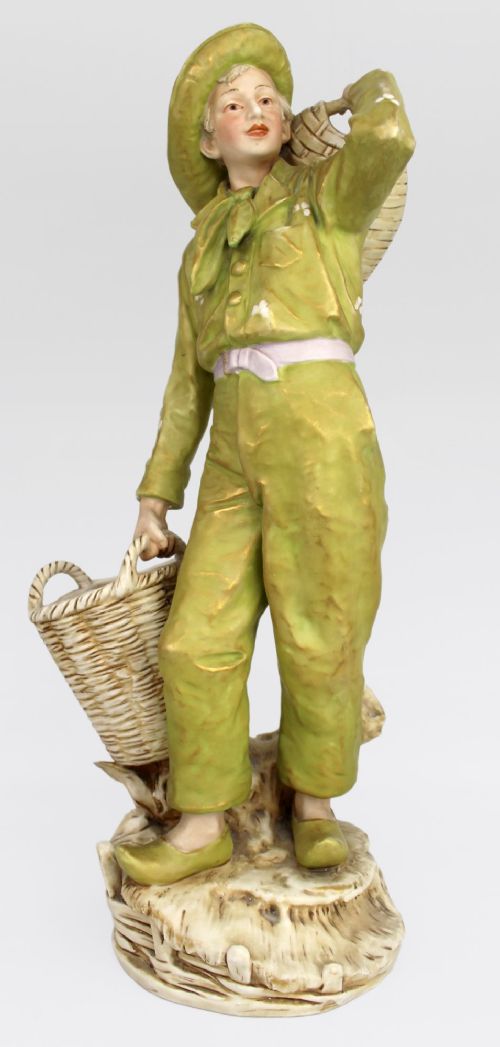
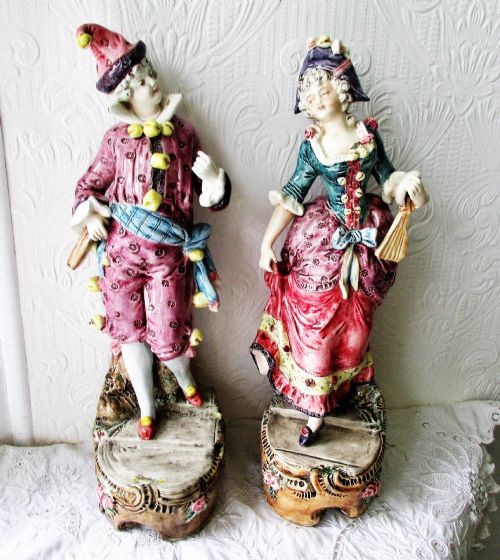
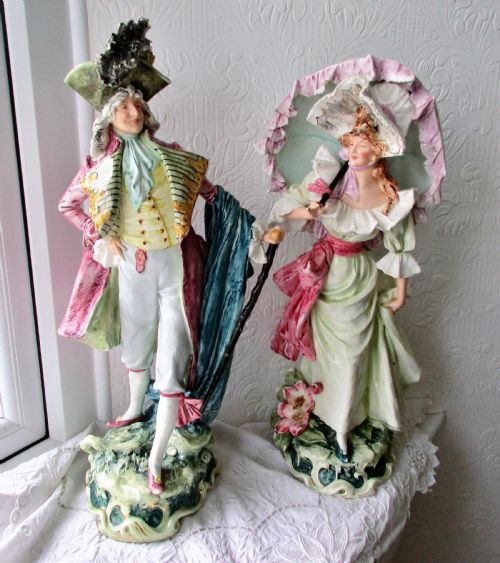
The most common examples on this page are 19th-century Staffordshire figures and animals, alongside continental European porcelains, earthenwares, and Japanese Meiji period okimono.
These pieces range from utilitarian mantel ornaments and portrait groups to high-art studio sculptures and ancient funerary pottery.
How they were made
Pottery statues are shaped from clay bodies including earthenware, stoneware, porcelain, and terracotta, which are then hand-modelled, slip-cast, or pressed into moulds.
Decoration is achieved through applied glazes such as sancai, enamel, gold leaf, and cobalt blue underglaze, followed by firing in kilns to vitrify the ceramic body and set the colours.
The material palette includes earthenware, porcelain, stoneware, terracotta, and Japanese Satsuma ceramic bodies.
What varies in quality
The depth and brilliance of the glaze, the complexity of the polychrome enamel or cobalt decoration, and the preservation of original firing colours distinguish superior studio and factory output from routine commercial wares.
Royal Dux Bohemia·Goldscheider·Charles Vyse·Royal Doulton·HB Quimper·John Bevington
The Antique Pottery Statue Glossary
- Earthenware
- A porous pottery body fired at lower temperatures, requiring a glaze to hold liquids and form a protective surface. It forms the basis of many traditional Staffordshire figures.
- Sancai
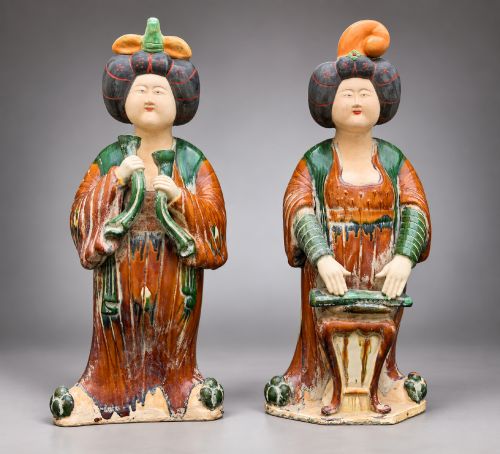
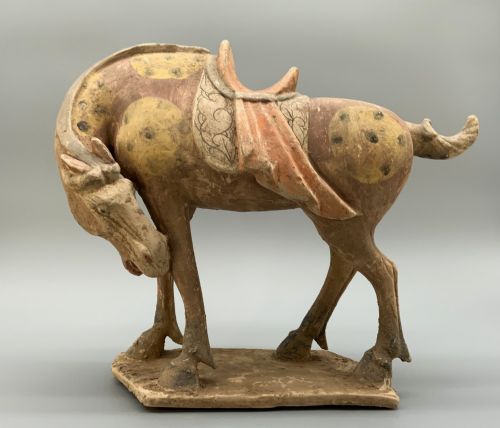
- A traditional Chinese three-colour glaze technique most commonly associated with Tang Dynasty pottery, utilising amber, green, and creamy white tones. These lead-glazed ceramics often depict horses, musicians, and court attendants.
- Okimono
- A Japanese decorative freestanding sculpture, typically displayed in a home, representing figures, deities, or animals. They are frequently carved from ivory or wood, or modelled in fine porcelain and Satsuma ware.
- Terracotta
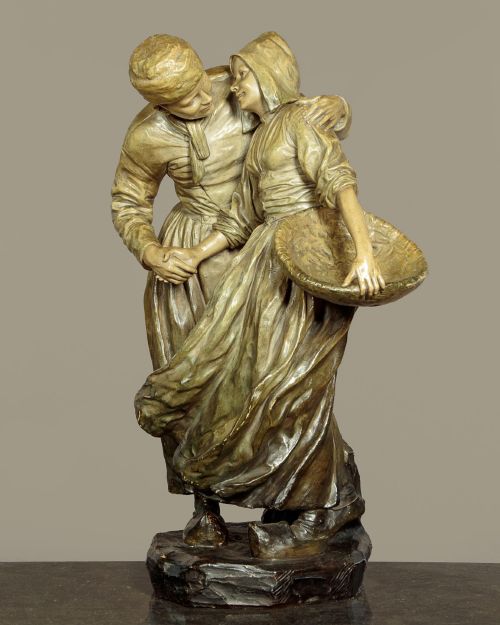
- Unglazed or glazed fired clay of a brownish-red hue, utilised widely for European sculptural figures and portrait groups. The material allows for sharp, immediate detail from the modeller's hand.
- Staffordshire figure
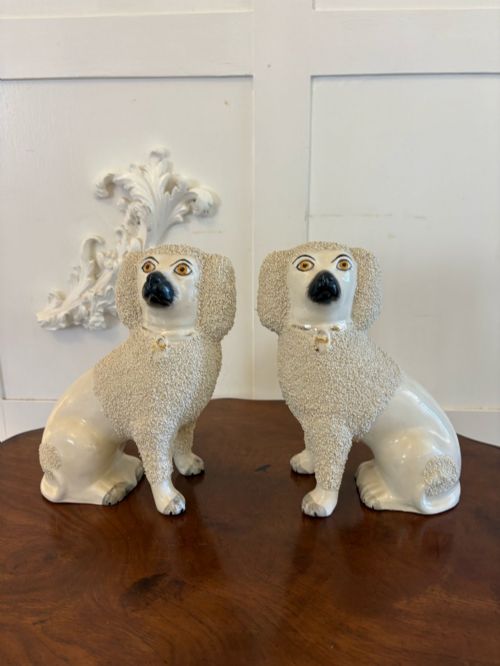
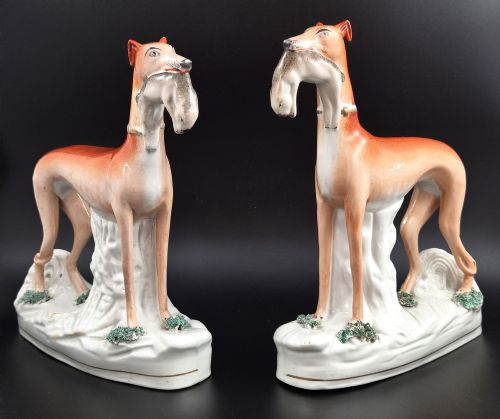
- A pottery figurine or group produced in the pottery districts of Staffordshire, England, particularly during the nineteenth century. These include poodles, lions, historical portraits, and theatrical characters.
Antique Pottery Statue: Frequently Asked Questions
How do I identify a Staffordshire pottery figure?
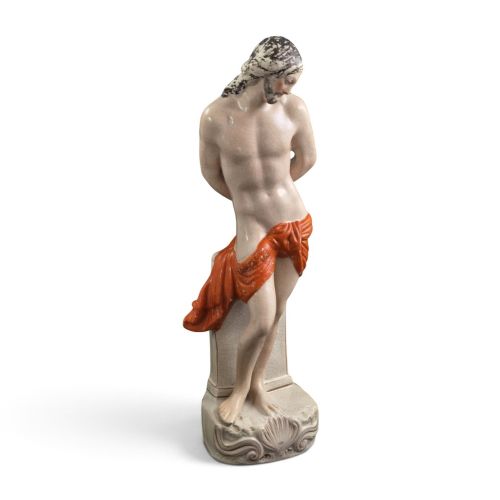
Staffordshire figures typically date from the nineteenth century and depict animals, notable people, or theatrical scenes with hand-painted underglaze colours and enamel highlights.
They often feature hollow bases, vent holes, and earthenware bodies characteristic of English regional potteries from that era.
What is the difference between porcelain and earthenware?
Porcelain is made from refined white clay fired at very high temperatures until it becomes vitrified, dense, and slightly translucent.
Earthenware uses common clay fired at lower temperatures, remaining porous beneath its glaze and generally showing a heavier, opaque structure.
How should I clean an antique pottery statue?
Dust your ceramic figures gently with a soft, dry brush to remove surface particles without disturbing delicate enamel or gold leaf details.
Avoid using water, chemical cleaners, or immersion, particularly on older earthenware or pieces with repaired areas.
What does sancai mean on Chinese pottery?
Sancai translates as three colours and refers to the lead-glazed pottery style developed during the Tang Dynasty using amber, green, and creamy white.
These glazes run and mingle naturally during the high-temperature firing process, creating distinctive mottled effects on horses, camels, and court figures.