




Military Ceramic Flatback Figure
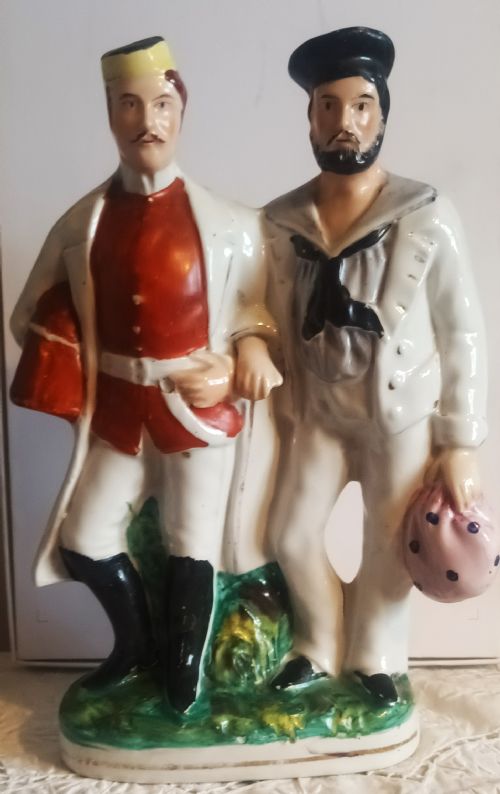
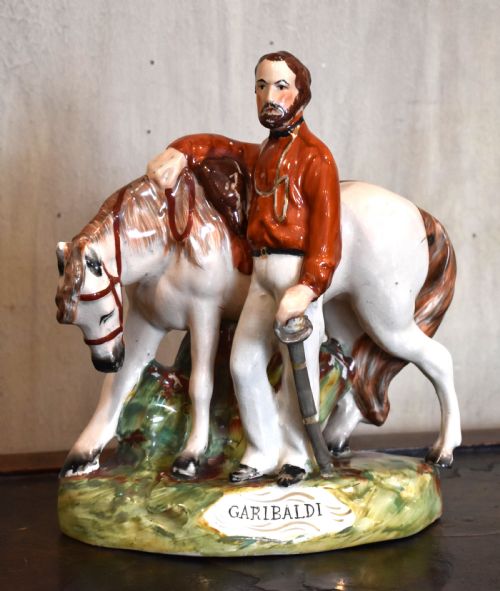
These military ceramic flatback figure examples bring Victorian portraiture straight to the mantelpiece, depicting generals, admirals, and royalty.
Military Ceramic Flatback Figure
A military ceramic flatback figure represents a distinct tradition of Victorian pottery designed to sit flush against a wall on a shelf or mantelpiece. Buyers searching for this phrase encounter Staffordshire figurines depicting notable historical commanders, royalty, and military figures such as Admiral Sir Charles Napier and General Charles George Gordon.
The pieces on this page span the nineteenth century and the year eighteen hundred and sixty, capturing significant political and military alliances of the era. Common subjects include portrait pieces titled 'Companions in Arms' alongside individual studies of Napoleon the Third, Louis Napoleon, Garibaldi, and Prince Albert.
These decorative ceramic figurines function primarily as portrait and commemorative objects rather than functional vessels. They capture the public fascination with military heroes and contemporary political figures through modelled earthenware.
Materials and methods
Potters shaped these items from earthenware, utilising press moulds to form the hollow body and the distinctive flat back that economised on clay and labour. The damp clay received hand-modelled additions before drying and firing in the kiln.
Listings feature earthenware glazed ceramic figures from the nineteenth century, including specific pieces dated eighteen hundred and sixty.
Judging quality in nineteenth-century pottery
The standard of modelling defines the finer examples, where facial expressions and military regalia appear crisp and well-defined rather than soft or blurred. Superior pieces maintain careful application of enamel paint and glaze without excessive pooling or running across the earthenware surface.
Legibility of lettering and titles adds to the desirability of a portrait figure, distinguishing carefully finished workshop output from hurried commercial production. The presence of clear gilt detailing indicates a higher grade of decoration applied after the initial firing.
Staffordshire Pottery
The Military Ceramic Flatback Figure Glossary
- Flatback
- A pottery figure modelled with a finished front and sides while the reverse remains flat and unglazed. This construction style allowed the object to sit securely against a wall.
- Staffordshire pottery
- Earthenware produced by numerous potteries operating in the Staffordshire district during the nineteenth century. The region dominated the manufacture of these decorative portrait figures.
- Lead glaze
- A glossy coating containing lead compounds applied to earthenware before firing. It provides a smooth protective surface and enhances the underlying enamel paint.
- Enamel paint
- Opaque vitreous colours applied over the glazed surface of the ceramic. These paints were fired at a lower temperature to fix the pigment to the piece.
Military Ceramic Flatback Figure: Frequently Asked Questions
What is a flatback figure?
A flatback figure is a ceramic ornament moulded with a detailed front and a flat, unadorned reverse. This design allowed the piece to rest flush against cottage mantelpieces.
Potters produced these items in large quantities during the Victorian period to commemorate military heroes and political leaders.
Who do these figures depict?
These pieces portray prominent military commanders, admirals, and European rulers from the nineteenth century. Subjects include Admiral Sir Charles Napier, General Charles George Gordon, Garibaldi, and Napoleon the Third.
Makers often inscribed the names directly onto the base to help buyers identify the historical figures.
How do I date a Staffordshire figure?
Dating relies on the historical subject, costume details, and manufacturing methods associated with nineteenth-century Staffordshire pottery. Pieces depicting specific events like the year eighteen hundred and sixty offer a clear chronological anchor.
Comparing the glaze consistency and enamel palette with documented examples helps narrow down the period of manufacture.
How should I display them?
These ceramic figures suit placement on narrow shelves, mantelpieces, or wall brackets where the flat back rests securely against a vertical surface. Keeping them away from direct sunlight protects the enamel paint and gilt highlights from fading.
Gentle dusting with a dry cloth maintains the glazed earthenware surface without risking the hand-painted decoration.