






Victorian Military Ceramic
Victorian military ceramic pieces are nineteenth-century Staffordshire figures and commemorative plates that honour historical commanders, volunteers and campaigns.
Victorian Military Ceramic
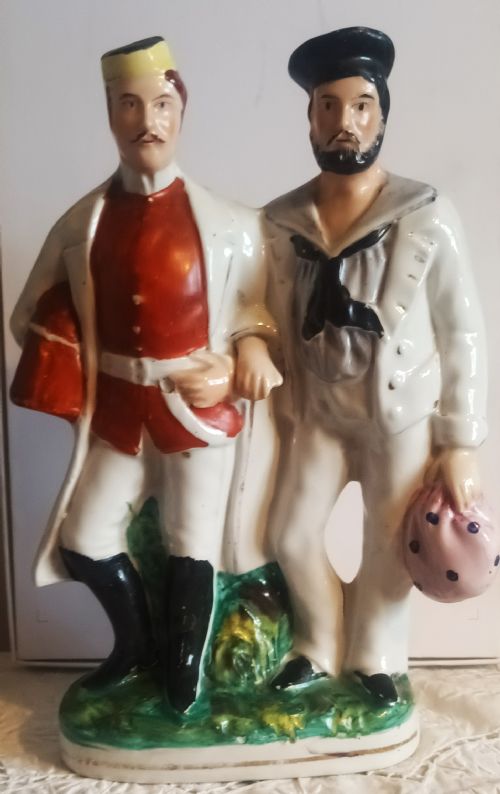
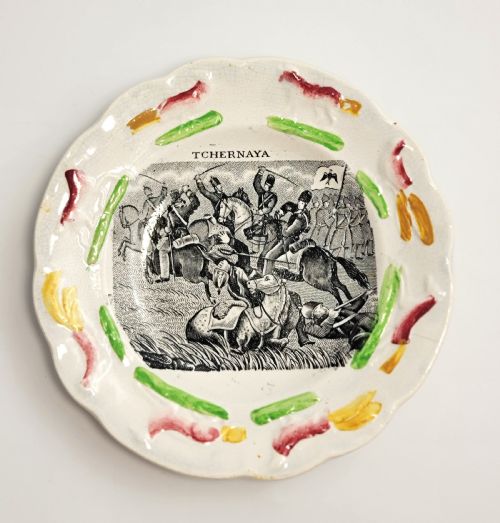
Victorian military ceramic pieces capture the prominent military figures, allies and conflicts of the nineteenth century in moulded earthenware. A buyer examining this selection encounters portrait figures of generals, admirals and emperors alongside commemorative plates and volunteer jugs from the Victorian era.
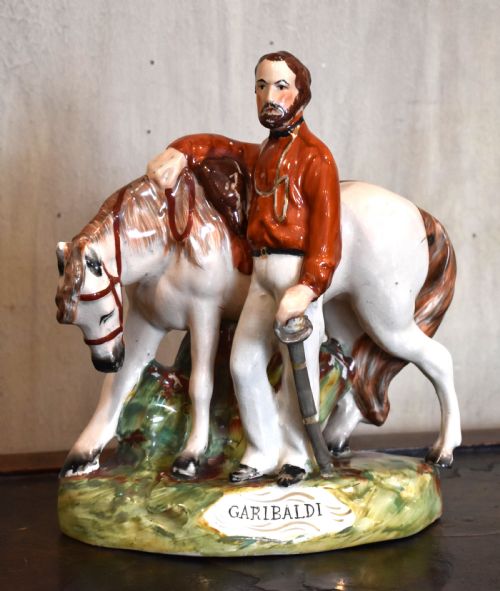
The objects commonly take the form of Staffordshire pottery figures depicting specific historical personages such as Admiral Sir Charles Napier, Napoleon III, Garibaldi and General Charles George Gordon. These portrait figures and commemorative items served as patriotic parlour ornaments in nineteenth-century homes.
Materials and construction
Gilt highlights are frequently applied to enhance details such as buttons, insignias and titles inscribed on the bases of the figures. The manufacturing process relies on hand-painting over glazed earthenware to bring definition to military dress and facial expressions.
Listings feature nineteenth-century earthenware and porcelain, spanning figures, plates and jugs decorated with enamel and glaze.
Assessing quality and character
The richness of the glaze and the careful application of gilt work distinguish finer outputs from simpler factory runs. Strong modelling and faithful likenesses to the historical subjects separate the better sculptural works in this category.
Staffordshire pottery·Meissen porcelain
The Victorian Military Ceramic Glossary
- Earthenware
- A porous pottery body fired at lower temperatures, commonly used for nineteenth-century Staffordshire figures. It requires a glaze to become impermeable to liquids.
- Staffordshire pottery
- Ceramic wares produced in the pottery towns of Staffordshire, England, famous for portrait figures and commemorative flatback models. These factories supplied popular domestic ornaments throughout the Victorian period.
- Lead glaze
- A glossy coating containing lead compounds applied to ceramic bodies before firing. It creates a smooth, shiny surface that protects the painted enamel beneath.
- Enamel
- Opaque glass-like pigments fused to the glazed ceramic surface during low-temperature firing. This technique allows for bright, varied uniform colours on military figures.
- Gilt
- A thin layer of gold applied to ceramic details such as lettering and uniform trim. It adds reflective highlights to the finished decorative object.
Victorian Military Ceramic: Frequently Asked Questions
What do victorian military ceramic pieces depict?
These ceramic works portray notable military commanders, allied leaders and specific conflicts from the nineteenth century. Common subjects include naval admirals, European emperors and revolutionary figures.
Portrait figures often bear the name of the subject on the base, serving as both decoration and patriotic commemoration in Victorian households.
How were these ceramic figures displayed?
Victorian households typically placed these earthenware figures on mantelpieces, sideboards or in display cabinets alongside other Staffordshire pottery. They functioned as accessible conversation pieces that celebrated current events and military heroes.
The brightly painted enamel surfaces and gilt details ensured the figures stood out in dimly lit nineteenth-century parlours.
Are all victorian military ceramics made in staffordshire?
The majority of portrait figures and commemorative plates in this category originate from the Staffordshire potteries. These English factories mass-produced commemorative wares for the domestic market.
Occasional continental works, such as porcelain animal groups from factories like Meissen, also appear within the broader military and historical theme.
How do you identify the subjects on portrait figures?
Makers frequently inscribed the names of the commanders or politicians directly onto the raised plinth or base of the Staffordshire figure. Contemporary uniforms, medals and specific campaign titles provide further clues to the identity of the person.
Historical research into nineteenth-century military campaigns helps connect obscure titles and spellings on the bases to the correct historical figures.