




Antique Ceramic Poodles
These antique ceramic poodles are charming Victorian mantel ornaments that bring character and period charm to any room.
Antique Ceramic Poodles
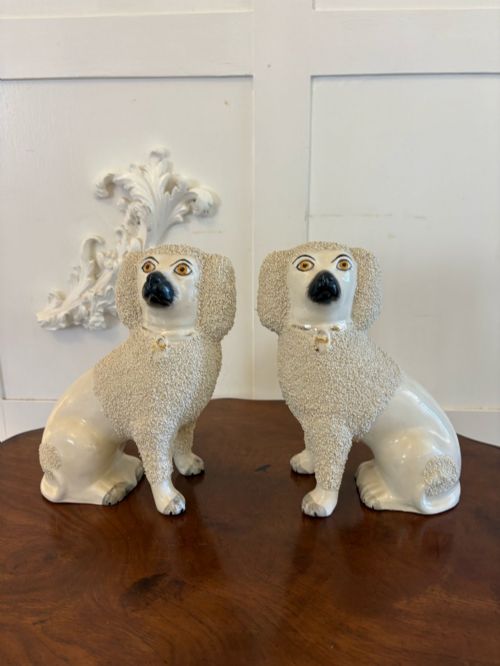
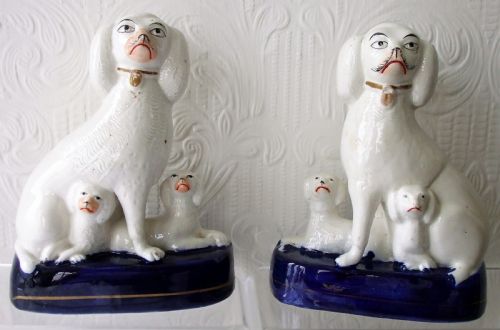
When you search for antique ceramic poodles, you are looking at Staffordshire pottery figures modelled in the nineteenth century, most often found as matched pairs. The selection here spans the Victorian era around eighteen sixty through to nineteen hundred, including miniature examples and figures accompanied by pups.
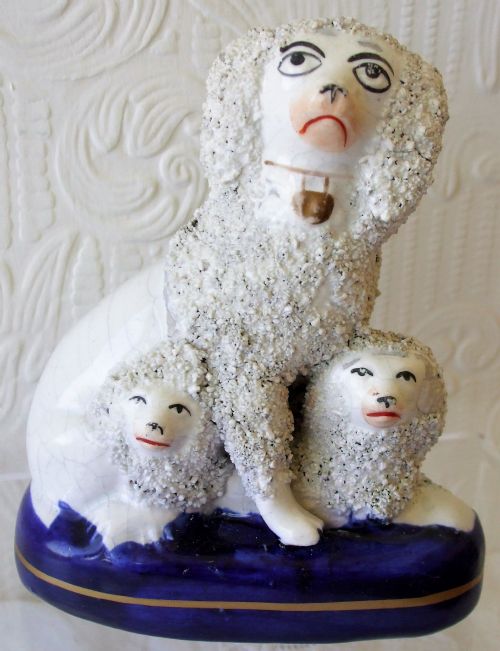
Many of these decorative objects serve practical purposes beyond simple display, taking the form of quill holders or clock groups. The subjects range from seated poodles with baskets to elaborate figure groups on blue cushions with encrusted detail.
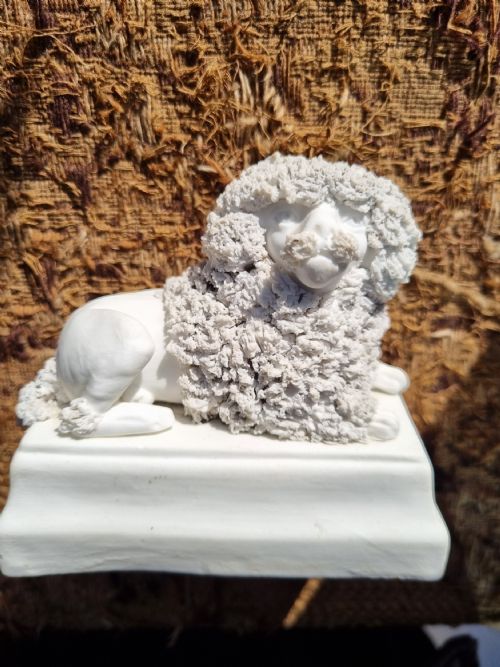
You are most likely to meet earthenware figures decorated with lead glaze and enamel, alongside occasional white bisque pieces. The makers drew on traditional Staffordshire methods to create robust mantle ornaments that remain collected today.
How they were made
Certain Victorian examples feature textured woolly coats achieved through specialised clay applications or encrusting techniques on the ceramic surface. The base pottery is typically fired at moderate temperatures typical of nineteenth-century Staffordshire production.
Current listings feature earthenware and bisque materials from the nineteenth century, specifically spanning the Victorian era around eighteen sixty to nineteen hundred.
What varies in quality
The standard of modelling separates the finest nineteenth-century figures from simpler workshop output, particularly in the rendering of facial expressions and sculpted fur. Crisper detail in the moulding and more careful hand-painting elevate certain pairs above standard production.
Completeness and originality of the glaze and enamel decoration dictate the overall standing of a piece. Matched pairs showing minimal wear to the gilt highlights and intact encrusting represent the higher end of the range.
James Dudson
The Antique Ceramic Poodles Glossary
- Staffordshire pottery
- Ceramic wares produced in the pottery towns of Staffordshire, England, renowned for figurative mantel ornaments. These pieces date predominantly to the Victorian period.
- Lead glaze
- A shiny coating containing lead oxide applied to earthenware before firing to create a waterproof and glossy finish. It gives nineteenth-century figures their characteristic surface sheen.
- Bisque
- Unglazed ceramic fired once, leaving a matte, porous white surface rather than a shiny glaze. It is less common among these poodle figures than glazed earthenware.
- Quill holder
- A desk accessory featuring a hollow section or attached basket designed to hold writing feathers. Several nineteenth-century dog figures incorporate this practical function.
Antique Ceramic Poodles: Frequently Asked Questions
Were these poodles made as pairs?
Many nineteenth-century Staffordshire ceramic poodles were produced and sold as matched pairs designed to sit symmetrically on either side of a mantelpiece. This practice was standard for Victorian decorative shelf ornaments.
Individual figures and miniature groupings also exist, sometimes accompanied by smaller pups or incorporated into inkstands and clock groups.
How should I clean antique pottery figures?
Dust these glazed earthenware figures gently with a soft, dry brush to prevent accumulation of dirt in the textured woolly coat details. Avoid using water or chemical cleaners, as nineteenth-century enamel and gilt decorations can be fragile.
Keeping them out of direct sunlight helps preserve the hand-painted enamel colours and prevents any deterioration of the underlying ceramic body.
What is the difference between bisque and glazed poodles?
Glazed poodles feature a shiny lead glaze finish over the earthenware body, providing a protective and reflective surface. Bisque poodles remain unglazed, offering a matte, porous white texture.
Glazed examples are far more common in Staffordshire production, while white bisque pieces represent an unusual alternative from the nineteenth century.