



Blue Base Dog Figurine
A blue base dog figurine is a ceramic canine companion from the Victorian era, prized by collectors for its distinct hand-painted plinth and charming domestic character.
Blue Base Dog Figurine
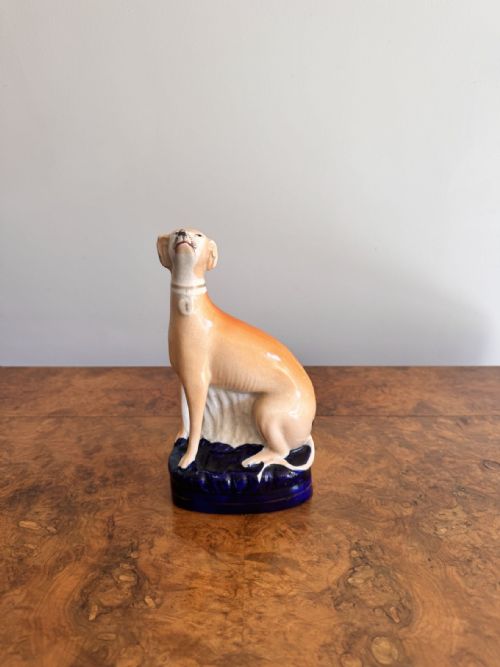
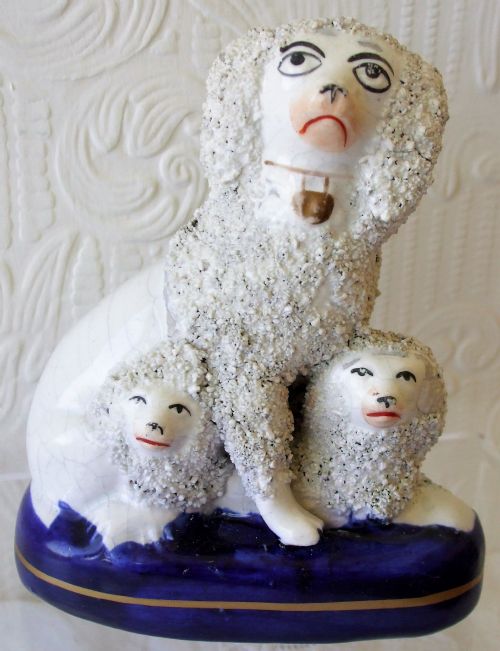
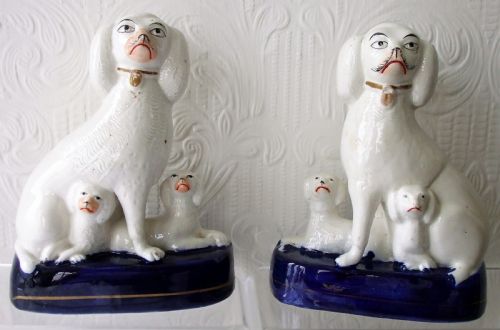
When you search for a blue base dog figurine, you encounter Staffordshire pottery figures and Continental porcelain pieces produced during the nineteenth century. These ornamental animals typically depict seated whippets, poodles with pups, dalmatians, and spaniels resting on modelled cushions or bases.
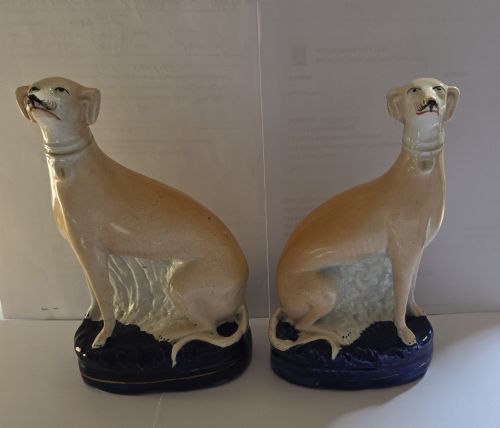
The pieces on this page span several decades of Victorian production, ranging from matched pairs of whippets to dalmatian inkwells and miniature porcelain figures. Most examples originate from Staffordshire workshops, capturing the Victorian penchant for domestic animal subjects.
You are most likely to meet earthenware figures decorated with glaze, enamel, and gilt, often modelled as pairs intended for mantelpiece display. The forms vary from simple seated dogs to elaborate figure groups featuring puppies and detailed textural encrusting.
How they were made
Potters shaped these earthenware and porcelain dogs using traditional moulding techniques before applying lead glaze and hand-painted enamel colours. Artisans added surface details such as fur encrusting and gold leaf highlights to enhance the visual appeal of the ceramic body.
The characteristic blue bases and cushions were painted with cobalt-derived pigments beneath or over the glaze, defining the plinth upon which the canine figures sit. Kiln firing fixed the enamels and gilding, though firing flaws and crazing frequently occurred during the process.
Blue Base Dog Figurine Retail Price Guide 2026
Typical asking prices for blue base dog figurine among the pieces listed under this phrase on Sellingantiques today, from the lower quarter to the upper quarter. They describe what is for sale here now, not the wider market.
Listings feature earthenware and porcelain materials spanning the nineteenth century, with styles attributed to Victorian Staffordshire and Continental makers.
What varies in quality
The distinction between average and superior examples lies in the crispness of the modelling and the precision of the hand-painting on the face and coat. Superior figures retain vibrant enamel colours and careful gilding without excessive rubbing or factory smudges.
Completeness and originality dictate desirability, particularly in matched pairs where both dogs and their respective bases should correspond harmoniously in size and decoration. Finer pieces demonstrate superior attention to anatomical detail in the paws, eyes, and facial expressions.
The Blue Base Dog Figurine Glossary
- Earthenware
- A porous pottery body fired at lower temperatures, commonly used for Victorian Staffordshire figures before being glazed and enamelled.
- Lead Glaze
- A glossy coating containing lead compounds applied to ceramics to waterproof the porous clay body and impart a smooth finish.
- Gilt
- A thin application of gold leaf or gold paint used to accentuate collars, bases, and decorative elements on the ceramic figures.
- Enamel
- Opaque glass-like coloured pigments applied over the glaze and refired at a lower temperature to decorate the pottery.
- Encrusting
- Applied ceramic clay particles or slip shaped by hand to simulate textured fur or decorative foliage on the figurine.
Blue Base Dog Figurine: Frequently Asked Questions
What are blue base dog figures?
These pieces are nineteenth-century ceramic sculptures depicting dogs such as poodles, whippets, and spaniels seated upon painted plinths. They were created primarily as decorative mantel ornaments during the Victorian period.
Potters in Staffordshire and on the Continent produced them in various sizes, often as symmetrical pairs. The blue base provides a distinctive stylistic anchor for the canine subject.
How were these dog figurines used?
Victorian households displayed these ceramic animals on mantelpieces, sideboards, and occasional tables to demonstrate domestic refinement and a fondness for pets. Some specialised examples, such as dalmatian models, incorporated inkwells for functional use on a desk.
They served purely as ornamental furnishings within the Victorian parlour. Their cheerful presence made them popular decorative accessories across Britain.
How do I date a Staffordshire dog?
Dating relies on stylistic clues, clay characteristics, and the nature of the glaze and enamel colours. Mid-nineteenth-century examples often exhibit heavier earthenware bodies and distinct potting traits associated with Victorian production.
Reference to specific periods like the 1860s or 1870s helps establish a chronological framework. Comparing the modelling style with documented factory output clarifies the era of manufacture.
Are these figures found in pairs?
Many Staffordshire dogs were manufactured and sold as matched pairs to sit symmetrically on either side of a fireplace or shelf. Single figures also appear, having become separated over generations of domestic use.
Finding a true original matched pair enhances the collectible nature of the items. Subtle variations in hand-painting often reveal whether two figures started out together.