

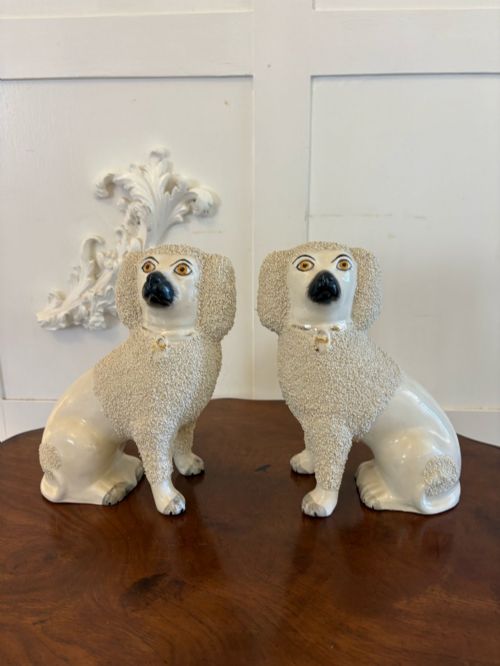
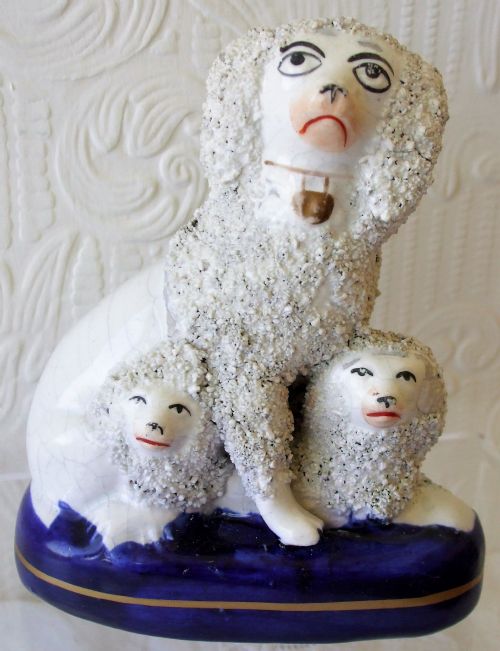


Victorian Poodle Figure
These charming victorian poodle figure examples capture the quintessential appeal of nineteenth-century ceramic art, offering wonderful character for any mantelpiece.
Victorian Poodle Figure
When searching for a victorian poodle figure, collectors encounter distinct ceramic canine sculptures originating from the nineteenth century. These objects frequently appear as pairs, often modelled with accompanying pups, baskets, or clock groups.
The most common examples on this page date from the Victorian era, specifically around eighteen sixty, showcasing the typical Staffordshire pottery traditions of the period. Many of these decorative figurines incorporate utilitarian elements such as quill holders alongside their sculptural form.
Makers produced these decorative objects in various sizes, ranging from miniature models to larger sculptural pairs. Collectors frequently find them styled with textured details that mimic the distinctive clipping of the breed.
How they were made
Potters utilised earthenware as the primary ceramic body for these figures, shaping them through traditional moulding techniques. Artisans then applied lead glaze and enamel colours to achieve the finished surface appearance.
Specialised decorative treatments included applied gold leaf highlights and textured finishes known as gravelware or confetti effects. These surface techniques created the characteristic woolly coat appearance associated with nineteenth-century ceramic poodles.
Victorian Poodle Figure Retail Price Guide 2026
Typical asking prices for victorian poodle figure among the pieces listed under this phrase on Sellingantiques today, from the lower quarter to the upper quarter. They describe what is for sale here now, not the wider market.
Listings span the nineteenth century, prominently featuring pieces dated around eighteen sixty alongside miniature examples from nineteen hundred.
What varies in quality
The presence of supplementary elements like pups, baskets, or clock groups introduces greater complexity to the manufacture and artistic merit of the piece. Pairs that retain their original matched proportions and consistent glaze coloration stand higher within the range.
James Dudson
The Victorian Poodle Figure Glossary
- Staffordshire pottery
- Ceramic wares produced in the various potteries of the Staffordshire region in England. This industry became world-renowned for its figures and utilitarian earthenware during the nineteenth century.
- Earthenware
- A porous type of pottery fired at a relatively low temperature. It requires a glaze to render it impermeable to liquids and forms the structural base for most nineteenth-century figures.
- Lead glaze
- A shiny coating containing lead compounds applied to pottery before firing. It produces a glossy, protective surface that enhances the underlying enamel colours.
- Quill holder
- A decorative desk accessory featuring an integrated receptacle for holding writing feathers. Nineteenth-century potters frequently combined this function with animal figure groups.
- Gravelware
- A textured decorative finish created by embedding sand or small particles into the wet glaze or clay body. This technique successfully imitated the shaggy fur of poodles and other animals.
Victorian Poodle Figure: Frequently Asked Questions
What are victorian poodle figures made from?
These pieces consist of earthenware ceramic bodies shaped by nineteenth-century potters. Artisans finished the figures using lead glazes and hand-painted enamel colours.
Additional decorative effects often included applied gold leaf and textured surfaces. Potters utilised these materials to mimic the distinctive clipped coat of the canine subject.
How were these ceramic figures used originally?
Victorian households displayed these decorative objects upon mantelpieces, side tables, and shelves to demonstrate taste and affluence. Some specialised examples incorporated practical functions, such as serving as quill holders on writing desks.
Many of the figures were produced in matched pairs to flank clocks or other decorative ornaments. Their cheerful presence made them popular interior decorations throughout the nineteenth century.
Why do some poodles have pups or baskets?
Potters introduced secondary elements like puppies or baskets to enhance the narrative charm and visual interest of the sculpture. These detailed group compositions appealed strongly to Victorian domestic purchasers.
Figures featuring multiple animals or functional additions generally required more complex modelling and assembly. Consequently, these more elaborate configurations offer greater variety for modern collectors.