


Antique Mantelpiece Dogs
Antique mantelpiece dogs bring domestic comfort to a hearth, most often seen as pairs of Staffordshire pottery spaniels and poodles from the nineteenth century.
Antique Mantelpiece Dogs
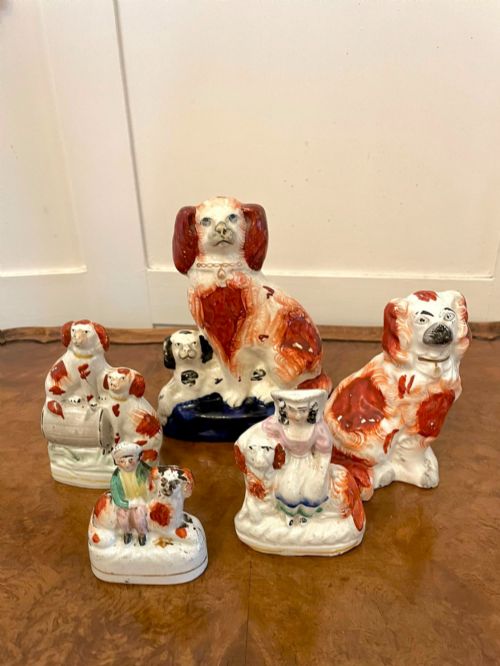
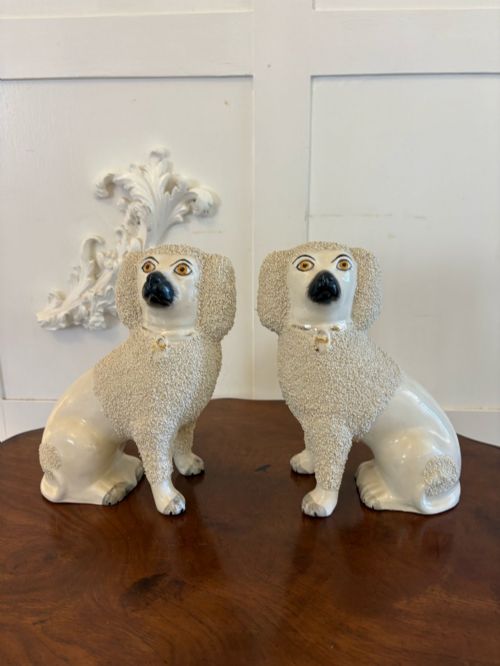
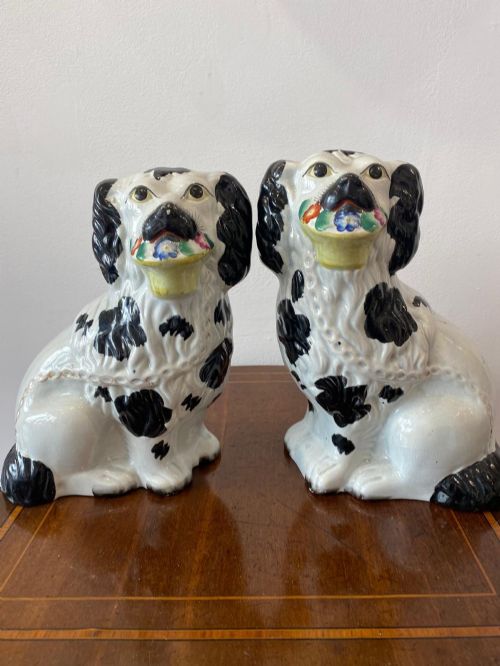
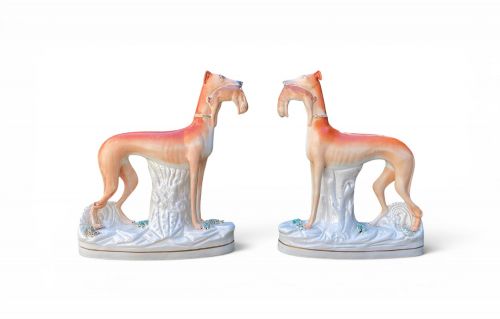
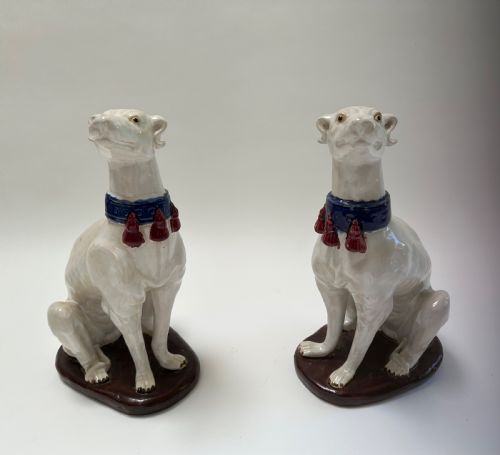
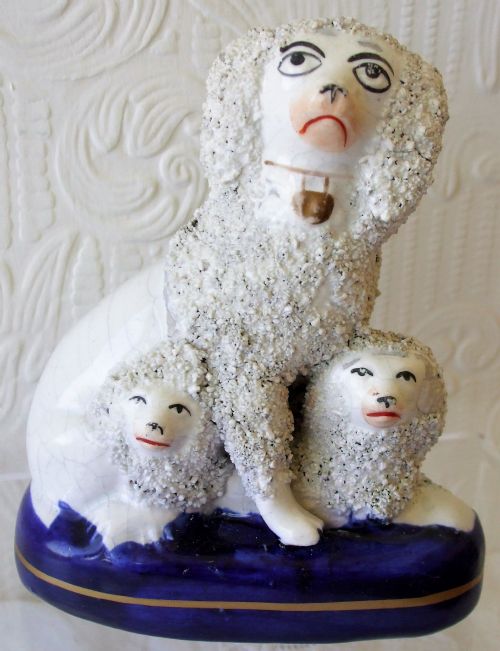
When you search for antique mantelpiece dogs, you encounter ceramic figures designed specifically to sit upon a fireplace mantel. The items on this page are predominantly nineteenth-century Staffordshire pottery figures, including spaniels, poodles, greyhounds, and setters.
The selection ranges from simple white glaze pairs to hand-painted varieties with enamel details, copper lustre, or gold leaf accents. Alongside traditional Staffordshire spaniels, you also find figures featuring children, musicians with dogs, and poodles with pups.
Most pieces appear in matching pairs intended to sit at either end of a mantelpiece, though collections of four or six individual pottery dogs also emerge. The forms span from miniature poodles to large nineteenth-century examples and twentieth-century interpretations.
How they were made
Makers fashioned these pottery figures using earthenware, stoneware, and porcelain, shaping them with moulded techniques before applying lead glaze or enamel paint. Many examples feature surface decoration executed in enamel, copper lustre, or gold leaf.
Potters achieved the varied coats and facial expressions of these dogs through hand-painted details over a white or coloured glaze base. Certain pieces incorporate specialised finishes such as ruby glass or spelter construction alongside traditional ceramic bodies.
Listings span the nineteenth and twentieth centuries, featuring earthenware, porcelain, and stoneware treated with lead glaze, enamel, and gold leaf.
What varies in quality
The presence of matching pairs with consistent glaze coverage and well-preserved painted markings distinguishes superior examples from mismatched or heavily worn individual figures.
James Dudson·Royal Capodimonte Factory·Royal Doulton
The Antique Mantelpiece Dogs Glossary
- Staffordshire
- Pottery originating from the English county renowned for producing earthenware figures. This region dominated the manufacture of nineteenth-century mantelpiece ceramics.
- Earthenware
- Porous pottery fired at a lower temperature and coated with glaze. It forms the primary ceramic body for most nineteenth-century Staffordshire dog figures.
- Enamel
- Opaque glass-like paint applied over the glazed surface of pottery. Artisans used this material to colour the eyes, collars, and markings of mantelpiece dogs.
- Copper Lustre
- A metallic glaze technique producing a reflective, coppery sheen. This finish appears on specific nineteenth-century Staffordshire dog pairs.
- Garniture
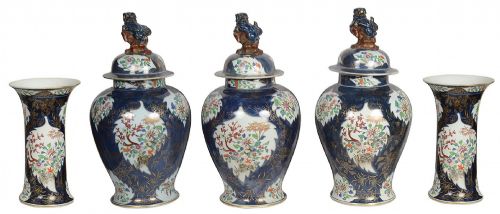
- A set of matching decorative vases or ornaments designed for display together. The listings include examples styled after Chinese traditions.
Antique Mantelpiece Dogs: Frequently Asked Questions
How were mantelpiece dogs used?
These figures served as decorative ornaments positioned on fireplace mantels in nineteenth-century homes. They were typically displayed facing inward toward each other.
Beyond simple hearth decoration, some larger groups and pairings incorporated themes like children with setters or musicians accompanied by dogs.
How do I date an antique dog?
Dating relies on observing the ceramic body, glaze type, and painting style. Nineteenth-century Staffordshire pieces often feature lead glazes and hand-painted enamel details distinct from later twentieth-century productions.
Markings, materials such as stoneware or earthenware, and stylistic influences like Victorian or Art Deco help narrow the period of manufacture.
Are mantelpiece dogs sold in pairs?
Many mantelpiece dogs appear as matching pairs intended to frame a fireplace. These dual arrangements reflect traditional nineteenth-century display practices.
You also encounter collections of four or six figures, as well as individual pieces and miniature poodles.