


Antique Pottery Dog Figure
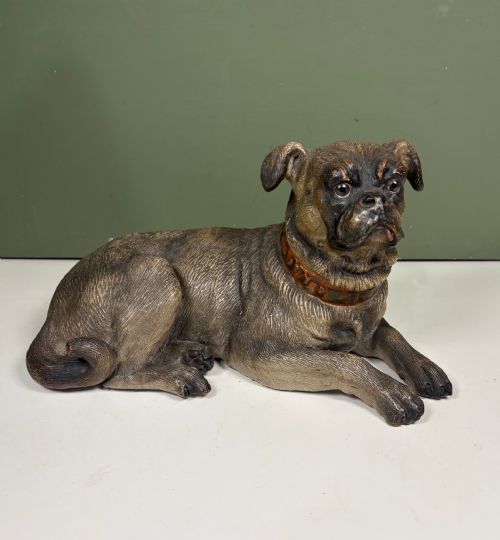
An antique pottery dog figure brings the character of nineteenth-century parlours and overseas workshops directly to a mantelpiece.
Antique Pottery Dog Figure
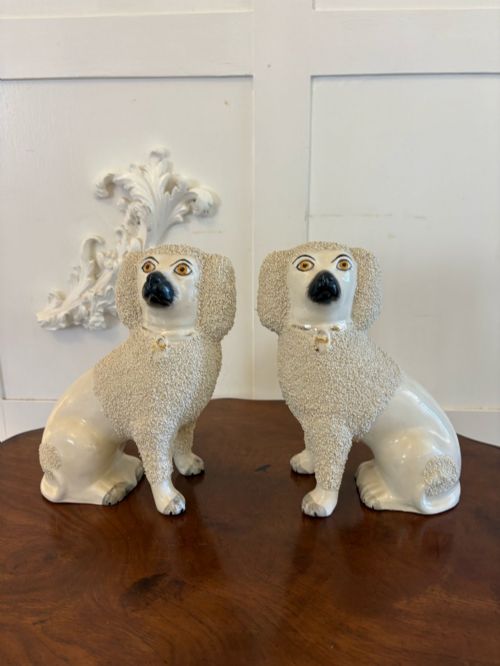
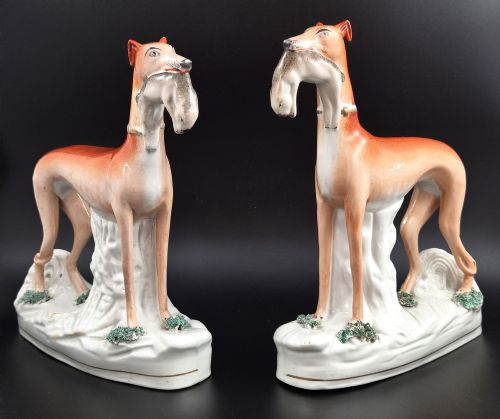
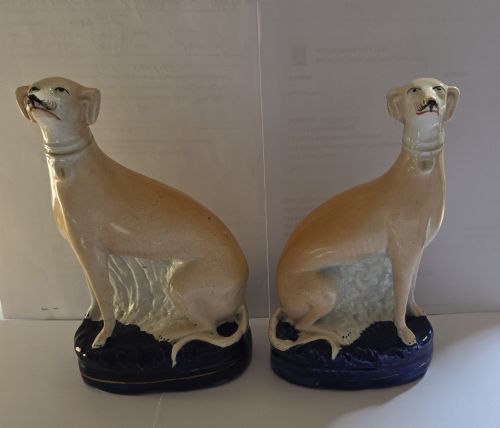
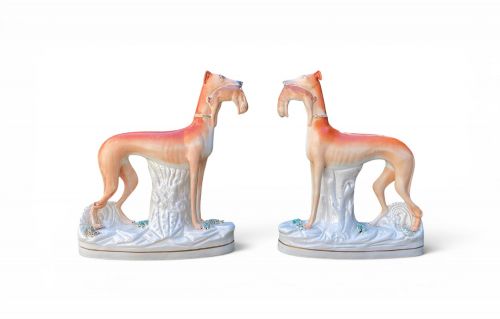
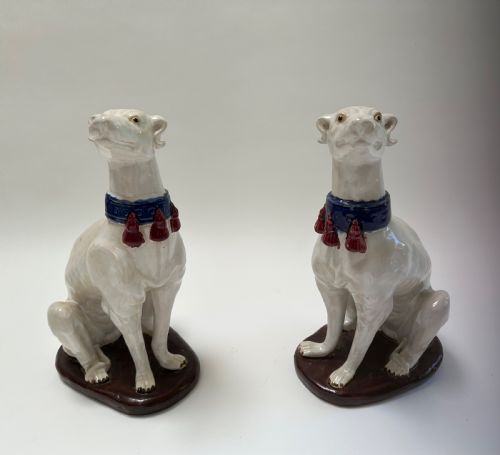
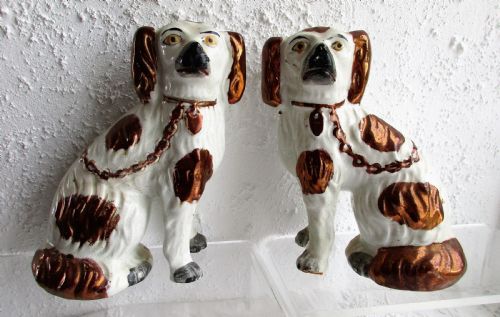
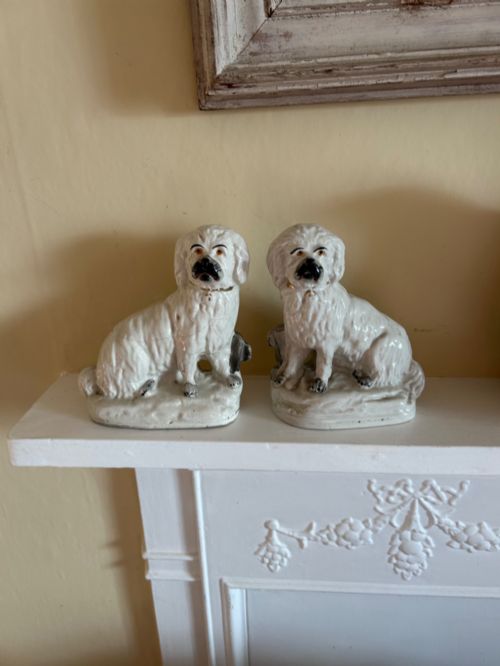
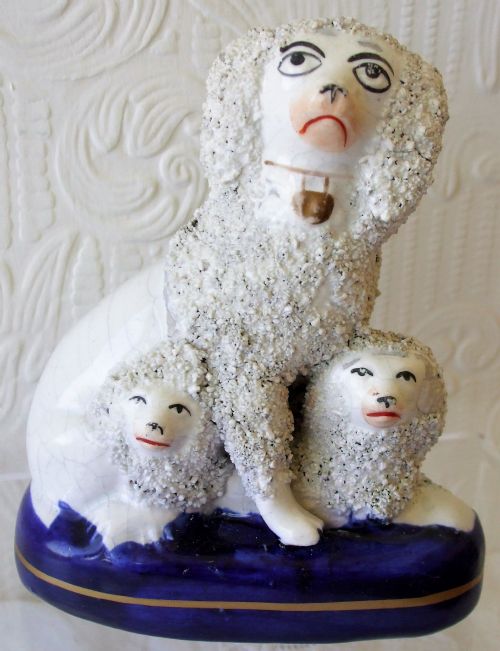
An antique pottery dog figure spans multiple traditions, though English Victorian Staffordshire ceramic pairs dominate the selection. Collectors encounter spaniels, poodles, greyhounds, whippets, pugs, and dalmatians modelled as fireside ornaments, money boxes, inkwells, and quill holders.
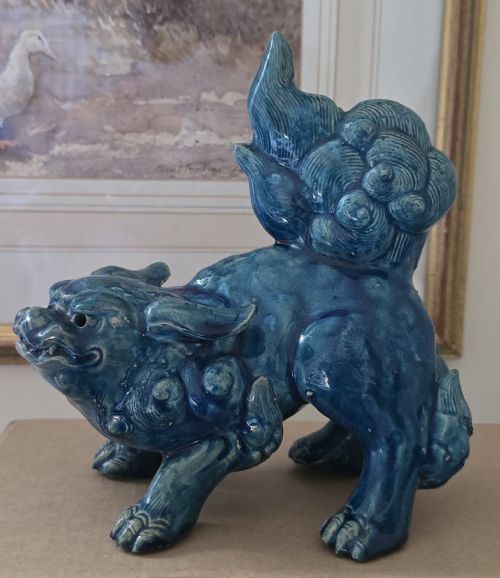
The offerings also extend to Eastern traditions through Japanese Meiji period turquoise-glazed shishi figures, Chinese Qing Dynasty porcelain foo dogs, and Shiwan Buddhistic lion dogs. These Asian ceramic figures serve protective and decorative roles quite distinct from domestic British mantelpiece ornaments.
Most British examples date from the nineteenth century, ranging from Georgian specimens down to Edwardian pieces. They appear individually or, more frequently, as matched pairs intended to sit symmetrically on either side of a fireplace.
Materials and Construction
Potters built these figures using earthenware, stoneware, or porcelain bodies shaped through moulding. Many British pieces receive a lead glaze or general glaze combined with enamel colours and gold leaf or gilt highlights.
Asian figures utilise specialised glazes, including turquoise and pale green variations over ceramic or porcelain bases. Enamel decoration provides surface detail on Chinese Qing period and Japanese Meiji period examples.
Dalmatian inkwells and greyhound quill holders prove that even Victorian guard dogs had to bring stationery to the office.
Factors of Quality
The presence of specialised forms, such as inkwells, money boxes, or quill holders, alongside original matched pairs rather than single specimens, elevates the standing of an antique pottery dog figure within a collection.
Thomas Parr·Wedgwood and Co Ltd·Wooley
The Antique Pottery Dog Figure Glossary
- Staffordshire
- A term applied to ceramic figures produced in the pottery towns of Staffordshire, England. These represent the bulk of nineteenth-century domestic animal figures on the market.
- Earthenware
- A porous ceramic body fired at lower temperatures, commonly used for nineteenth-century British animal figures. It requires a glaze to render it impermeable.
- Foo Dog
- A traditional guardian lion figure originating in Asian art, frequently rendered in porcelain or pottery. They appear in pairs guarding thresholds or sacred spaces.
- Quill Holder
- A utilitarian ceramic desk accessory incorporating a figure with a hollow or tray designed for writing implements. These combine decorative animal subjects with desktop function.
Antique Pottery Dog Figure: Frequently Asked Questions
What rooms suit antique pottery dogs?
These figures sit naturally on mantelpieces, bookshelves, and side tables where their decorative presence adds historic character. Pairs look particularly striking when arranged symmetrically.
Because they originate from various nineteenth-century domestic and overseas settings, they mix easily with traditional and eclectic interior schemes alike.
How were Staffordshire dog pairs displayed?
Victorian households traditionally placed matched pairs of spaniels or greyhounds facing inwards on either side of the fireplace. This symmetrical arrangement was a staple of Victorian parlour decoration.
Individual pieces and functional variants like inkwells or money boxes found places on desks and sideboards rather than purely flanking hearths.
How do I date a pottery dog figure?
Dating relies on stylistic clues, the type of ceramic body, and glaze characteristics recorded across the nineteenth century. Georgian pieces often display simpler forms, while Victorian examples introduce varied breeds and functional objects.
Marked pieces or attribution to documented makers like Thomas Parr provide more precise chronological anchors within the broader Victorian period.
What is the difference between spaniels and comforter spaniels?
Comforter spaniels specifically refer to the King Charles or Blenheim style spaniels kept by Victorian owners as lapdogs and companion animals. Potters immortalised these specific breeds as fireside ornaments.
Other spaniel representations capture hunting or working varieties, distinguishing the companion dogs by their characteristic seated postures and painted lockets.