



Cobalt Blue Base Ceramic Figurine
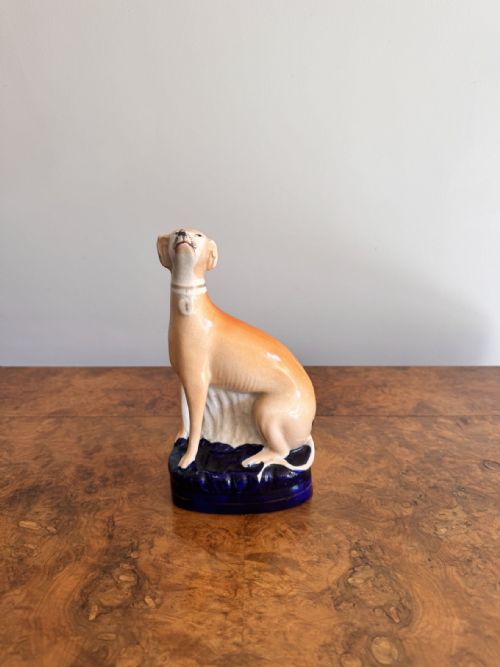
A cobalt blue base ceramic figurine brings character to a room, showing the Victorian taste for animal figures.
Cobalt Blue Base Ceramic Figurine
When you search for a cobalt blue base ceramic figurine, you meet nineteenth century figures, primarily Victorian Staffordshire pottery and Continental porcelain.
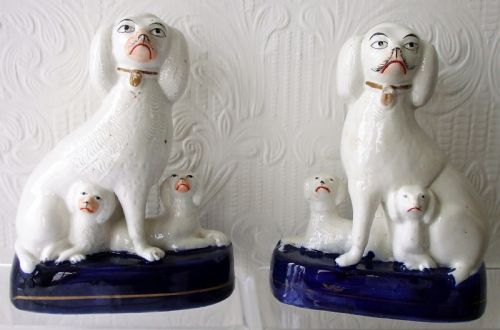
The selections span figures of poodles, dalmatians, spaniels and greyhounds, often modelled as pairs or groups with pups.
Staffordshire pottery forms the core of these listings, alongside miniature porcelain dog figures from the late nineteenth century.
Materials and methods
Potters shaped earthenware and porcelain into animal forms, applying lead glaze to create a smooth surface finish.
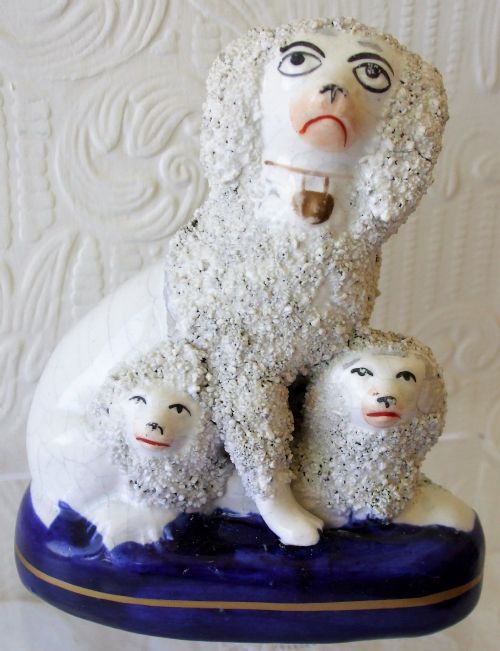
Makers added enamel colours and gilt or gold leaf details, alongside applied encrusting to represent fur and texture.
Cobalt Blue Base Ceramic Figurine Retail Price Guide 2026
Typical asking prices for cobalt blue base ceramic figurine among the pieces listed under this phrase on Sellingantiques today, from the lower quarter to the upper quarter. They describe what is for sale here now, not the wider market.
Victorian potters captured canine loyalty in clay, populating parlours with poodles guarding their tiny pups on painted cushions.
Judging quality
The distinction between standard figures and finer examples rests on the crispness of the modelling and the precision of the enamel painting.
Pair completeness and the survival of original gilt highlights elevate the standing of individual pieces.
The Cobalt Blue Base Ceramic Figurine Glossary
- Staffordshire pottery
- Earthenware produced in the potteries of Staffordshire, particularly known for animal figures and spill vases during the nineteenth century. These wares were widely exported and remain popular with collectors today.
- Lead glaze
- A glossy coating containing lead oxide applied to earthenware before firing to seal the porous clay body. This technique gives the surface its characteristic shine.
- Enamel
- Vitreous colour applied over the fired glaze and fixed with a lower temperature second firing. It provides the bright hues seen on nineteenth century animal figures.
- Figure group
- A ceramic composition featuring multiple subjects, such as a mother animal with pups. These groups required greater skill in modelling and kiln firing.
Cobalt Blue Base Ceramic Figurine: Frequently Asked Questions
What animals appear on these bases?
The listings feature dogs including poodles, dalmatians, spaniels and greyhounds. Many of these appear alongside pups or rest upon cushions.
Staffordshire potters focused heavily on canine subjects during the nineteenth century, reflecting domestic tastes of the period.
Are these figures English or Continental?
The evidence shows a mix of English Victorian Staffordshire pottery and Continental porcelain pieces. Staffordshire pottery forms the majority of the available selection.
Continental pieces tend to be miniature porcelain dog figures dating towards the end of the nineteenth century.
How do I care for glazed ceramics?
Keep these figures away from direct sunlight to protect the enamel colours and gilt details from fading over time. Dust them gently with a dry, soft cloth.
Avoid using water or chemical cleaners, as nineteenth century glazes and enamels can be sensitive to moisture.
How can I tell the period?
Dating relies on stylistic markers such as the Victorian Staffordshire form, the presence of lead glaze and hand-painted enamel details. The evidence points to the nineteenth century, specifically around eighteen sixty to eighteen ninety.
Examine the base construction and the weight of the earthenware or porcelain to understand the manufacturing era.