



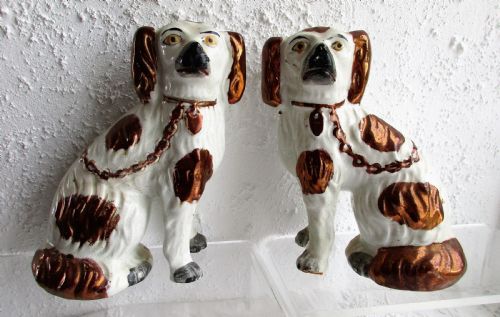
English Earthenware Figurine
These English earthenware figurine pieces bring tactile character and domestic history to a mantelpiece.
English Earthenware Figurine
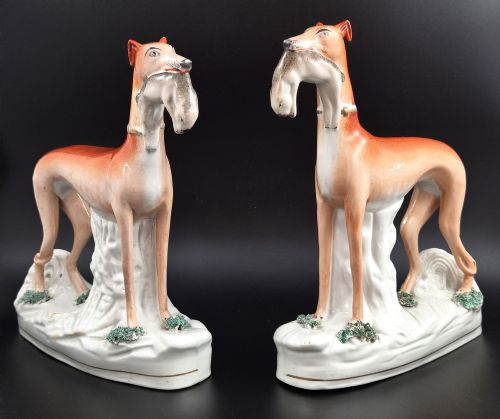
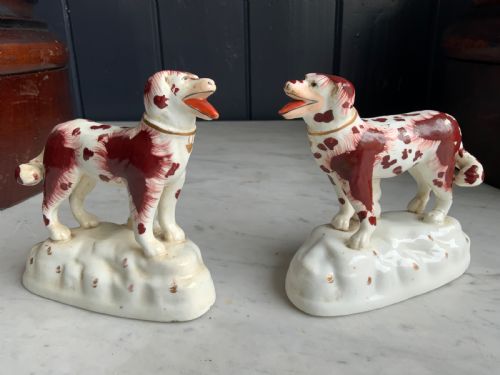
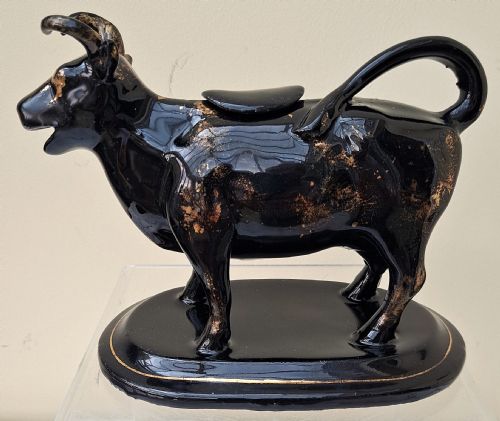
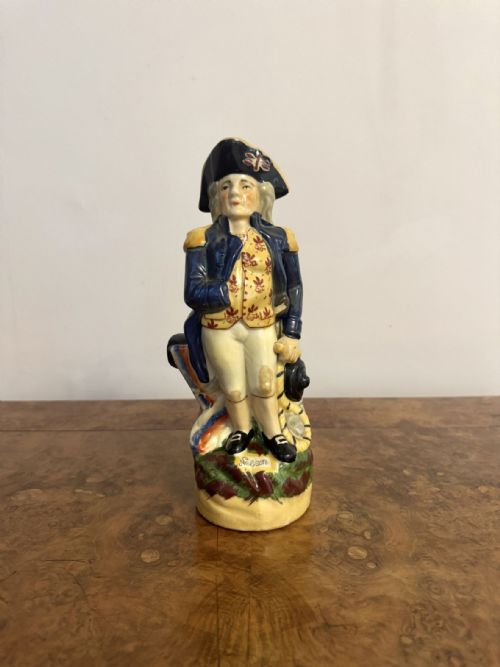
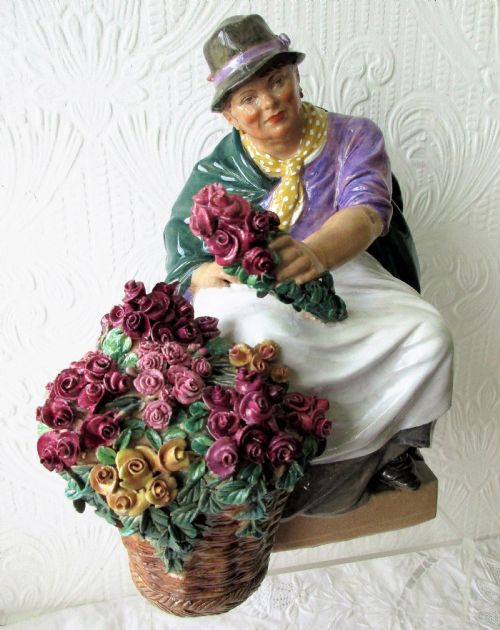
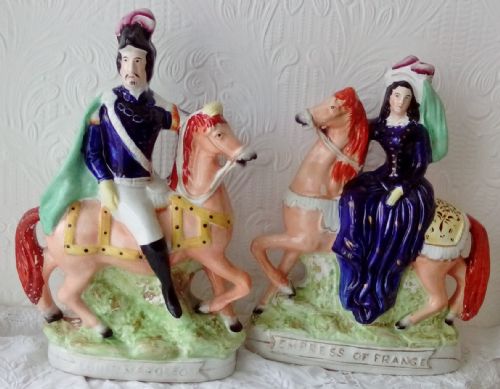
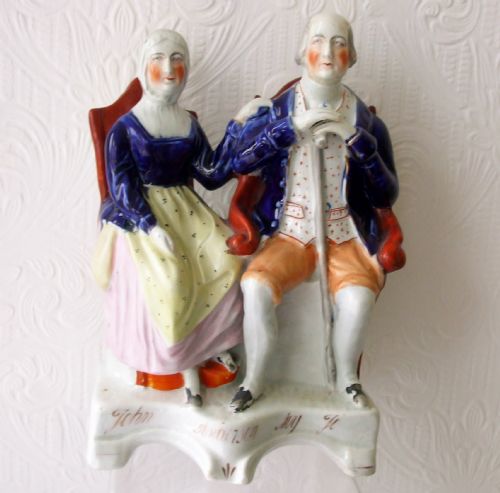
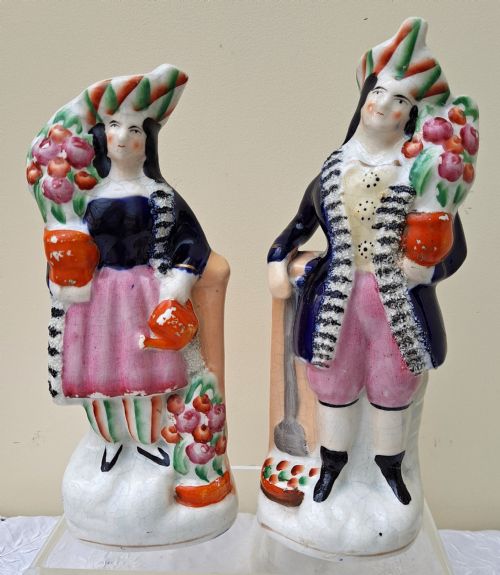
An english earthenware figurine represents moulded ceramic work produced across the nineteenth century and into the early twentieth century. These figures take the form of domestic animals, theatrical subjects, military heroes, and portrait groups designed to adorn Victorian and Georgian interiors.
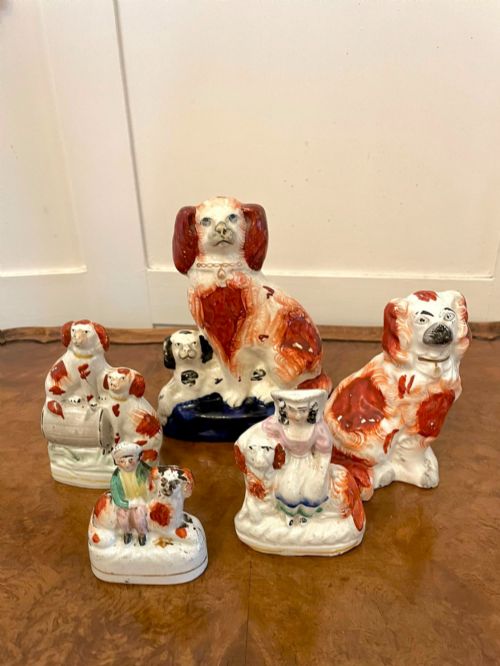
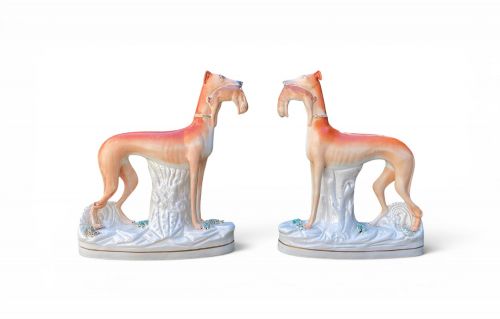
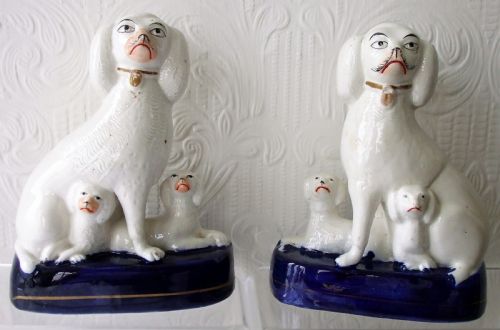
The nineteenth century provides the bulk of the examples seen here, with Staffordshire potteries dominating the output alongside studio pottery figures from the 1920s and 1930s. Pieces range from flat-backed castle ornaments and comforter spaniels to spill vases and figural tobacco jars.
How They Were Made
Moulds dictated the primary form of these decorative objects, allowing potteries to replicate popular portrait figures, animals, and architectural groups efficiently. Artisans then hand-painted the enamel colours onto the surface before a final kiln firing.
Listings include Victorian Staffordshire figures, Regency pieces, and 1920s studio pottery earthenware.
What Varies in Quality
The crispness of the moulding determines how sharply defined the facial expressions, clothing folds, and animal coats appear. Softer mouldings lose the fine details of the original design during production.
The precision and vibrancy of the hand-painted enamels separate standard commercial output from finer examples. Careful brushwork and controlled application of gilding result in a more convincing and visually engaging finished object.
Charles Vyse·Rockingham Pottery
The English Earthenware Figurine Glossary
- Earthenware
- A porous type of pottery fired at lower temperatures than stoneware or porcelain. It requires a glaze to become impermeable to liquids.
- Pearlware
- A refined fine-grained earthenware developed in the late eighteenth century with a subtle bluish-white glaze. It bridges the transition from creamware to later white earthenware bodies.
- Spill Vase
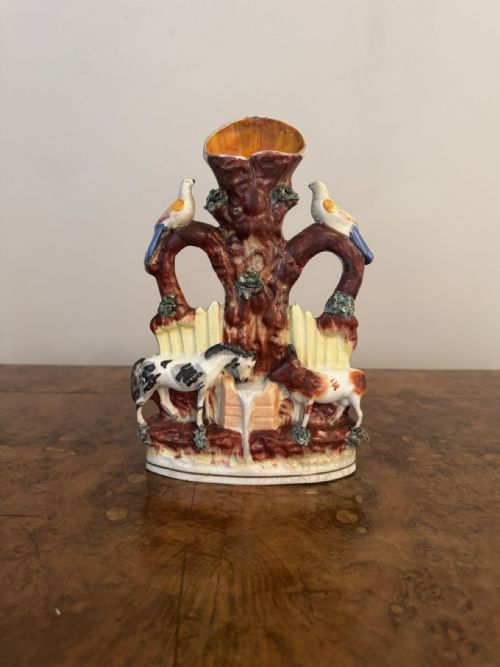
- A hollow ceramic vessel featuring an attached upright holder for wooden spills used to light candles or pipes. These often take the form of tree trunks behind animals or figures.
- Toby Jug
- A pottery jug modelled in the form of a stout, jovial person usually seated and holding a mug of beer or a pipe. They date primarily from the Georgian and Victorian periods.
- Treacle Glaze
- A dark, translucent brown lead glaze that produces a glossy, rich surface resembling molasses. It appears frequently on nineteenth century lions and animal figures.
English Earthenware Figurine: Frequently Asked Questions
What are English earthenware figurines?
These pieces are moulded ceramic decorative objects made primarily by nineteenth century regional potteries and later studio artists. They depict animals, human subjects, and architectural scenes for domestic display.
Most examples originate from Staffordshire potteries, capturing contemporary interests, theatrical characters, and popular portraiture in glazed earthenware.
How were Staffordshire figures displayed?
Victorian households placed these ceramic figures on mantelpieces, sideboards, and occasional tables to decorate domestic living spaces. Pairs of dogs or matching portrait figures often sat symmetrically at either end of a shelf.
Some functional forms, such as spill vases and tobacco jars, served a practical purpose alongside their decorative role in the parlour.
What is a comforter spaniel?
Comforter spaniels are glazed earthenware dog figures produced in pairs to sit on either side of a fireplace hearth. They typically feature glossy coats, gilded chains, and alert expressions.
These popular Victorian ornaments represent the King Charles spaniel and remain among the most recognizable forms of nineteenth century Staffordshire pottery.