




Staffordshire Pottery Poodles
Staffordshire pottery poodles are charming Victorian mantelpiece figures that bring character and playful texture to any room.
Staffordshire Pottery Poodles
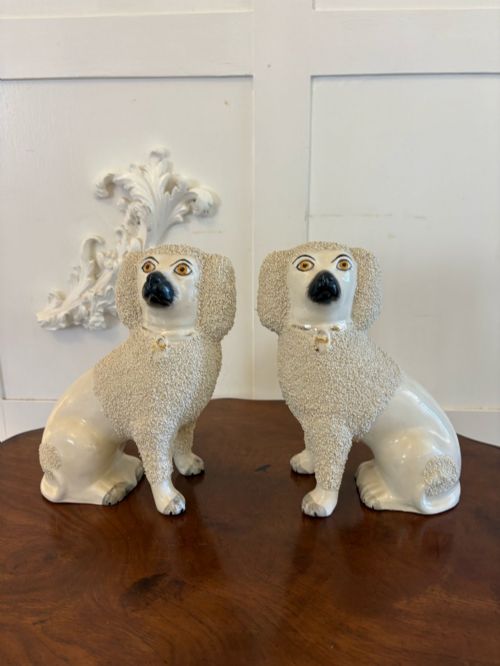
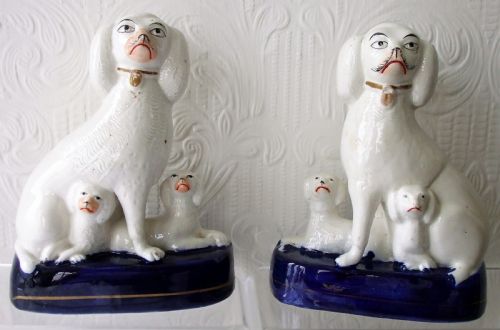
Staffordshire pottery poodles are decorative figurines that appear most frequently as symmetrical pairs designed for Victorian firesides and mantelpieces. These ceramic dogs often incorporate realistic modelling alongside whimsical details such as puppies, baskets, or quill holders.
Buyers encounter forms ranging from standard pairs to miniature versions and complex figure groups involving clocks. Many examples date from the nineteenth century, including specific pieces from around eighteen hundred and sixty, reflecting the era's fondness for animal subjects.
How they were made
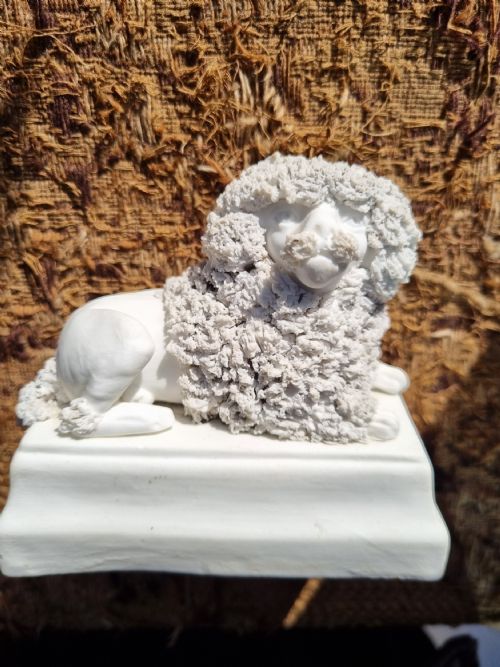
Potters shaped these earthenware figures using moulded clay bodies finished with lead glazes or white bisque. Artisans then applied surface decoration using enamel colours and details in gold leaf or gilt.
Specialist techniques such as clay encrusting created the characteristic textured wool effect on the bodies of the poodles. Certain Victorian models also feature separate front feet to enhance the realism of the seated posture.
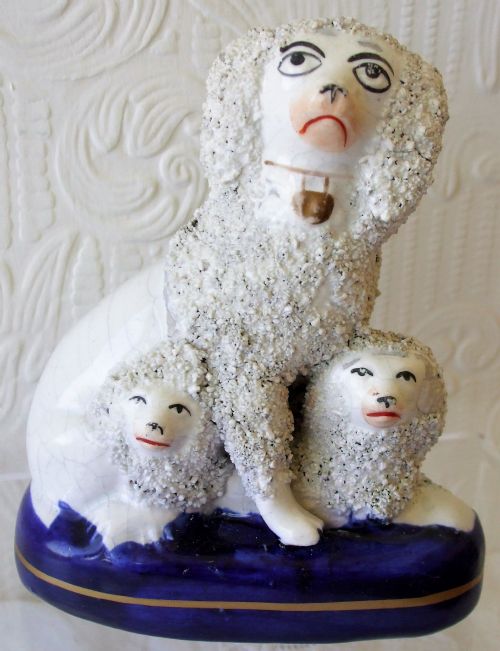
Some poodles sport elaborate woolly coats made from tiny applied clay pellets.
What varies in quality
The sophistication of the composition also dictates value, with paired figures, interacting puppies, and unusual functional forms like quill holders or clock groups representing higher craftsmanship.
James Dudson
The Staffordshire Pottery Poodles Glossary
- Bisque
- Unglazed ceramic pottery that has been fired once, giving a matte white finish. This texture appears on specific nineteenth-century poodle figures.
- Enamel
- Vitreous paint applied over the glaze and fired at a lower temperature to add colour. It provides the distinct markings on the faces and eyes.
- Gilt
- A thin layer of gold or gold-like material applied to highlights such as collars. It adds a decorative accent to the white pottery.
- Lead glaze
- A shiny coating containing lead oxide applied to earthenware before firing. This gives the characteristic glossy finish seen on Victorian Staffordshire dogs.
Staffordshire Pottery Poodles: Frequently Asked Questions
What are Staffordshire pottery poodles?
Staffordshire pottery poodles are nineteenth-century ceramic decorative figures modelled as dogs, frequently produced in pairs for domestic display.
Potters created these mantelpiece ornaments during the Victorian era using earthenware and glazes, often adding puppies or baskets.
How were these ceramic dogs used?
Victorian households placed these figures symmetrically on mantelpieces, shelves, and firesides as decorative ornaments.
Some specialised pieces also served functional roles, such as holding quills or framing clock groups on the mantel.
How do I care for antique pottery?
Display these glazed earthenware figures away from direct sunlight and areas subject to sudden temperature changes.
Dust them gently with a dry, soft cloth and avoid using liquid cleaners on the enamel or gilt details.