




Victorian Ceramic Poodles
Victorian ceramic poodles are charming earthenware canine figures, and you want one for their characterful modelled curls and classic nineteenth-century shelf presence.
Victorian Ceramic Poodles
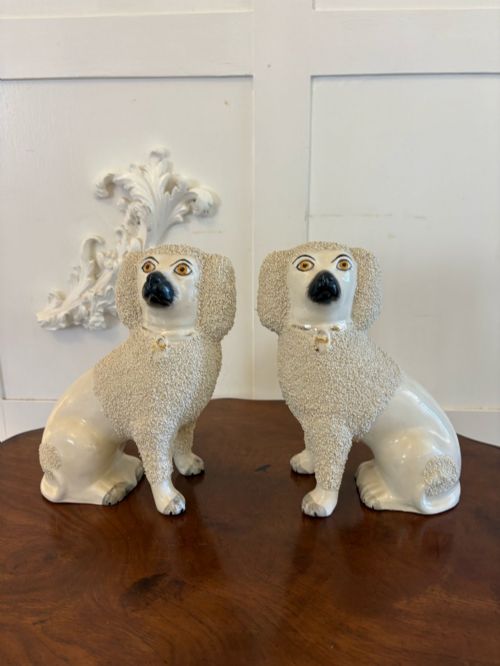
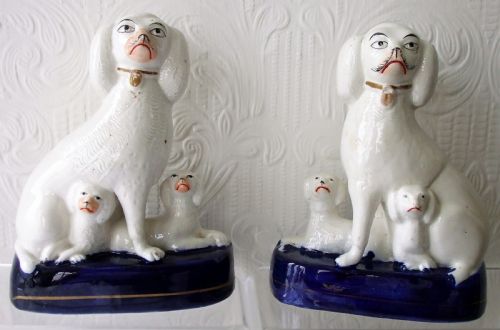
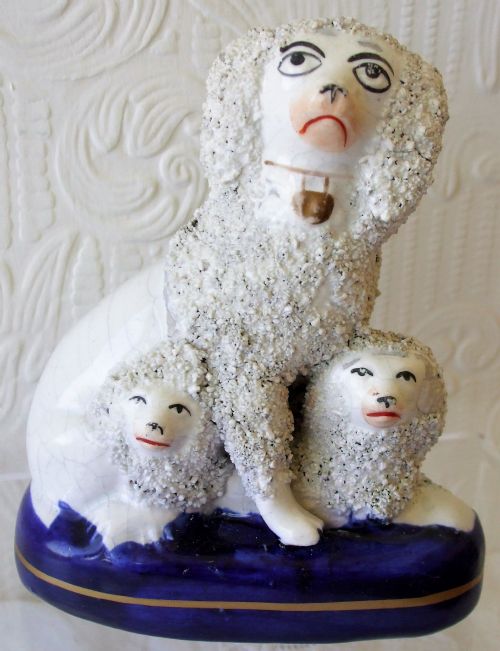
Victorian ceramic poodles appear most frequently as decorative pairs, often modelled with pups or seated upon cushions. These earthenware figures capture the distinctive grooming and appeal of the breed as rendered by nineteenth-century potters.
The selection ranges from standard decorative figures and miniature pairs to specialised forms such as quill holders and clock groups. Most examples date from the nineteenth century, including specific pieces recorded around eighteen sixty.
How they were made
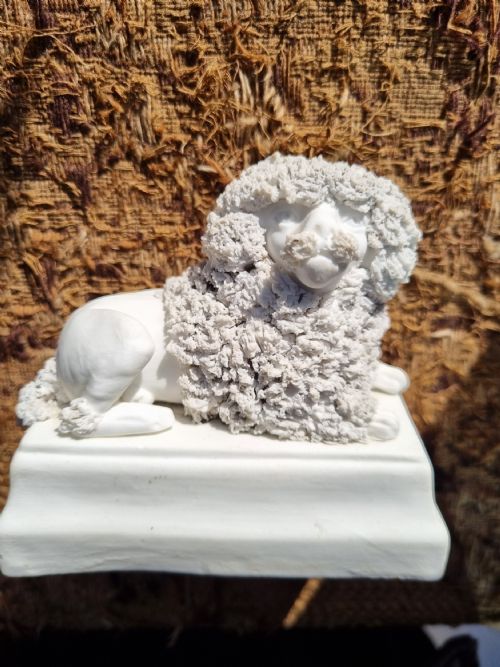
Specialised variations utilise white bisque pottery or incorporate encrusting on bases such as blue cushions. The manufacturing techniques combine moulded ceramic bodies with hand-applied finishing touches.
Listings feature nineteenth-century earthenware and glazed ceramic figures, including miniature pairs and pieces dated around eighteen sixty.
What varies in quality
Miniature versions and complex figure groups with pups demand greater sculptural skill from the maker. The survival of clean glaze and bright enamel colours across the nineteenth-century surface defines the better pieces.
James Dudson
The Victorian Ceramic Poodles Glossary
- Earthenware
- A porous pottery body fired at lower temperatures, commonly used for nineteenth-century figures. It requires a glaze to become impermeable.
- Bisque
- Unglazed pottery fired once, leaving a matte white surface that highlights fine sculptural detail. It appears on specific nineteenth-century poodles.
- Enamel
- Vitreous coloured decoration applied over the glaze and fired again at a lower temperature. It provides the facial markings and accent colours on these figures.
- Quill Holder
- A functional desk accessory featuring a modelled figure with an integrated receptacle for writing feathers. Some nineteenth-century examples combine this utility with dog forms.
- Lead Glaze
- A glossy coating containing lead oxide applied to earthenware before firing. It produces a characteristic shine and protects the porous clay body.
Victorian Ceramic Poodles: Frequently Asked Questions
Why are Victorian ceramic poodles often found in pairs?
Nineteenth-century mantelpieces and decorative arrangements typically required symmetrical placement, so potters produced matching left and right facing canine figures.
Pairs also offered buyers a complete sculptural group, frequently incorporating litters of pups or matching cushions to enhance the domestic display.
What is a woolly poodlestyle?
The woolly style refers to the textured clay application used to imitate the thick clipped curls of a real poodle. Potters achieved this effect through applied clay fragments or specialised tooling on the earthenware body.
This technique creates the characteristic tactile surface that distinguishes these specific nineteenth-century figures from smoother ceramic spaniels.
Where were these ceramic dogs placed in a home?
Victorian owners positioned these figures on mantelpieces, side tables, and occasional furniture where their bright glazes caught the light. Some variations, such as quill holders, served a practical desktop function alongside their decorative appeal.
They added a touch of canine companionship and gentility to nineteenth-century domestic interiors.
How do you distinguish poodles from Staffordshire spaniels?
Poodles feature distinctive clipped body hair and textured woolly coats rendered in clay, whereas spaniels present smoother patches and different facial proportions. Poodle groups also frequently include playful pups or sit upon decorative cushions.
The specific grooming representation defines the breed identity in nineteenth-century ceramic art.