




English Pottery Dogs
English pottery dogs sit proudly on mantelpieces, bringing character and ceramic history into any room.
English Pottery Dogs
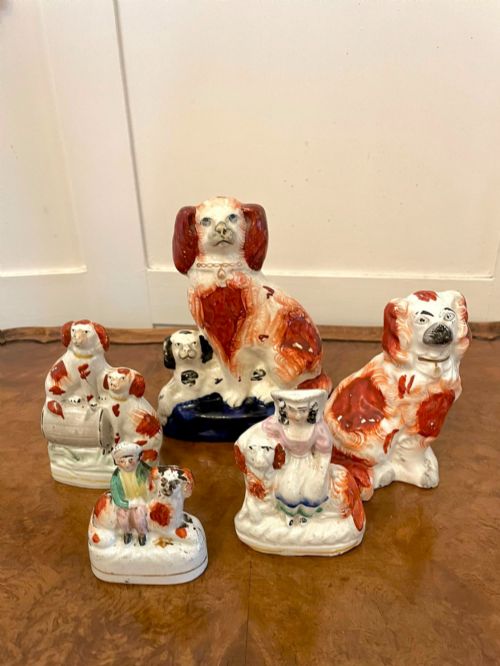
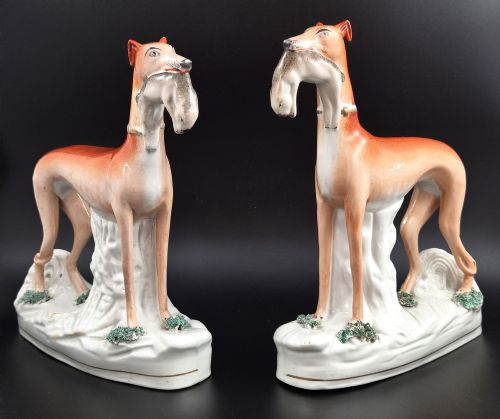
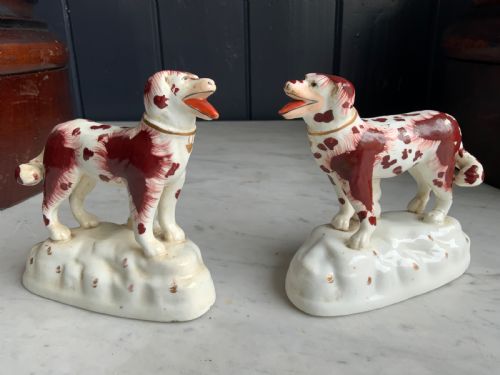
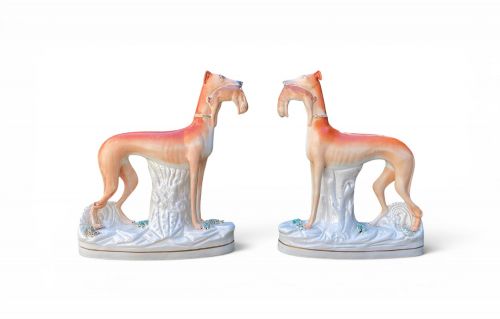
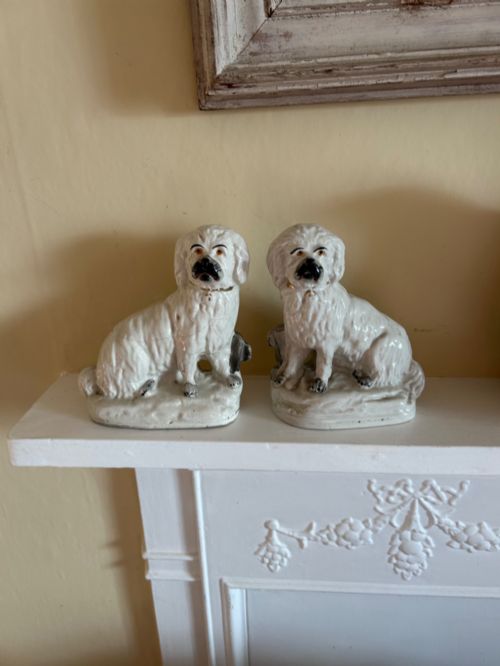
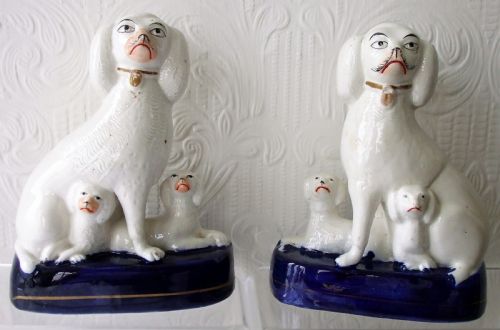
When you search for english pottery dogs, you encounter sculptural ceramics produced across the nineteenth century, most notably during the Victorian period. These figures depict various canine breeds, often modelled as pairs intended to flank a fireplace or adorn a shelf.
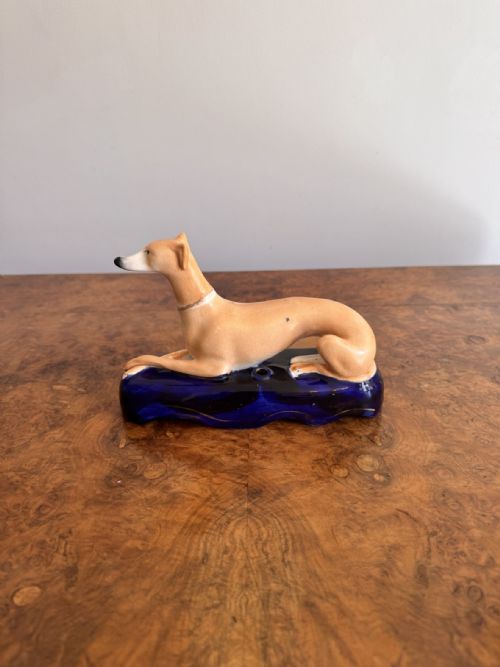
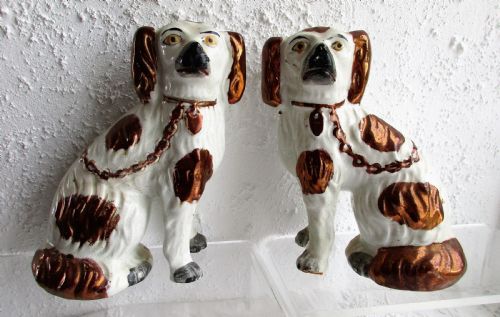
The selection ranges from spaniels and poodles to greyhounds, dalmatians, and pugs. Many examples take the form of comforter spaniels, while others serve practical functions such as inkwells or quill holders.
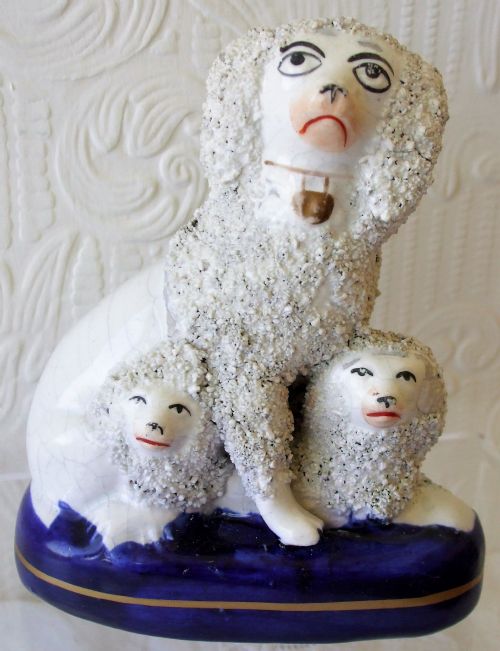
Most pieces originate from the Staffordshire potteries and date from the mid-nineteenth century, around eighteen-sixty. They appear both as single figures and as larger pairs accompanied by hares, pups, or children.
How they were made
Certain models incorporate distinct details such as inserted glass eyes, adding a lifelike expression to the ceramic body. Hand-painted finishes ensure that individual pairs display subtle variations in their black, red, white, or patterned coats.
English Pottery Dogs Retail Price Guide 2026
Typical asking prices for english pottery dogs among the pieces listed under this phrase on Sellingantiques today, from the lower quarter to the upper quarter. They describe what is for sale here now, not the wider market.
Listings feature earthenware and ceramic pieces from the nineteenth century, including Victorian Staffordshire and Regency periods.
What varies in quality
The distinction between ordinary and superior pieces rests on the crispness of the moulding and the finesse of the hand-painting. Stronger examples exhibit finely rendered facial expressions, clean enamel work, and carefully applied gilding that remains crisp.
Size and composition also elevate a piece, with large pairs, complex figure groups involving pups or hares, and functional items like inkwells representing the more ambitious end of nineteenth-century production.
James Dudson
The English Pottery Dogs Glossary
- Comforter spaniels
- Staffordshire ceramic spaniels traditionally displayed on mantelpieces in pairs facing inwards toward one another. These popular Victorian mantel ornaments often feature gold lockets and chains.
- Staffordshire pottery
- Earthenware and stoneware figures produced by numerous potteries in the Staffordshire region of England. The term encompasses a wide variety of nineteenth-century animal and human figurines.
- Lead glaze
- A glossy ceramic coating containing lead oxide applied to earthenware before firing. It gives these nineteenth-century figures their characteristic smooth, reflective surface.
- Quill holder
- A desk accessory featuring a ceramic animal figure alongside a trough or channel for resting writing implements. These functional pieces combine utility with decorative sculptural form.
- Figure group
- A ceramic composition depicting multiple subjects together, such as a dog with puppies, a hare, or children. These arrangements require more complex moulding and modelling than single figures.
English Pottery Dogs: Frequently Asked Questions
What are english pottery dogs?
English pottery dogs are nineteenth-century ceramic figures depicting various canine breeds, most commonly associated with Staffordshire potteries. They were modelled as decorative ornaments and functional desk items.
Victorian households frequently displayed these figures on mantelpieces, often arranged in facing pairs. The subjects range from spaniels and poodles to greyhounds and pugs.
Where were english pottery dogs made?
These ceramic figures were principally produced in the Staffordshire pottery district of England. Local workshops and potteries shaped earthenware and stoneware into popular animal forms.
The regional industry utilised local clay resources and established techniques for moulding, glazing, and enamel painting during the Victorian era.
How do I style english pottery dogs at home?
English pottery dogs look most authentic when placed on a mantelpiece, shelf, or sideboard. Pairs of spaniels or greyhounds are traditionally arranged facing inward toward the centre of the space.
They complement traditional and eclectic interiors alike, adding traditional ceramic texture and historic character to a room without requiring complex arrangement.
How can I tell the age of english pottery dogs?
Dating these ceramic figures involves examining the materials, glaze characteristics, and modelling style. Nineteenth-century examples typically feature earthenware bodies with lead glaze and hand-painted enamel details.
Victorian pieces often display specific decorative conventions, such as moulded gilt collars or glass eyes, which help distinguish them from later reproductions.