


Victorian Staffordshire Dog Pair
When you search for a victorian staffordshire dog pair, you enter a world of mantelpiece companions shaped by nineteenth-century potters for domestic display.
Victorian Staffordshire Dog Pair
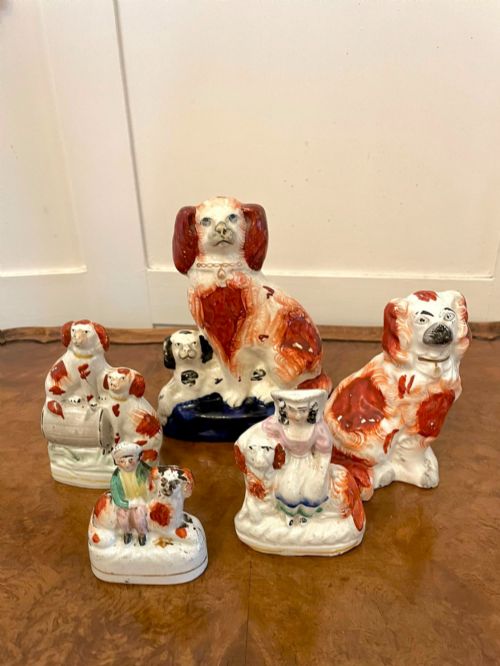
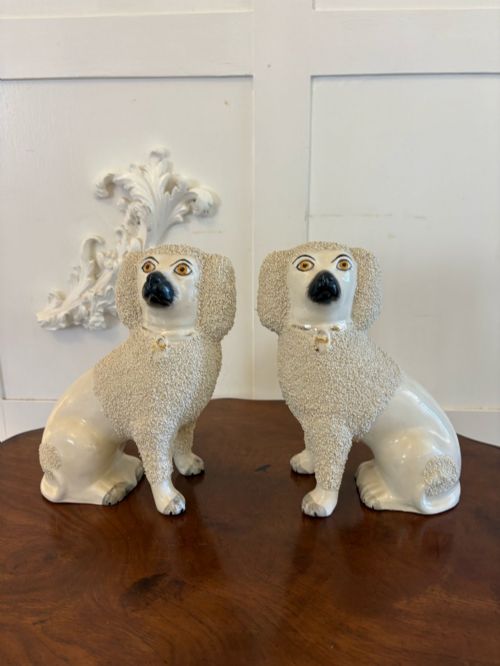
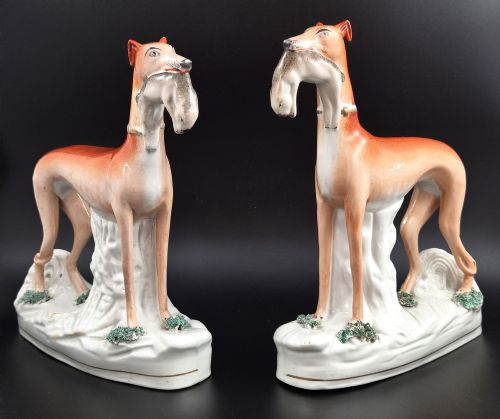
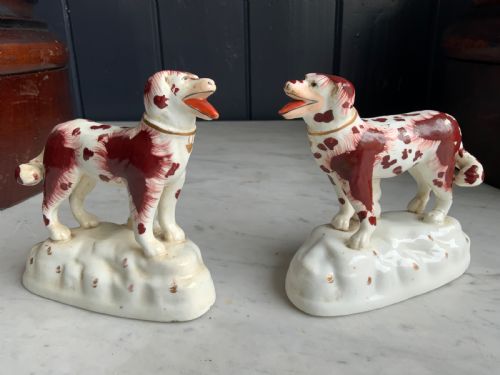
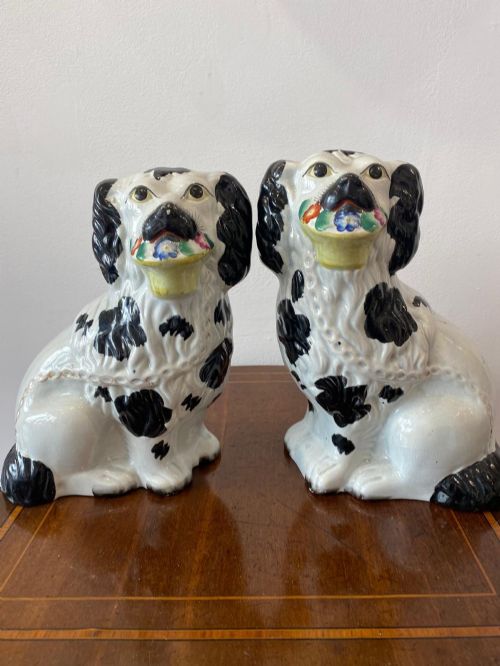
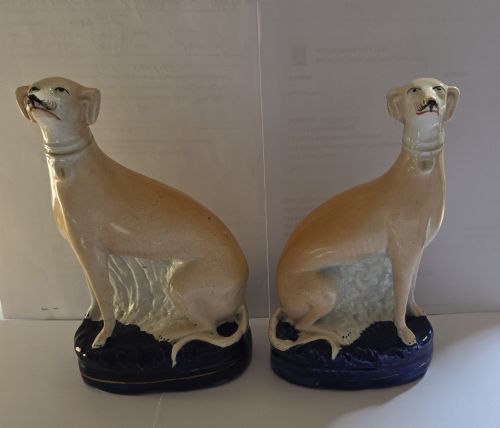
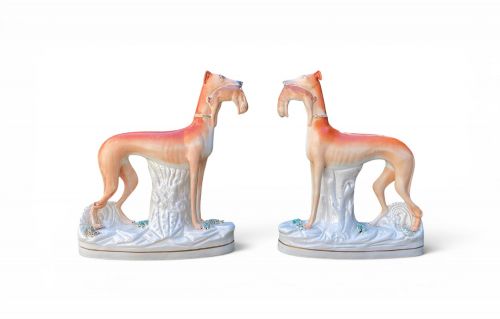
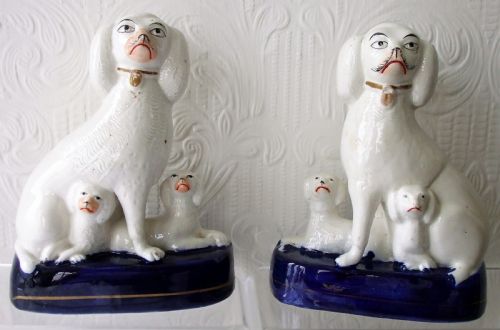
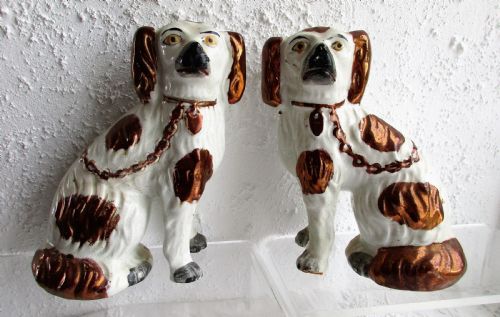
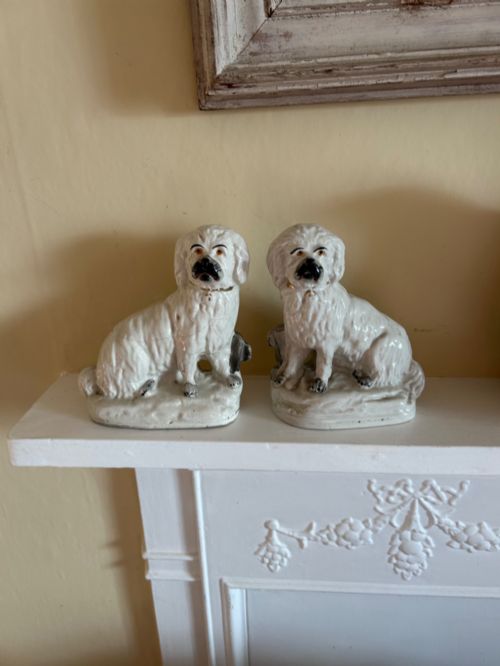
A victorian staffordshire dog pair represents the quintessential mantelpiece ornament of the nineteenth century, produced in numerous Staffordshire potteries for domestic decoration. Collectors encounter seated spaniels, greyhounds with hares, poodles, whippets, dalmatians, and maltese terriers alongside functional forms like inkwells and quill holders.
Most examples date from the mid to late nineteenth century, spanning eras from the eighteen-fifties through to eighteen-ninety, reflecting Victorian tastes for domestic animal figures. These mantle figures often appear in symmetrical left- and right-facing pairings designed to sit at either end of a fireplace.
The variety extends from large fifteen-inch comforter spaniels down to miniature poodles, encompassing different breeds and colour schemes including white and gilt, red and white, black and white, and copper lustre.
How They Were Made
Potters shaped these earthenware and ceramic figures using press moulds, often producing separate legs or distinct bodies that were joined before firing. Specialised finishes such as confetti clay or gravelware were applied to simulate the curled coats of poodles.
The fired earthenware received lead glaze and enamel decoration, sometimes augmented with gilt or gold leaf highlights on collars, chains, and lockets. Copper lustre finishes provided a metallic sheen across the surface of selected spans and hounds.
Listings feature earthenware ceramics decorated with lead glaze, enamel, and gold leaf across the nineteenth century.
What Varies in Quality
The application of glaze and gilding creates a visual separation, where controlled lustre and neatly brushed gold leaf elevate the overall presence of the ceramic figures.
Thomas Parr
The Victorian Staffordshire Dog Pair Glossary
- Comforter spaniel
- A type of Staffordshire earthenware dog modelled after King Charles spaniels, traditionally placed on Victorian hearths. These mantelpiece figures often feature distinct lockets and chains painted around the neck.
- Gravelware
- A textured ceramic technique involving applied sand or crushed pottery to simulate animal fur, frequently found on poodle figures. This surface treatment creates a rough, tactile coat distinct from smooth glazed earthenware.
- Copper lustre
- A metallic pottery glaze containing copper oxide that produces a reflective, iridescent bronze finish. Potters used this technique to give the ceramic surface a polished sheen.
- Quill holder
- A functional ceramic desk accessory incorporating a figure with specific recesses designed to hold writing feathers. These utilitarian pieces combine decorative animal forms with desktop utility.
- Confetti pottery
- A style of ceramic decoration featuring small flecks of coloured clay applied to the body to represent textured hair. It is most commonly seen on nineteenth-century poodle figures.
Victorian Staffordshire Dog Pair: Frequently Asked Questions
What breeds are found among these Staffordshire figures?
The inventory records spaniels, greyhounds, poodles, whippets, dalmatians, and maltese terriers.
Spaniels and greyhounds appear most frequently, often accompanied by hares or modelled as comforter dogs.
Were these dogs purely decorative or functional?
Most examples served as decorative mantelpiece ornaments designed to sit in symmetrical pairs.
Certain pieces incorporated utilitarian functions such as inkwells and quill holders for a desk.
What colour varieties do the glazed figures take?
Common colour schemes include white and gilt, red and white, black and white, and copper lustre.
Gold leaf accents frequently highlight collars and chains on white-glazed bodies.
How do miniature pairs differ from standard ones?
Miniature versions replicate the forms of larger spaniels and poodles on a much smaller scale.
They share the same earthenware materials and enamel decoration while occupying less display space.