


Staffordshire Whippet Figures
Staffordshire whippet figures are pottery dogs capturing Victorian domestic life, prized by collectors for their charming character and period appeal.
Staffordshire Whippet Figures
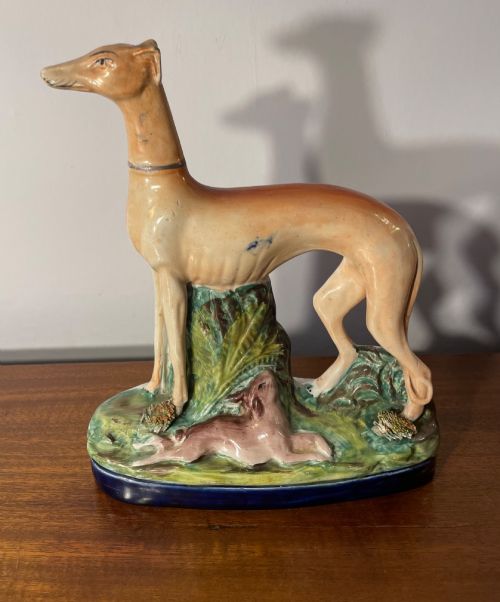
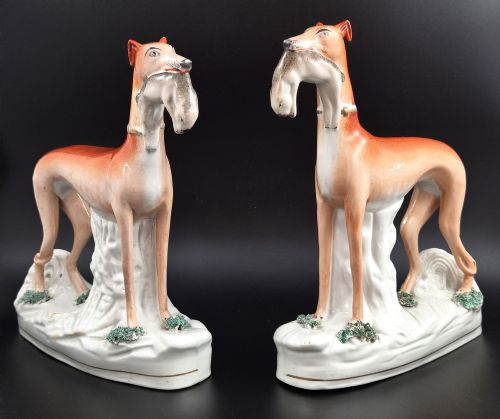
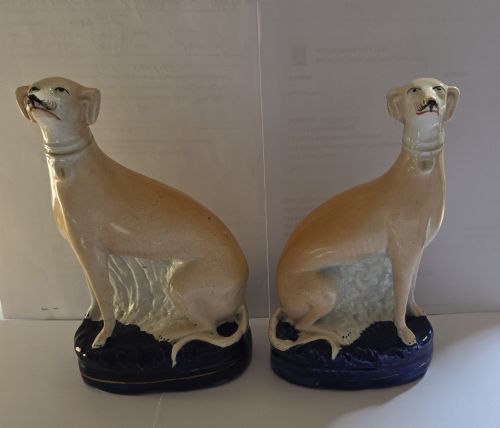
When you search for staffordshire whippet figures, you encounter earthenware dogs that typically date across the nineteenth century, including Victorian examples from eighteen fifty to eighteen eighty. These decorative ornaments often appear as pairs of seated hounds, sometimes accompanied by hares at their feet.
The form extends beyond simple display pieces into functional items such as quill holders and inkwells. Most versions you meet on this page originate from English country potteries, capturing the Victorian fascination with hunting dogs and domestic pets.
How they were made
Potters shaped these earthenware figures using traditional ceramic techniques before applying a smooth lead glaze to the surface. Enamel paint and touches of gold leaf brought out the details of the fur, collars, and accompanying hares.
The manufacturing process relied on skilled hand-painting, meaning each dog received individual markings and facial expressions. Kiln firing fixed the glaze and pigments, resulting in the glossy finish characteristic of nineteenth-century pottery.
Many Victorian whippets wear surprisingly polite painted collars, as if ready to attend a very formal canine tea party.
What varies in quality
Larger scale and well-matched pairs generally command greater attention from collectors than smaller, single figures. The inclusion of functional elements like inkwells or quill holders also influences the desirability of a piece.
Thomas Parr
The Staffordshire Whippet Figures Glossary
- Earthenware
- Porous pottery fired at lower temperatures, commonly used for nineteenth-century Staffordshire figures. It forms the essential ceramic body beneath the glaze.
- Lead glaze
- A glossy coating applied to pottery to seal the clay and provide a smooth, shiny finish. This treatment gives Victorian figures their characteristic sheen.
- Quill holder
- A desk accessory featuring a modelled figure with a built-in channel for resting writing feathers. These functional pieces combine utility with decorative appeal.
- Inkwell
- A small desk container for holding liquid ink, frequently incorporated into the base of Staffordshire animal figures. They represent the more practical side of Victorian desk ornaments.
Staffordshire Whippet Figures: Frequently Asked Questions
What periods do these figures come from?
The pieces span the nineteenth century, with the majority dating from the Victorian era between eighteen fifty and eighteen eighty. Earlier examples from around eighteen forty also appear.
Potteries continued producing these canine ornaments throughout the period, reflecting evolving Victorian tastes in domestic decoration.
Were these dogs purely decorative?
While many served as mantelpiece ornaments or decorative figurines, several Victorian examples had practical uses. Potters incorporated inkwells and quill holders into the bases.
These functional desk accessories allowed owners to display their love for hunting dogs while keeping writing equipment close at hand.
How do I identify a matched pair?
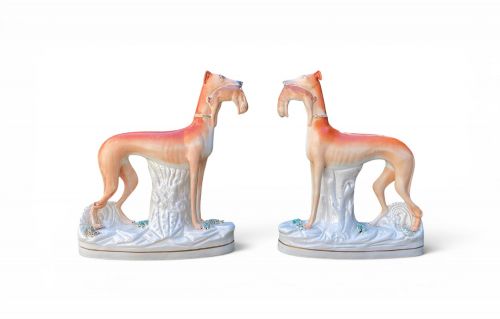
Matched pairs typically feature mirror-image hounds facing one another, often accompanied by hares. They were modelled to sit symmetrically on either side of a fireplace or shelf.
Comparing the size, glaze tone, and enamel painting helps confirm whether two individual dogs belong together as an original pair.
How should I clean Staffordshire pottery?
Dust these glazed earthenware figures gently with a soft, dry cloth to protect the surface enamel and gold leaf. Avoid using harsh chemical cleaners or submerging the pieces in water.
Careful handling preserves the hand-painted details and the delicate lead glaze applied during the nineteenth century.