
Victorian Staffordshire Pottery Dogs
Victorian staffordshire pottery dogs are charming ceramic mantel ornaments depicting spaniels, poodles, greyhounds, and other breeds that bring character and history to any room.
Victorian Staffordshire Pottery Dogs
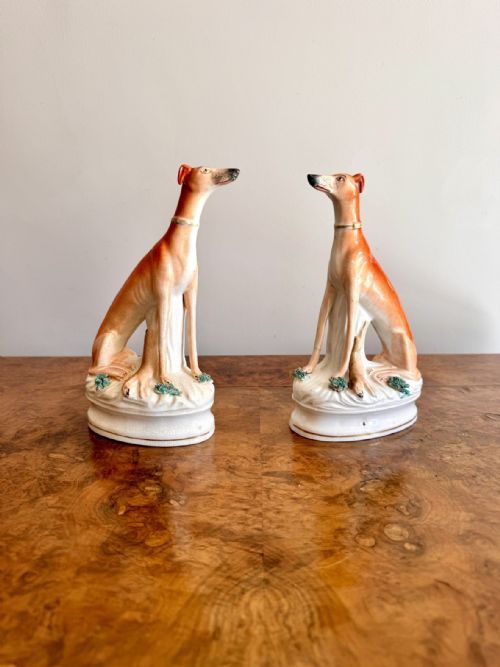
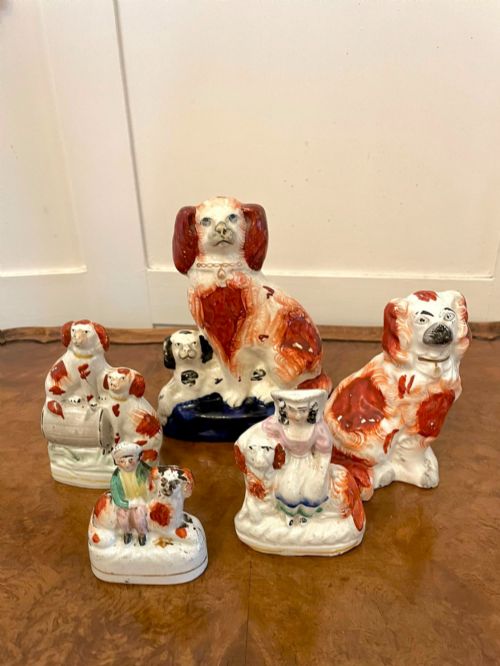
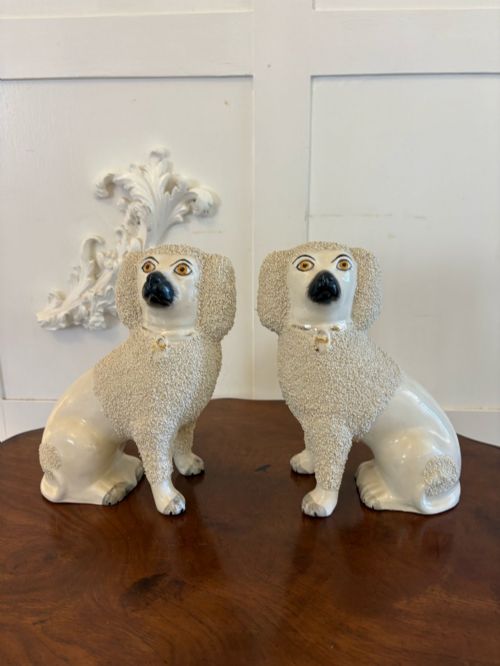
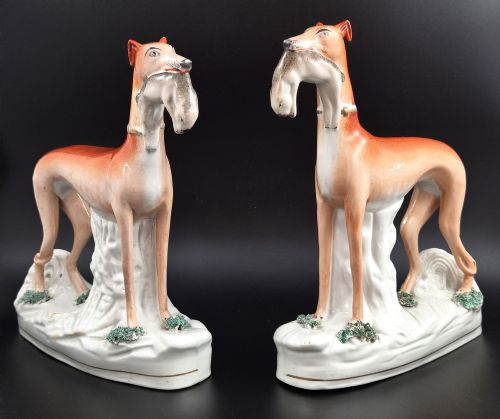
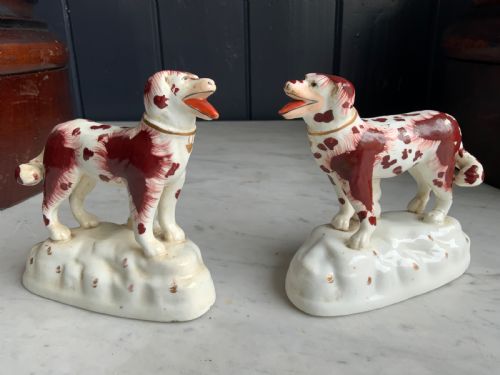
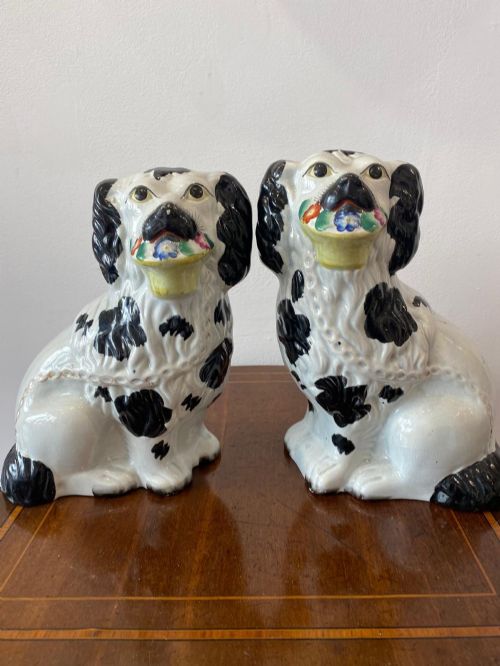
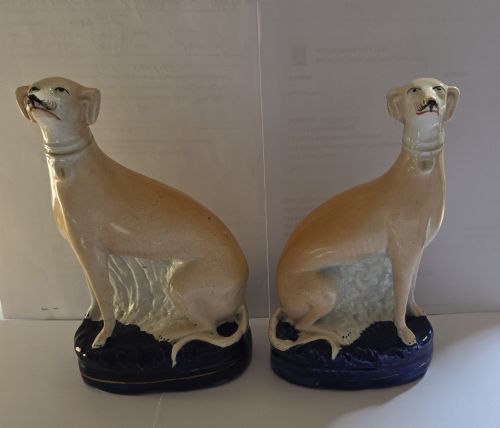
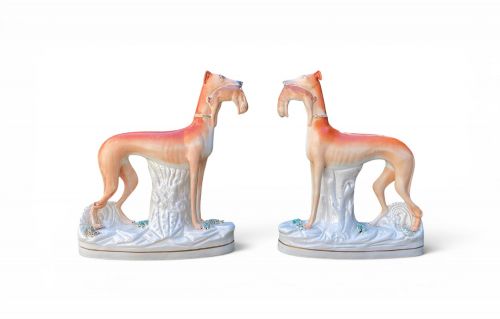
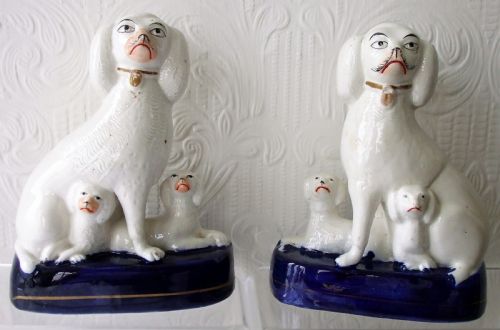
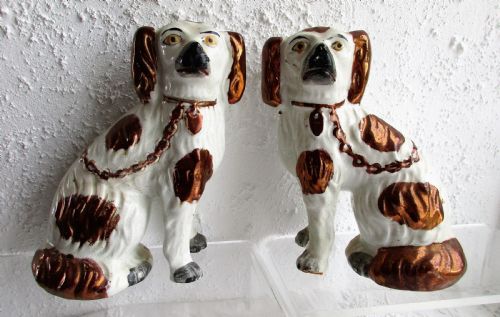
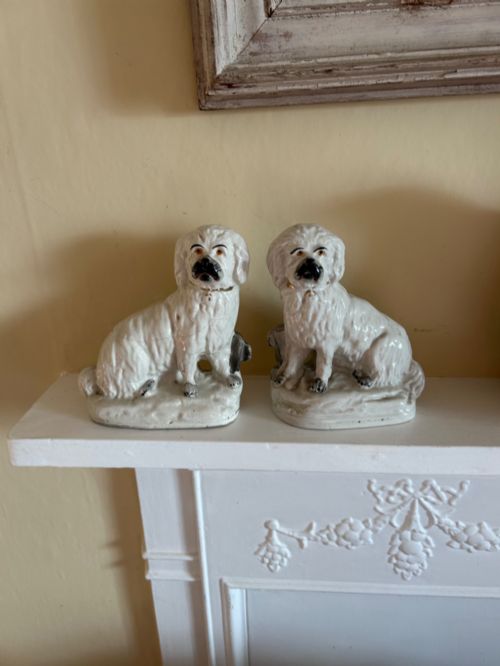
Victorian staffordshire pottery dogs are decorative mantel figures produced across the nineteenth century, most frequently encountered as symmetrical pairs of seated spaniels, poodles, and greyhounds designed to adorn the hearth.
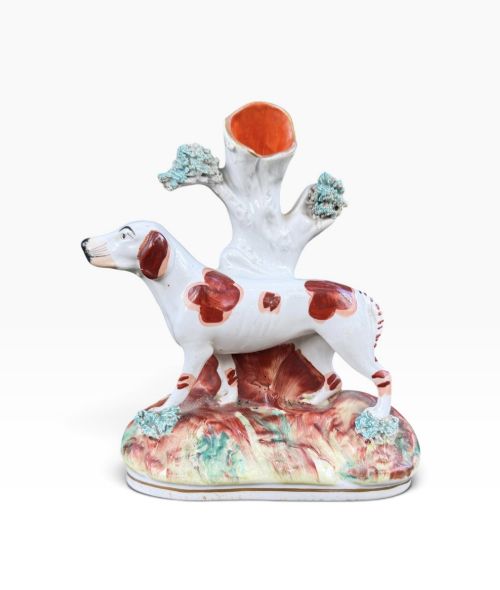
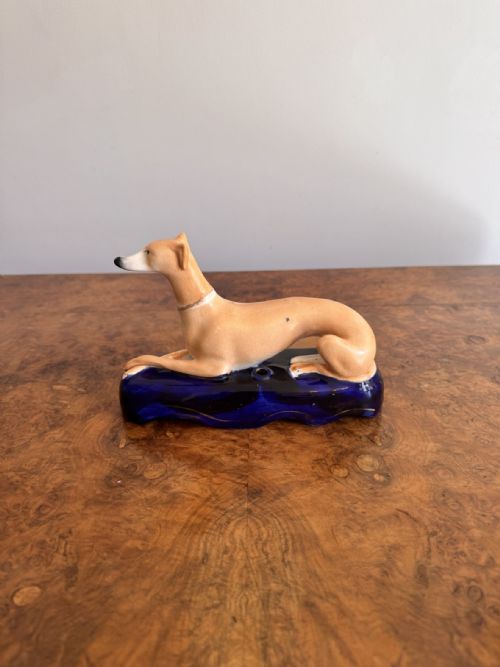
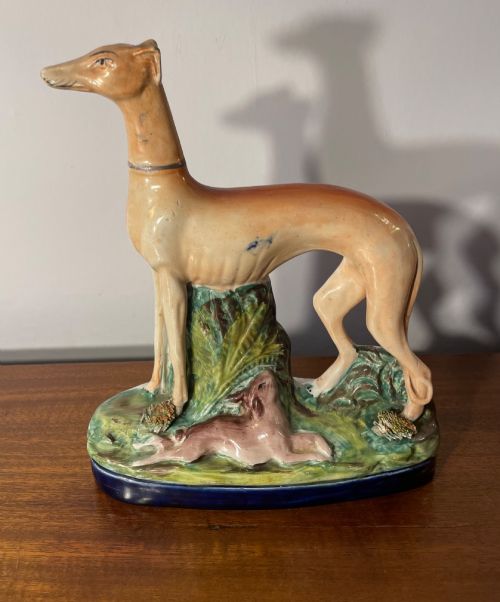
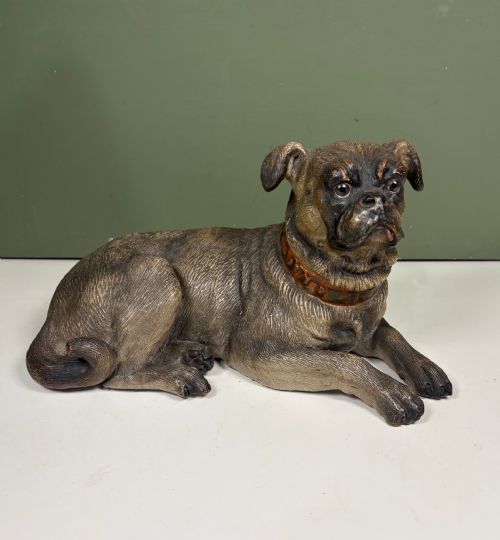
The selection spans various breeds including pugs, dalmatians, maltese terriers, and whippets, often taking the form of fireplace ornaments, quill holders, inkwells, or money boxes rather than simple figurines.
Originating predominantly from the nineteenth century with periods extending from Georgian roots through to nineteen hundred, these ceramic figures capture the domestic animal portraiture popular during the Victorian era.
How they were made
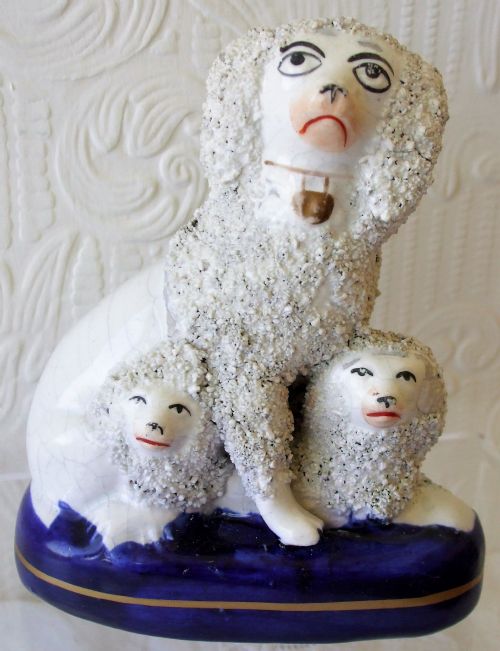
Makers incorporated decorative elements such as gold leaf, gilt highlights, copper lustre, and textured clay treatments like confetti or gravelware to simulate animal fur.
Some poodles sport literal ceramic confetti coats, proving Victorian makers understood the profound artistic value of looking slightly ridiculous.
What varies in quality
Scale and complexity create distinct tiers, separating standard mantel pairs from large format models, specialised forms like inkwells, or examples featuring detailed separate legs.
Thomas Parr·Wooley
The Victorian Staffordshire Pottery Dogs Glossary
- Comforter spaniels
- Staffordshire pottery spaniels traditionally displayed on fireplace mantelpieces as domestic companions. They are almost universally found facing each other as pairs.
- Gravelware
- A specialised pottery technique where small sand or ceramic particles are pressed into the wet clay surface to create a textured, woolly coat on poodles.
- Quill holder
- A utilitarian desk accessory incorporating a modelled dog figure with openings designed to hold writing feathers. These combine decorative appeal with practical desk use.
- Copper lustre
- A metallic glaze technique producing a warm, iridescent copper sheen across the pottery surface. It was frequently utilised on nineteenth century dog figures for collars and markings.
Victorian Staffordshire Pottery Dogs: Frequently Asked Questions
Why were they made in pairs?
Victorian staffordshire pottery dogs were traditionally manufactured as symmetrical pairs to flank the central clock or ornaments on a fireplace mantelpiece.
This paired arrangement suited the formal Victorian interior design aesthetic, creating balanced displays across the hearth.
What dog breeds are most common?
Spaniels, often referred to as comforter spaniels, represent the most frequently encountered breed among these ceramic figures.
Other regular breeds include poodles, greyhounds, pugs, dalmatians, and whippets, appearing in various sizes and colour combinations.
How were these figures used originally?
These ceramic animals primarily served as decorative ornaments intended to sit on mantelpieces in Victorian homes.
Certain variations fulfilled secondary practical functions, such as inkwells, desk accessories, quill holders, and money boxes.
How can you tell the age of these dogs?
Dating relies upon examining the ceramic body, glaze characteristics, and painting style relative to nineteenth century production standards.
Earlier Georgian and early Victorian pieces often feature simpler hand-painted details, whilst later nineteenth century examples display distinct moulding and colour applications.