



Antique Ceramic Greyhound
These antique ceramic greyhound figures capture the sleek grace of the breed through Victorian pottery and porcelain craft.
Antique Ceramic Greyhound
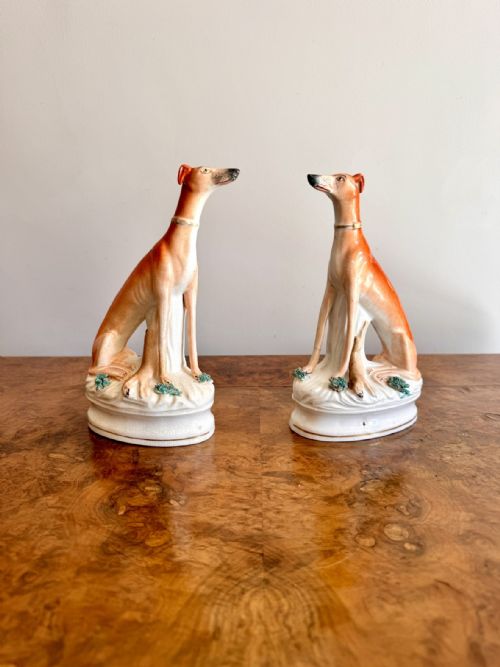
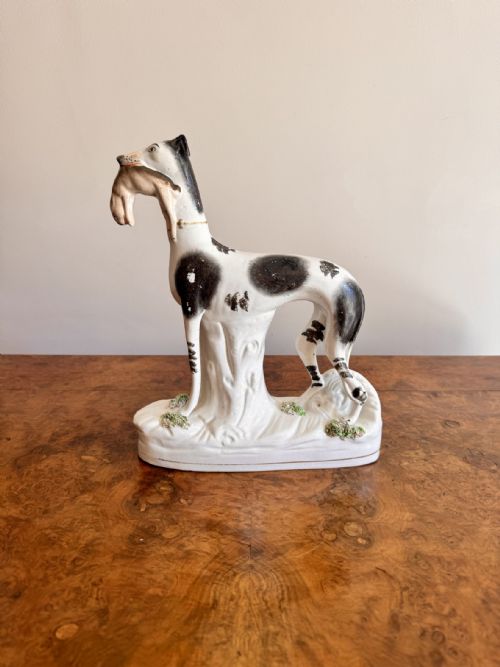
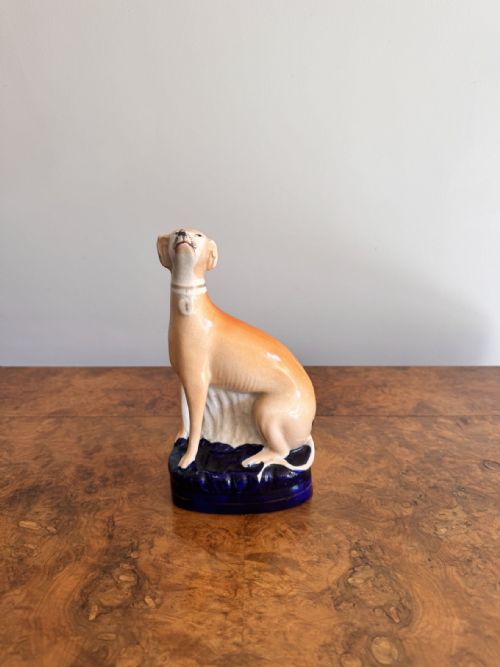
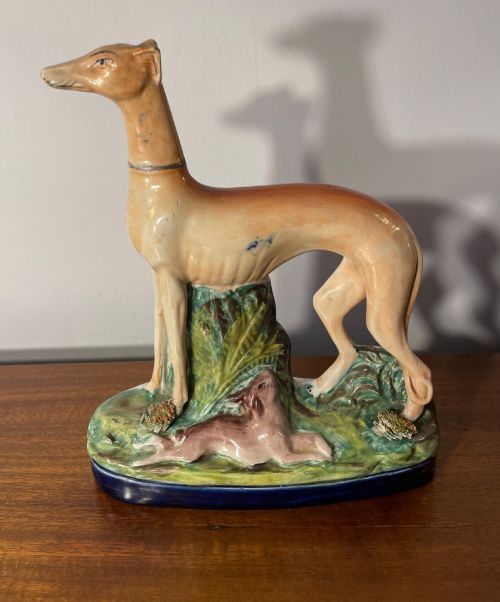
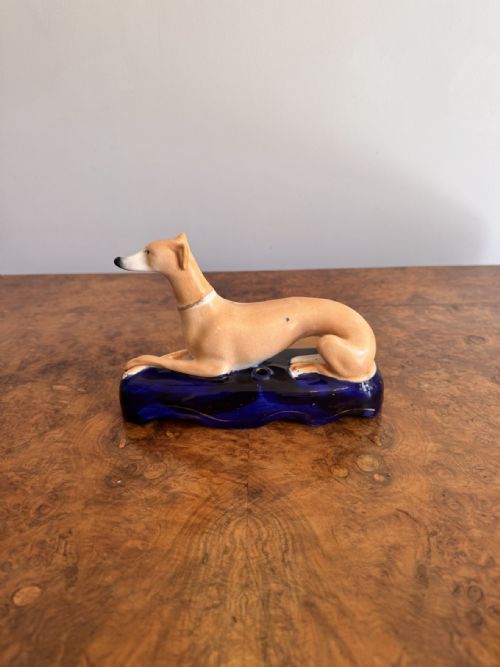
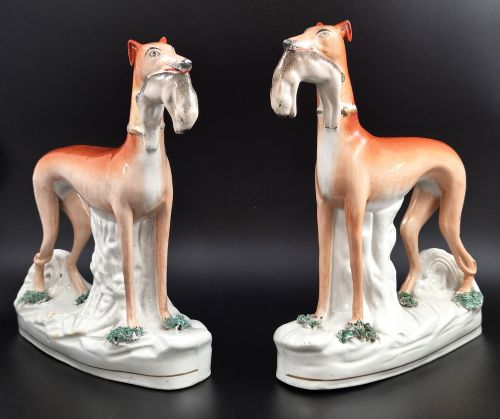
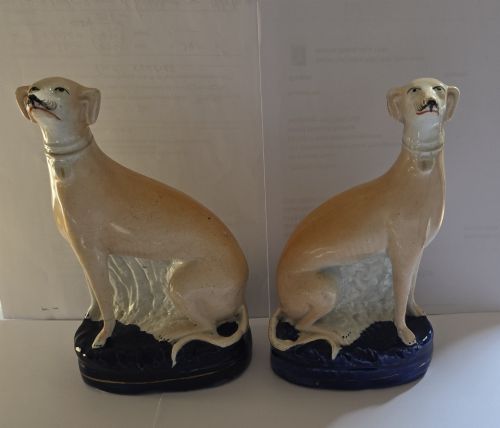
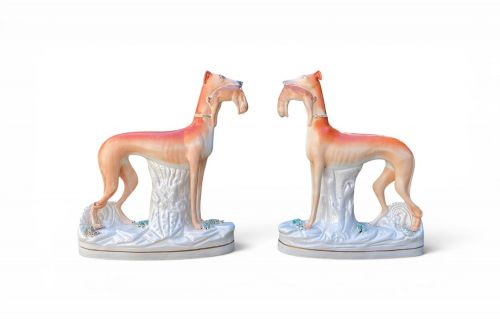
An antique ceramic greyhound takes various sculptural forms, ranging from single seated dogs to matched pairs accompanied by hares. The pieces appearing here lean heavily towards Victorian Staffordshire pottery, though earlier figures and later porcelain examples also occur.
Beyond purely decorative mantel ornaments, these dogs often served a practical domestic purpose. Makers adapted the sculptural form into functional items such as quill holders, inkwells, and harvest cups.
Materials and technique
Potters shaped these animals primarily from earthenware and porcelain, employing moulding techniques to achieve the characteristic slender silhouettes. Artisans then applied lead glaze to seal the body and create a smooth surface.
Antique Ceramic Greyhound Retail Price Guide 2026
Typical asking prices for ceramic greyhound among the pieces listed under this phrase on Sellingantiques today, from the lower quarter to the upper quarter. They describe what is for sale here now, not the wider market.
Listings span periods from the eighteenth century to the mid-twentieth century, featuring earthenware and porcelain.
Determining quality
The fineness of the modelling dictates much of the distinction between pieces, separating crisp muscular definition from softer, blurred casts. Sculptural ambition also plays a role, with large pairs or complex groupings involving hares demanding greater technical skill from the potter.
Surface decoration sets the better examples apart through the precision of the enamel painting and the richness of the glaze. Careful application of colours and gold leaf gives depth to the coat, whereas hurried brushwork flattens the form.
Thomas Parr
The Antique Ceramic Greyhound Glossary
- Staffordshire
- A term denoting pottery produced in the numerous kilns of the Staffordshire region in England. This area dominated British figural ceramics during the nineteenth century.
- Lead glaze
- A shiny coating containing lead oxide applied to earthenware before firing. It provides a glossy waterproof finish that enhances the underlying colours.
- Enamel paint
- Vitreous colours fused to the ceramic surface during a secondary low-temperature firing. This technique allowed makers to achieve a wide palette of bright surface details.
- Quill holder
- A desk accessory featuring a modelled animal with a shallow trough or hollow designed to hold writing feathers. These practical items combined utility with Victorian parlor decoration.
- Earthenware
- Porous pottery fired at lower temperatures than porcelain. It served as the standard body for most nineteenth-century Staffordshire animal figures.
Antique Ceramic Greyhound: Frequently Asked Questions
What were greyhound figures used for?
Most antique greyhound figures served as decorative ornaments for the mantelpiece or sideboard during the Victorian era.
Some pieces were made with a practical function, incorporating inkwells or quill holders for use on a writing desk.
How do I date a ceramic greyhound?
Dating relies on stylistic clues, the type of ceramic body, and the characteristics of the glaze. Victorian pieces often display moulded details like textured bases and painted eyes.
Earlier examples from the eighteenth or early nineteenth century feature different clay bodies and simpler enamel palettes.
Are these figures usually found as pairs?
Many nineteenth-century Staffordshire greyhounds were produced as matched pairs to flank a fireplace or centrepiece. Single figures also appear frequently in the listings.
Pairs often feature mirrored poses or include hunted hares at the base of each dog.
What is the difference between earthenware and porcelain?
Earthenware is a porous, opaque pottery body that requires a glaze to hold liquid and was the standard material for Staffordshire figures. Porcelain is a denser, vitrified material fired at higher temperatures, often associated with finer, smoother finishes.