
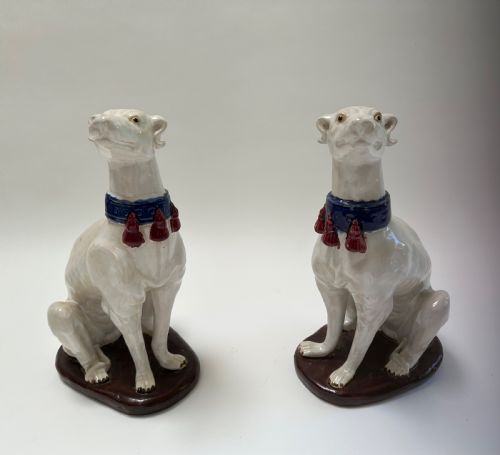


Pottery Greyhound Figure
A pottery greyhound figure captures the sleek elegance of the breed in earthenware and glaze, offering collectors a charming piece of nineteenth-century animal sculpture.
Pottery Greyhound Figure
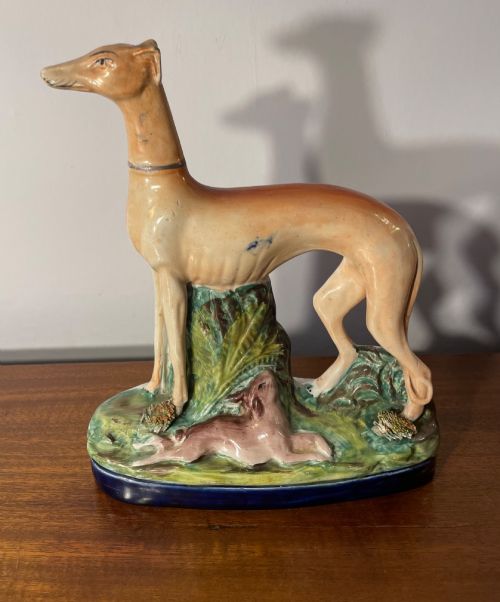
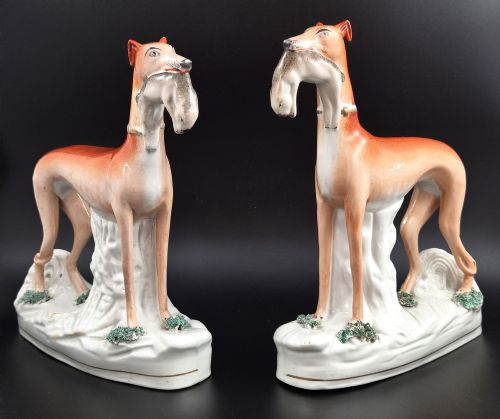
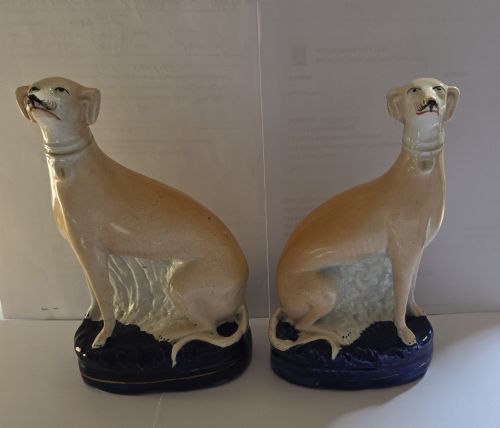
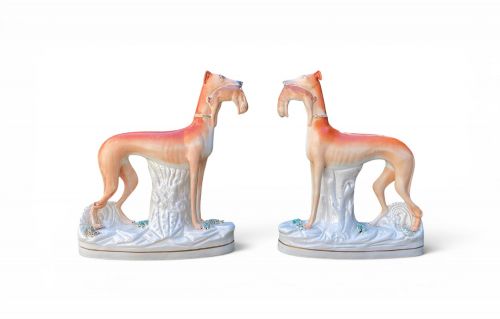
A pottery greyhound figure represents a distinct branch of nineteenth-century ceramic animal sculpture, depicting seated or recumbent hounds often accompanied by hares. These decorative ornaments appear most frequently as pairs originating from Victorian Staffordshire potteries, capturing the Victorian fascination with hunting and domestic pets.
Beyond standard decorative figurines, some pieces serve functional roles such as inkwells, quill holders, and desk accessories. The designs range from large early nineteenth-century models down to smaller Victorian country pottery versions, showing considerable variety in scale and purpose across the surviving examples.
Materials and methods of production
The construction relies on traditional Staffordshire moulding techniques typical of nineteenth-century ceramic production. Artisans shaped these decorative figures in sections before firing and hand-painting the surface details in enamel colours.
Several attentive hounds share their ceramic bases with remarkably unfazed pottery hares.
Distinctions in quality and execution
The standard of modelling largely defines the quality of a pottery greyhound figure, separating finely articulated anatomical forms from softer, more generic factory output. Superior examples display crisp facial expressions, well-defined muscle structure, and careful attention to the accompanying hares.
The application of enamel paint and glaze contributes significantly to a piece's visual success. Rich, carefully controlled lead glaze and neatly painted surface details elevate the better Victorian Staffordshire pairs well above simpler country pottery variants.
Thomas Parr
The Pottery Greyhound Figure Glossary
- Staffordshire
- A regional designation for ceramics produced in the towns of Stoke-on-Trent during the nineteenth century. These potteries dominated the production of popular animal figures and decorative ornaments.
- Earthenware
- A porous type of pottery fired at relatively low temperatures and rendered impermeable through the application of glaze. It serves as the primary body material for Victorian animal figures.
- Quill Holder
- A functional desk accessory featuring a hollow or fitted channel designed to hold writing feathers. In pottery greyhound figures, these often sit alongside the base or behind the seated hound.
- Lead Glaze
- A glossy coating applied to earthenware before firing to seal the porous clay body. This finish produces the characteristic shine seen on nineteenth-century pottery figures.
- Majolica
- A type of earthenware coated with an opaque tin-lead glaze and painted with metallic oxide colours. Italian majolica examples introduce a different aesthetic tradition compared to standard Staffordshire production.
Pottery Greyhound Figure: Frequently Asked Questions
What periods do these figures come from?
The pieces span the nineteenth century, with the majority originating from the Victorian era between eighteen fifty and eighteen eighty. Earlier examples date back to the early eighteen hundreds.
Production methods and regional styles evolved slightly across these decades, shifting from early Staffordshire workshops to later Victorian manufacturing.
Were these figures meant for display?
Most examples function primarily as decorative ornaments, designed for display on mantelpieces, tables, and shelves in Victorian homes. Their subjects reflect the popularity of greyhounds and coursing.
Some variants include built-in inkwells or quill holders, combining ornamental display with practical desk use.
Why do many greyhounds appear with hares?
The inclusion of hares relates directly to the hunting heritage of greyhounds and the Victorian enthusiasm for sporting subjects. Hares appear beneath the paws or beside the seated dogs as sculptural elements.
This composition reinforces the narrative of the hunt within domestic decorative art.
How do you display a pair safely?
Pairs of pottery greyhounds look best placed symmetrically on a stable mantelpiece or sideboard where they can be viewed without risk of being knocked. Earthenware figures require a secure, level surface away from heavy foot traffic.
Keep them out of direct sunlight to protect the enamel paint and gold leaf detailing over time.