


Victorian Whippet Statue
A victorian whippet statue captures the sleek line of the hound in bronze or earthenware, bringing nineteenth-century animal sculpture into your home.
Victorian Whippet Statue
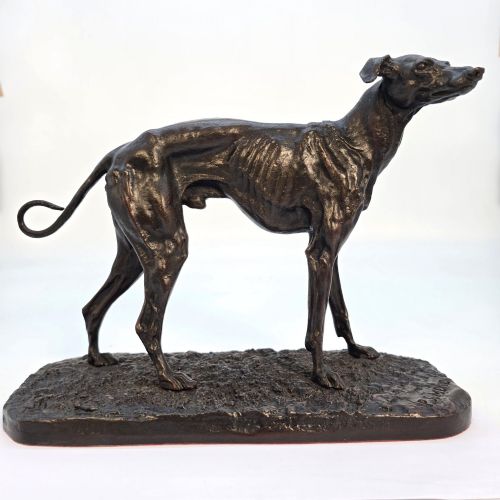
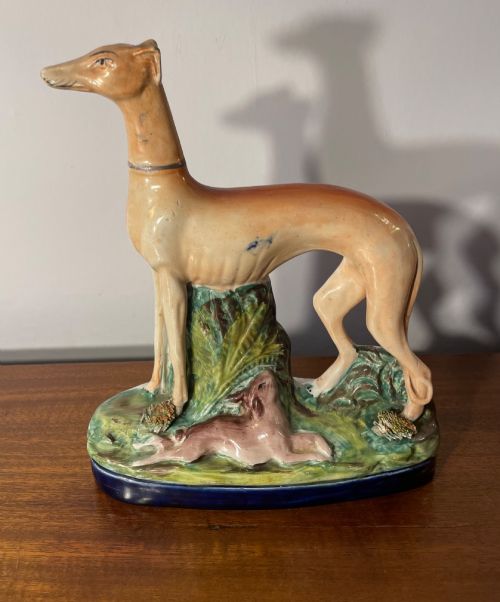
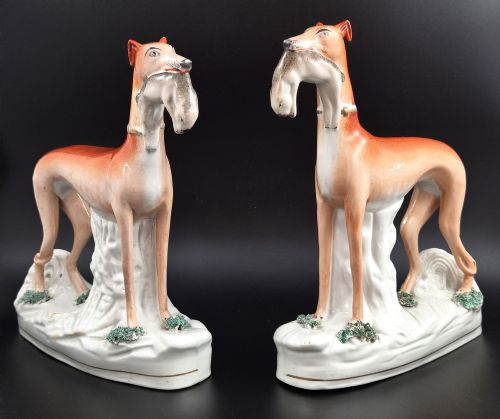
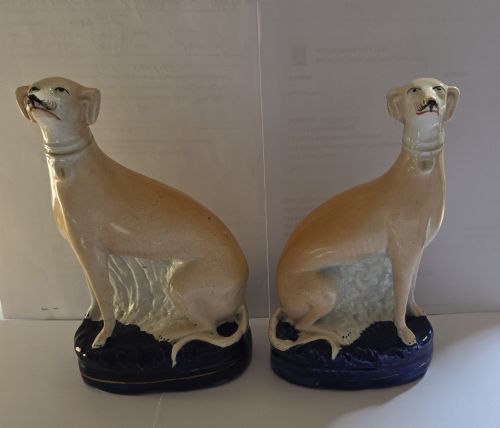
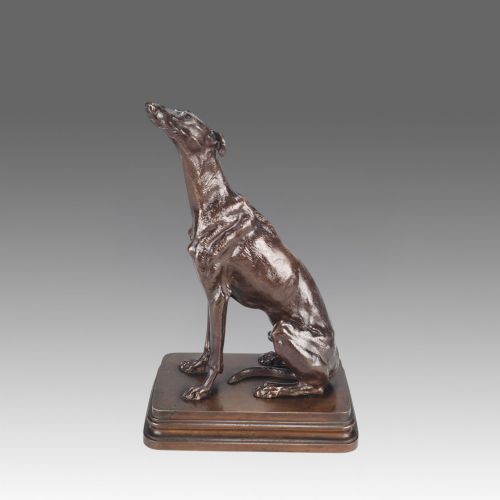
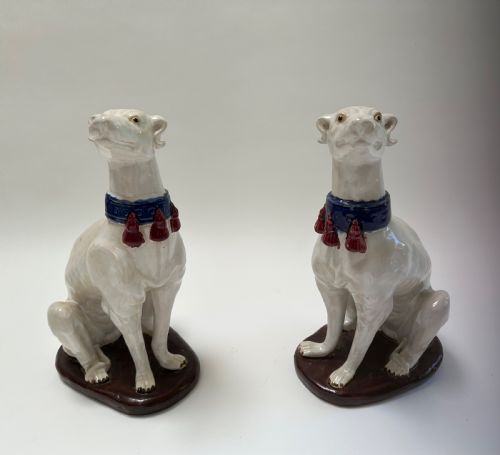
A victorian whippet statue comprises seated hounds, pairs with hares, and desk accessories like quill holders created during the nineteenth century. These sculptures range from earthenware pottery figures to animalier bronzes produced across Britain, France, and Italy. When exploring a victorian whippet statue, you will most frequently encounter Staffordshire pottery pairs and continental bronze casts.
Staffordshire potteries produced earthenware models often finished with lead glaze and enamel paint, showing recumbent or seated hounds. French and Italian foundries cast bronze sculptures capturing the muscular tension and alert posture of sighthounds. These varied forms reflect both popular domestic mantelpiece ornaments and fine art animalier casting traditions.
How they were made
Makers of earthenware pieces shaped clay in moulds before applying lead glazes and enamel paint details to Staffordshire pottery dogs. Bronze versions utilised the lost-wax casting method, allowing founders to capture fine muscular detail and naturalistic textures in metal.
Glazed ceramic figures required careful kiln firing to set the surface decoration, while bronze sculptures received hand-chiselled finishing and patination. These distinct methods resulted in either colourful ceramic ornaments or heavy, detailed metal castings.
Listings span periods from the early nineteenth century through the nineteen-twenties, featuring earthenware, bronze, and enamel materials.
What varies in quality
In bronze casts, distinction lies in the sharpness of the chiselling and the depth of the foundry patina. Superior animalier bronzes display anatomically precise musculature and clear signatures from recognised makers.
Alfred Dubucand·Pierre Jules Mene·Joseph Francois Victor Chemin
The Victorian Whippet Statue Glossary
- Animalier
- A nineteenth-century artistic movement focusing on the realistic depiction of animals. Sculptors in this tradition studied living subjects to capture authentic movement and anatomy.
- Lead glaze
- A glossy coating containing lead oxide applied to earthenware before firing. This technique created a smooth, vitreous surface common on Staffordshire pottery.
- Staffordshire
- A major pottery-producing area in England known for earthenware figures. Potteries in this region turned out countless decorative animals for domestic mantelpieces.
- Lost-wax
- A metal casting process where a wax model is replaced by molten bronze. This method permits intricate detail in sculptural works.
Victorian Whippet Statue: Frequently Asked Questions
How were these statues used?
These figures served primarily as decorative ornaments on mantelpieces and sideboards in nineteenth-century homes. Some utilitarian versions also functioned as quill holders on writing desks or as heavy desk paperweights.
Pairs were often placed symmetrically on either side of a fireplace or mirror. Their presence reflected a fondness for household pets and sporting animals during the Victorian era.
Are these figures made of bronze or pottery?
The pieces appear in both cast bronze and glazed earthenware pottery. French and Italian foundries specialised in metal animalier sculptures, while English potteries produced the ceramic Staffordshire dogs.
Each material dictates a different aesthetic, ranging from the dark patinated surface of metal casts to the bright enamel colours of glazed pottery.
What is an animalier bronze?
An animalier bronze is a nineteenth-century sculpture focusing on realistic representations of animals in motion or repose. Sculptors studied live subjects to achieve anatomical accuracy in their metal casts.
Foundries used the lost-wax method to capture fine textures like fur and muscle, often applying a dark patina to the finished bronze.