


White Glaze Pottery Dogs
White glaze pottery dogs bring undeniable charm to a mantelpiece, offering the enduring appeal of Victorian and early twentieth-century ceramic figures.
White Glaze Pottery Dogs
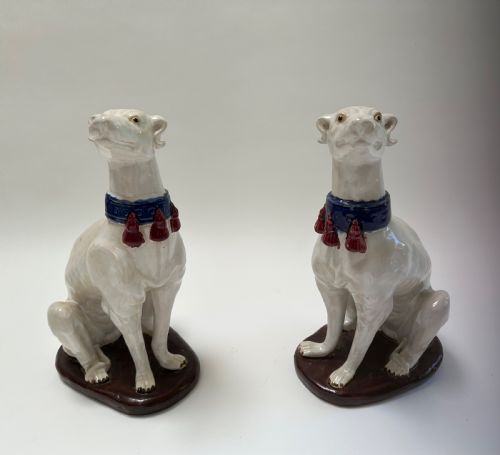
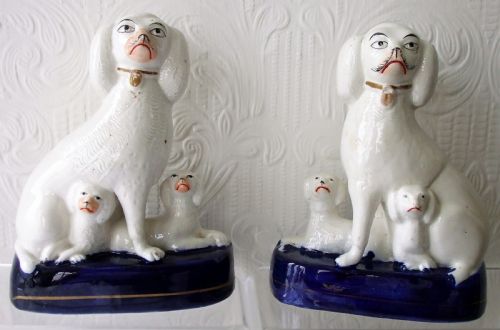
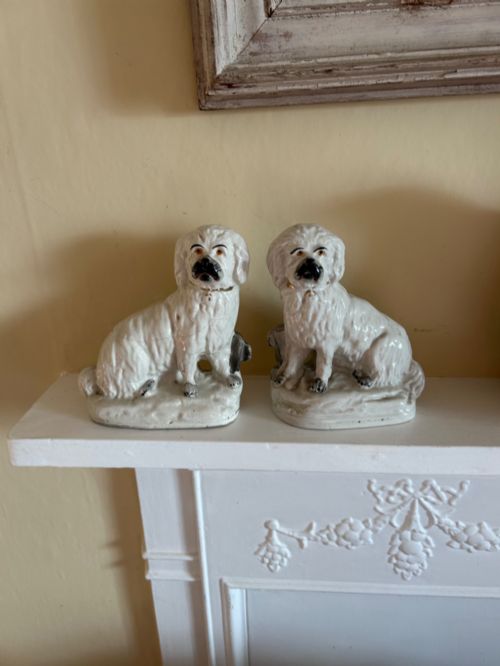
White glaze pottery dogs comprise a delightful assortment of decorative figurines, ornaments, and practical items such as inkwells and quill holders. When searching for white glaze pottery dogs, collectors encounter various canine representations including spaniels, poodles, maltese terriers, greyhounds, and dalmatians modelled in pairs or groups.
The pieces on this page span from the nineteenth century, including Victorian examples, through to the early twentieth century around 1900 and 1920. Alongside traditional Staffordshire figures, the selection incorporates Italian Majolica and Chinese glazed pottery kylins, reflecting diverse regional interpretations of canine subjects.
What varies in quality
The sophistication of the modelling and the crispness of the hand painting dictate the distinction between standard figures and superior examples. Finer pieces demonstrate careful attention to anatomical detail in the fur and expression.
The application of glaze and supplementary enamel or gilt work affects the overall visual impact. Consistency in the ceramic body and the preservation of delicate additions like puppies or accessories elevate certain pairs above others.
Listings feature earthenware and ceramic pieces decorated with lead glaze, enamel, and gold leaf from the Victorian era up to 1920.
Thomas Parr
The White Glaze Pottery Dogs Glossary
- Staffordshire figures
- Ceramic ornaments produced in the Staffordshire potteries, widely known for pairs of dogs designed to sit on mantelpieces. These figures capture numerous Victorian breeds.
- Earthenware
- A porous pottery body fired at lower temperatures, commonly utilised for nineteenth-century figures before being glazed. It forms the structural base for most Staffordshire dogs.
- Lead glaze
- A glossy coating containing lead compounds applied to pottery before firing to waterproof the ceramic and provide a smooth surface. It gives many antique figures their characteristic sheen.
- Quill holder
- A desk accessory featuring a modelled figure with an integrated channel or aperture to rest writing quills. These functional pieces combine utility with decorative charm.
White Glaze Pottery Dogs: Frequently Asked Questions
How do I date white glaze pottery dogs?
Dating relies on stylistic clues, manufacturing techniques, and characteristic glazing methods typical of periods from the mid-nineteenth century up to the 1920s. Victorian pieces often display specific modelling traits and hand-painted touches unique to Staffordshire workshops.
Examining the underside, the type of earthenware body, and the ageing of the glaze also assists in narrowing down the decade of production.
Were these dogs always made in pairs?
Many Staffordshire dogs were modelled and sold as symmetrical pairs designed to flank a clock or ornament on a Victorian mantelpiece. Single figures and larger collections of four also appear in ceramic form.
Collectors frequently seek out matching pairs because they represent the traditional arrangement used in period domestic interiors.
How should I display pottery dogs at home?
These ceramic figures sit naturally on mantelpieces, bookshelves, or side tables where their decorative forms can be appreciated at eye level. Keeping them away from direct heat sources helps protect the glaze and any surface enamel.
Pairing them with period furnishings enhances their traditional character within a modern interior setting.
What is the difference between spaniels and poodles in these figures?
Spaniels modelled in Staffordshire pottery typically feature floppy ears, calm expressions, and distinctive patches, reflecting popular Victorian pets. Poodles often showcase textured curls, sometimes accompanied by smaller pups.
Modelling conventions for each breed help identify the specific canine representation intended by the potter.