


Antique Ceramic Hunting Dog
An antique ceramic hunting dog captures the fierce loyalty and sporting spirit of the field through delicate modelling and glaze.
Antique Ceramic Hunting Dog
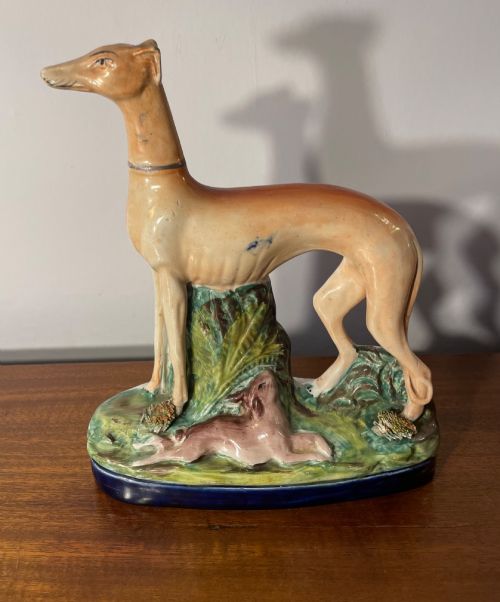
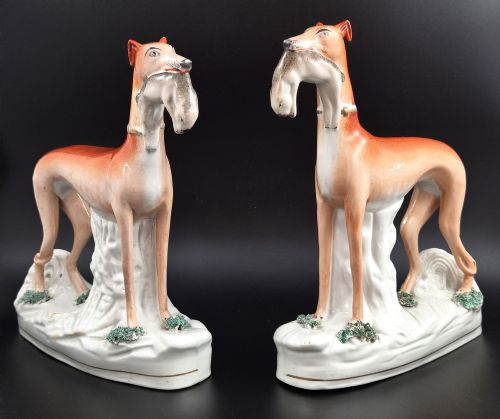
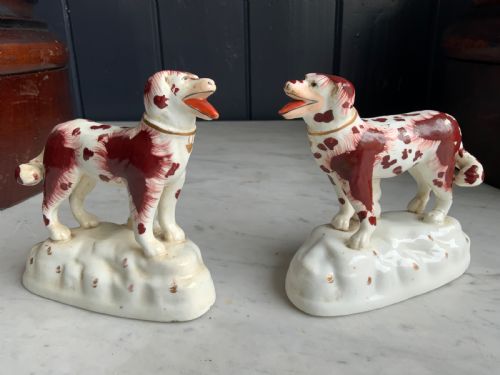
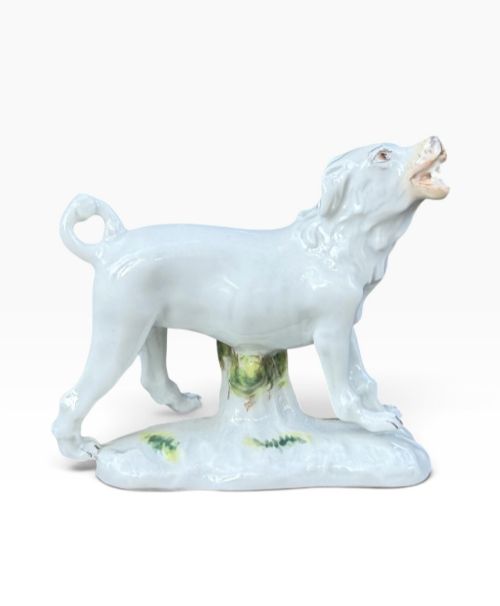
An antique ceramic hunting dog takes the form of porcelain figurines, earthenware pottery, and sculptural groups depicting greyhounds, setters, hounds, and gundogs. These decorative objects capture sporting hounds alongside hares or game, reflecting the pursuits of the 18th, 19th, and early 20th centuries.
The pieces appearing on this page span Victorian Staffordshire pottery pairs, Georgian porcelain figures, Edwardian sculptures, and continental works from factories such as Meissen, Royal Dux, and Royal Capodimonte. Buyers encounter both single figures and symmetrical pairs designed for mantelpieces.
Makers ranged from large English factories to continental porcelain works, producing figures styled in the Regency, Victorian, Rococo Revival, and Art Nouveau manners. Collectors look for these ceramic hounds to represent historical domestic displays and classic sporting art.
Materials and construction
Potters shaped these hunting dogs using porcelain, earthenware, and Parian bodies, applying lead glazes and enamel paint to render the markings of setters and greyhounds. Firing techniques established the smooth vitrified surfaces of porcelain alongside the heavier, opaque bodies of Staffordshire pottery.
Makers enhanced the figurines with hand-painted enamel details, gilding, and fine incisions to suggest fur texture, collars, and natural terrain. Sculptural forms were cast in moulds or modelled by hand before undergoing kiln firing.
Listings feature periods spanning from Georgian and Regency eras through the Victorian and Edwardian decades.
Assessing quality in ceramic hounds
The prestige of the factory or modeller, from documented Staffordshire potters to continental porcelain works, influences the desirability of a piece. Preservation of the original glaze and minimal restoration maintain the integrity of the antique form.
Thomas Parr·Enoch Wood factory·Royal Capodimonte Factory·Royal Dux
The Antique Ceramic Hunting Dog Glossary
- Staffordshire pottery
- Earthenware figures and groups produced in the Staffordshire potteries of England. These domestic ornaments often depict animals and figures with hand-painted underglaze colours.
- Parian
- A fine-grained, unglazed white porcelain resembling marble, developed in the 19th century. It allowed sculptors to render smooth human and animal forms with distinct neoclassical detail.
- Lead glaze
- A glossy coating containing lead oxide applied to pottery before firing. It creates a smooth, glassy finish that enhances the underlying earthenware body.
- Blanc de Chine
- A French term for white Chinese porcelain, later used to describe similar white-glazed wares produced in Europe. It highlights the pure contour of a modelled figure without pigment.
- Enamel paint
- Vitreous colours applied over a fired glaze and refired at a lower temperature to fuse with the surface. This technique provided vibrant hues for the collars and markings of dogs.
Antique Ceramic Hunting Dog: Frequently Asked Questions
How do I date a ceramic hound?
Dating relies on identifying the material, glaze type, and stylistic traits such as Victorian Staffordshire modelling or Art Nouveau contours.
Factory marks, where present, alongside the historical fashion of the base and colouring, help narrow the period of manufacture.
Where were these figures made?
Production centred on the Staffordshire potteries in England, alongside notable European porcelain houses in Germany and Bohemia.
English earthenware works produced robust pottery groups, while continental factories specialised in refined porcelain sculptures.
How should I display ceramic dogs?
These figurines suit stable display surfaces away from direct sunlight and heavy foot traffic to protect their delicate enamel paints.
Paired greyhounds traditionally sit at either end of a mantelpiece or sideboard to maintain symmetrical balance in a room.