
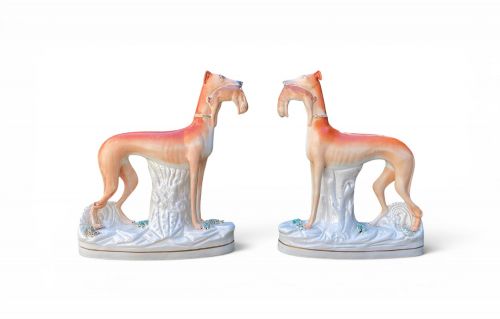


Victorian Staffordshire Greyhounds
Victorian Staffordshire greyhounds are earthenware pottery figures of dogs, often modelled with hares, that bring domestic charm and period character to a mantelpiece.
Victorian Staffordshire Greyhounds
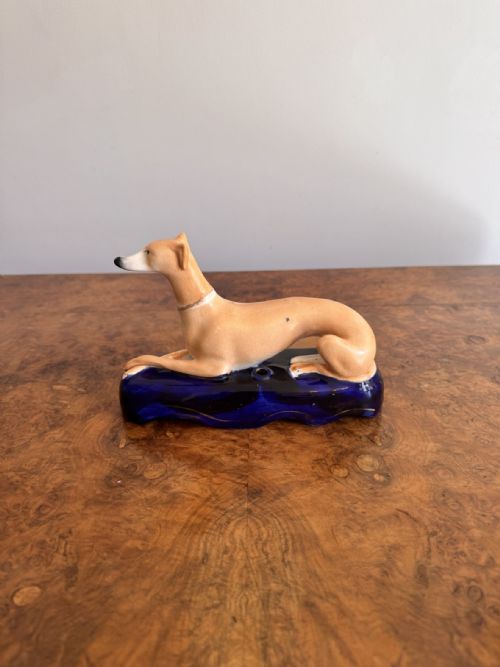
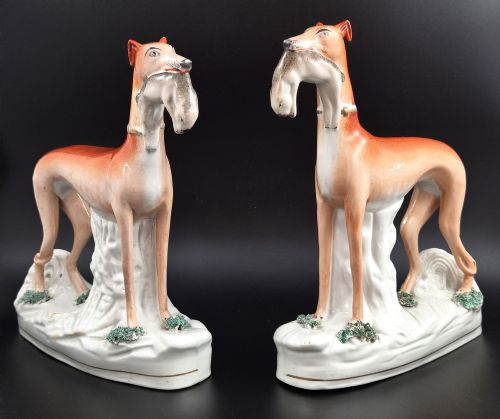
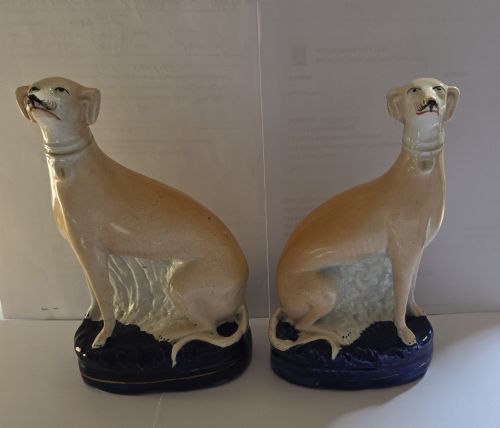
Victorian Staffordshire greyhounds are pottery figures that capture the sleek lines of the breed, frequently depicted as seated pairs or paired with hares. These decorative ornaments range from standard mantel figures to practical desk accessories like inkwells and quill holders.
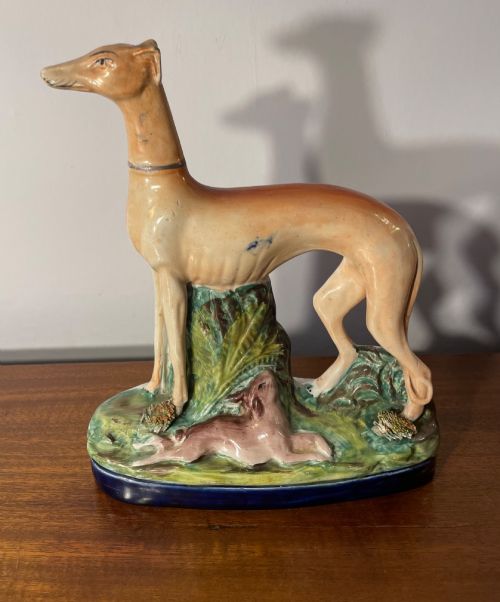
The pieces appearing here span the nineteenth century, including examples dated from eighteen fifty to eighteen eighty and earlier nineteenth century Staffordshire hounds. Buyers will encounter both single figures and matched pairs, some incorporating hares beneath the dogs or at their feet.
Moulded in pottery and earthenware, these decorative figures reflect the Victorian taste for animal sculpture and hunting subjects. They turn up in various sizes, from unusually large hounds down to standard mantelpiece pairs.
How they were made
Potters shaped these figures using earthenware clay, pressing it into moulds to create the hollow bodies of the greyhounds and hares. Once formed, the pieces received a lead glaze to seal the pottery body and provide a smooth surface.
Colour came from enamel paint applied over or under the glaze, sometimes accented with gold leaf highlights on collars or bases. Firing in kilns set the glaze and fixed the enamel colours onto the ceramic surface.
Some Victorian greyhounds doubled as desk stationery, holding ink and quills while keeping a stern ceramic watch over the paperwork.
What varies in quality
Painting execution separates standard production pieces from finer work, with careful brushwork on the facial expressions and enamel detailing. The preservation of original enamel paint and gold leaf also distinguishes well-kept examples.
Thomas Parr
The Victorian Staffordshire Greyhounds Glossary
- Earthenware
- Porous pottery fired at lower temperatures, commonly used for nineteenth century Staffordshire figures before being glazed. It forms the solid body beneath the decorative surface.
- Lead glaze
- A shiny coating applied to pottery to create a glossy finish and waterproof the earthenware body. It gives these figures their characteristic reflective sheen.
- Quill holder
- A desk accessory featuring a modelled dog or hound with a slot or rest for writing feathers. These functional pieces combined utility with decorative animal sculpture.
- Inkwell
- A small desk vessel designed to hold liquid ink, often incorporated into the base of a Staffordshire pottery greyhound figure. They served as desktop furnishings in the nineteenth century.
Victorian Staffordshire Greyhounds: Frequently Asked Questions
What are Victorian Staffordshire greyhounds?
They are ceramic figures of greyhounds and whippets produced in the Staffordshire potteries during the nineteenth century. Potters often modelled them as pairs, sometimes including hares or bases adapted for inkwells and quill holders.
Collectors prize them as quintessential examples of Victorian chimney piece ornaments. Their enduring appeal lies in their sculptural variety and direct link to nineteenth century domestic pottery traditions.
Were they used as desk accessories?
Yes, some examples incorporate functional elements such as inkwells or quill holders into their ceramic bases. These pieces served practical purposes on Victorian writing desks while maintaining the decorative dog motif.
Other variations functioned purely as decorative ornaments for mantelpieces and display shelves. The presence of inkwells or pen rests distinguishes these working desk pieces from standard figures.
How can I date these pottery figures?
Dating relies on stylistic clues, modelling characteristics, and comparative examples from the nineteenth century. Pieces range from early nineteenth century types up to items produced around eighteen eighty.
Markings are uncommon on these figures, so dating is usually determined by glaze characteristics, enamel colours, and the sharpness of the mould. Earlier pieces often display simpler modelling compared to later Victorian iterations.
Why do some greyhounds have hares?
The inclusion of hares reflects the association of greyhounds with coursing and hunting subjects popular in the nineteenth century. Hares appear beneath the dogs or beside them on the ceramic base, adding narrative detail to the composition.
This pairing was a standard motif for Staffordshire potters seeking to appeal to sporting interests of the period. Such figures provide a visual reference to rural pastimes of the Victorian era.