


Antique Ceramic Whippet Pair
These antique ceramic whippet pair pieces are charming Victorian pottery dogs that bring classic English canine character to any mantelpiece.
Antique Ceramic Whippet Pair
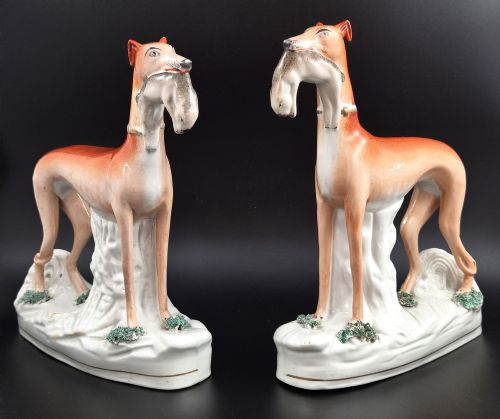
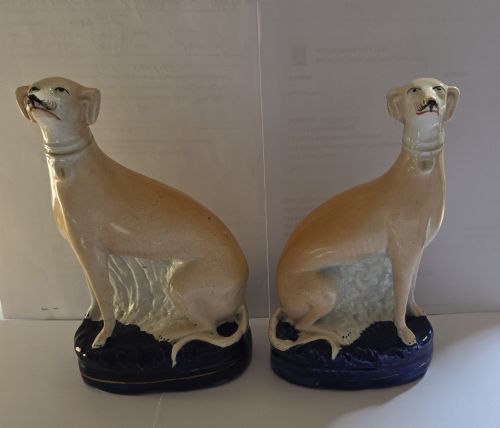
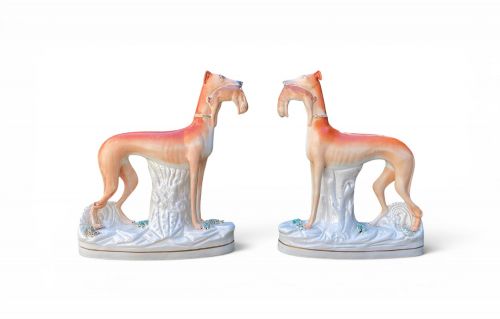
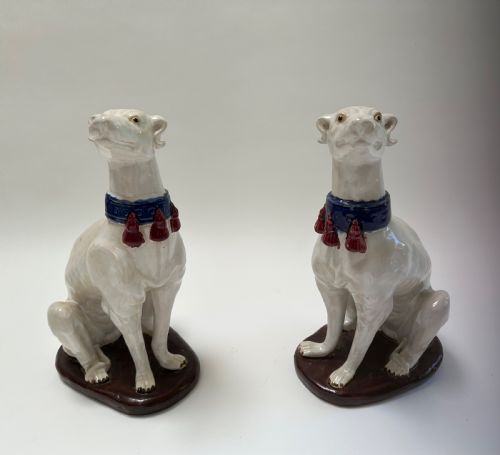
When you search for an antique ceramic whippet pair, you encounter decorative pottery figures and functional desk accessories from nineteenth-century England. These models depict greyhounds and whippets, often shown seated or paired with hares, reflecting the Victorian fascination with rural pursuits and hunting dogs.
Makers such as Thomas Parr produced these Staffordshire figures, utilising local earthenware and lead glazes to create charming representations of hounds. The subject matter ranges from simple seated hounds to more elaborate hunting groups featuring hares beneath the dogs.
How they were made
Many examples incorporate a lead glaze finish to impart a glossy sheen across the ceramic surface, sometimes highlighted with enamel paint or touches of gold leaf. Functional pieces like quill holders and inkwells were cast with dedicated apertures and wells integrated into the ceramic base during manufacture.
Victorian dog figures occasionally stare back with wonderfully doleful human expressions, having clearly spent too long listening to family arguments.
What varies in quality
The division between standard figures and superior examples rests upon the crispness of the moulding and the delicacy of the hand-painted enamel work. Finer pieces display carefully delineated facial expressions and distinct markings on the whippet coats rather than generalized brushwork.
Original matched pairs maintain a consistency in size, glaze tone, and modelling that elevates their appeal over assembled groups. The presence of secondary elements like hares and the survival of bright enamel paint or gold leaf further distinguish the upper tier of these nineteenth-century ceramics.
Thomas Parr
The Antique Ceramic Whippet Pair Glossary
- Staffordshire
- Pottery manufactured in the towns of the Staffordshire potteries in England, renowned for figurative earthenware dogs and animals during the nineteenth century.
- Lead glaze
- A glossy coating containing lead oxide applied to earthenware before firing, giving these Victorian figures their characteristic smooth and reflective surface.
- Quill holder
- A desk accessory featuring small apertures designed to hold writing quills, often modelled as a pair of recumbent whippets or greyhounds.
Antique Ceramic Whippet Pair: Frequently Asked Questions
What are antique whippet pairs?
These pieces are nineteenth-century ceramic figures depicting greyhounds or whippets, usually modelled as seated matched pairs from the Victorian era.
Potters in England created them primarily for decorative display on mantelpieces or as functional desk furnishings.
How were these dog figures used?
Victorian households displayed these whippet pairs as ornamental mantel ornaments to signal an appreciation for rural sports and hound breeding.
Certain variations served practical purposes on writing desks, incorporating built-in inkwells or hollow channels to hold feather quills.
How do I date Staffordshire whippets?
Dating relies upon stylistic markers, modelling techniques, and the type of glaze used across the earthenware body during the Victorian period.
Pieces originating from around eighteen fifty typically display simpler earthenware forms, while later nineteenth-century examples incorporate more elaborate enamel painting.
Are these figures always found in pairs?
Makers frequently produced these whippet and greyhound models as symmetrical pairs to flank clock sets or centrepieces on nineteenth-century mantels.
Collectors prize surviving matched pairs for their balanced display quality and matching glaze characteristics.