


Staffordshire Pottery Dog Pair
A staffordshire pottery dog pair brings instant character to a mantelpiece, offering the enduring charm of nineteenth-century domestic ceramics.
Staffordshire Pottery Dog Pair
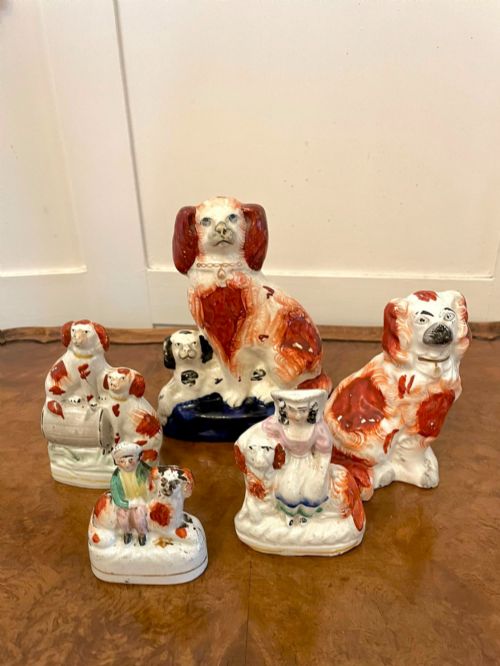
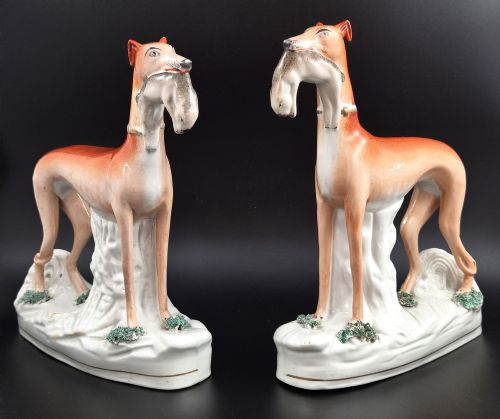
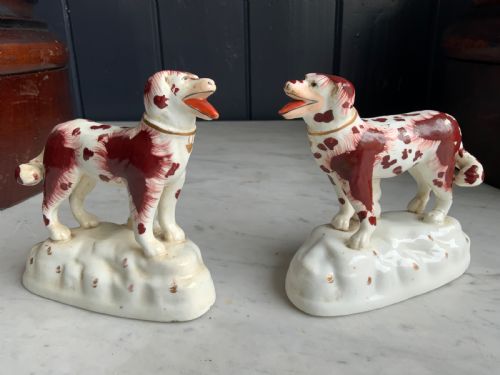
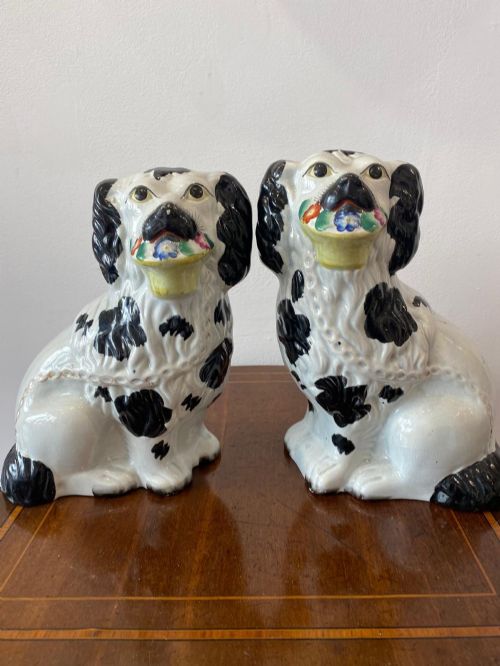
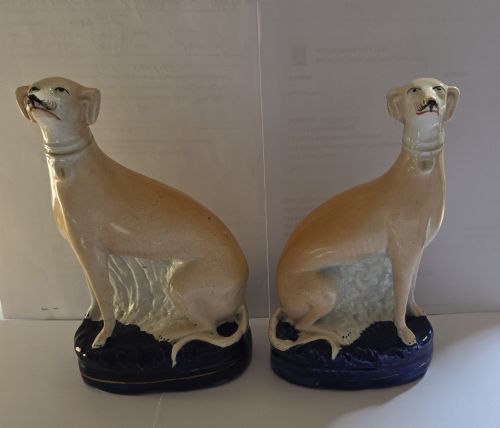
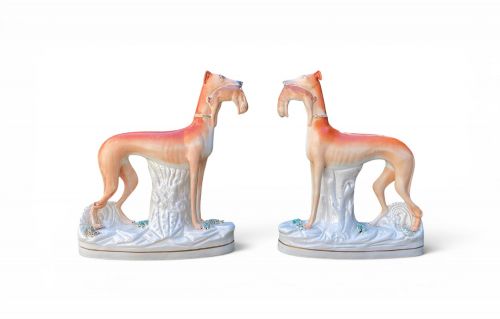
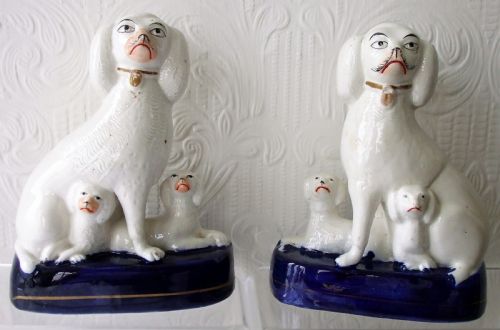
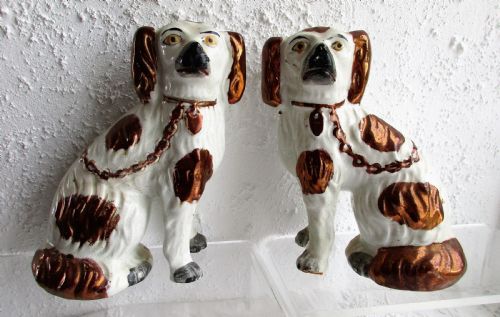
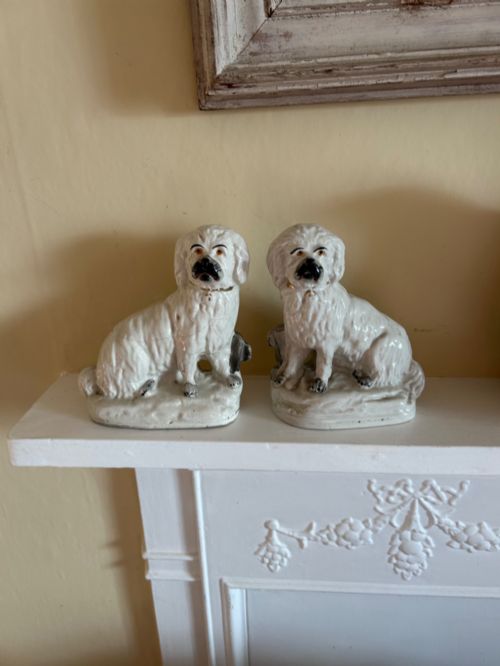
A staffordshire pottery dog pair typically comprises seated spaniels, poodles, greyhounds, or terriers manufactured across the nineteenth century, most frequently appearing in Victorian styles. These figures were designed as mantelpiece ornaments, often intended to face one another from opposite ends of a fireplace.
The selections on this page range from standard comforter spaniels to rarer breeds such as pugs, dalmatians, and whippets, occasionally incorporating functional forms like inkwells or quill holders. Pieces date from the Regency era through to the late nineteenth century, reflecting diverse regional potteries including Scottish works alongside traditional English kilns.
How They Were Made
These figures are constructed from earthenware clay, shaped using press-moulding techniques and finished with lead glazes that provide a smooth, reflective surface. Enamel colours and gold leaf highlights or gilt collars were applied over the glaze and subjected to a secondary firing.
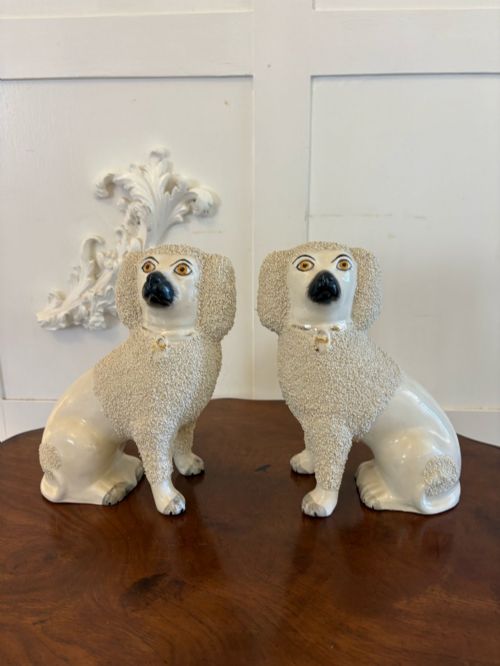
Specialised variations involved applying crushed ceramic or sand fragments, known as confetti or gravelware, onto the clay body to replicate the textured coats of poodles. Details like separate front legs and glass eyes further distinguish particular moulded batches from standard hollow castings.
Some poodles wear distinct gold chains and padlocks, offering a glimpse into Victorian pet accessorising.
What Varies in Quality
The presence of specialised physical traits, such as separate legs, textured confetti coats, or functional accessories like inkwells, elevates a pair beyond standard decorative figurines. Scale also plays a role, with larger figures and well-matched pairs demanding greater technical skill during the firing process.
Thomas Parr
The Staffordshire Pottery Dog Pair Glossary
- Comforter spaniels
- A specific type of Staffordshire pottery dog, usually modelled as a seated spaniel, traditionally placed on mantelpieces. These figures gained immense popularity during the Victorian period.
- Earthenware
- A porous pottery body fired at lower temperatures, commonly used for nineteenth-century figures before being glazed and painted. It forms the structural base for the majority of these ceramic animals.
- Gravelware
- A technique where crushed ceramic or sand is applied to the wet clay body to imitate textured animal hair. This method is frequently found on Staffordshire poodles.
- Lead glaze
- A glossy coating containing lead oxide applied to pottery before firing to waterproof the vessel and impart shine. It creates the characteristic glossy finish seen on Victorian figures.
- Gilt
- A thin layer of gold leaf or metallic paint applied to ceramic details such as collars, chains, and lockets. It adds ornamental contrast against white or coloured glazes.
Staffordshire Pottery Dog Pair: Frequently Asked Questions
What are staffordshire pottery dog pairs?
These ceramic figures represent various canine breeds produced by English and Scottish potteries during the nineteenth century. They were created primarily as decorative ornaments for domestic hearths.
Most pairs consist of mirror-image dogs intended to sit symmetrically on either end of a mantelpiece. Common breeds include spaniels, greyhounds, poodles, and terriers.
How do you date a staffordshire dog pair?
Dating relies on stylistic clues, modelling characteristics, and finishing techniques observed across the Victorian era. Earlier Regency examples often display different glazing and modelling compared to late nineteenth-century pieces.
Base construction, such as the presence of vent holes or slip-cast seams, also helps establish the manufacturing period. Examining the application of enamel colours and gilding provides further chronological context.
Were these dogs meant to be functional?
While the majority of figures served a purely decorative purpose on Victorian mantelpieces, certain forms incorporated practical uses. Collectors occasionally encounter examples designed as inkwells or quill holders.
Pug and greyhound variants sometimes featured slots or receptacles for desk accessories. These functional pieces combine domestic display with utilitarian utility from the period.
How should I display them at home?
Traditionally positioned facing each other on a fireplace mantel, these pairs suit placement on prominent shelves, sideboards, or console tables. Their symmetrical design makes them effective centrepieces in traditional room layouts.
Placing them away from direct sunlight helps preserve the hand-painted enamels and gilt highlights. Ensuring stable surfaces protects these historic ceramic objects from accidental knocks.