



Terracotta Ceramic Dog Figurines
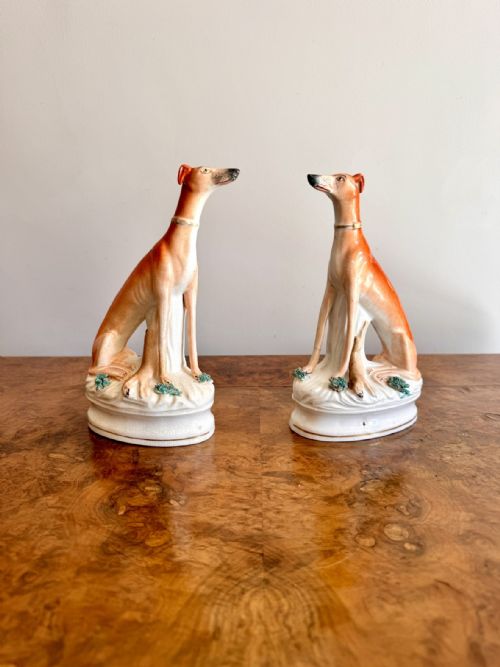
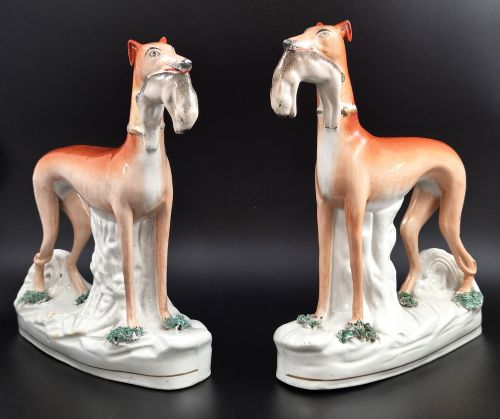
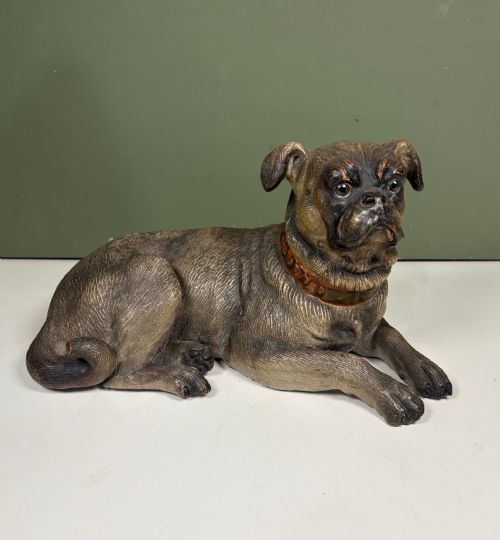
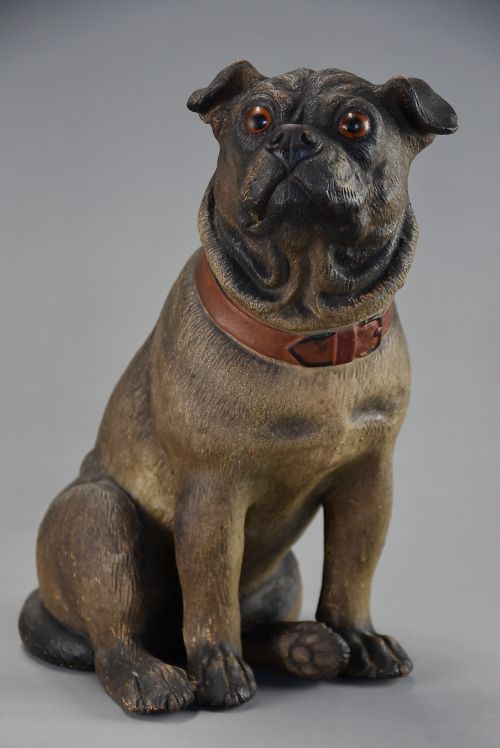
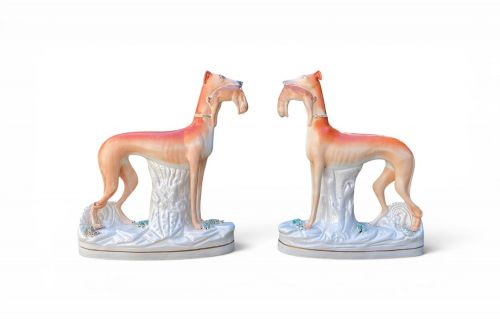
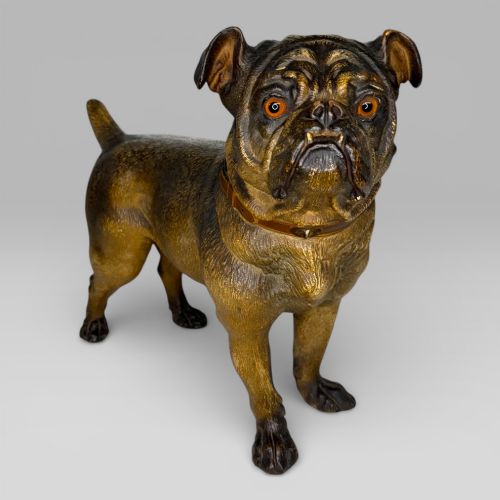
These terracotta ceramic dog figurines bring nineteenth-century character into a room through earthenware models of pugs, spaniels, greyhounds, and hounds.
Terracotta Ceramic Dog Figurines
Buyers seeking terracotta ceramic dog figurines encounter nineteenth-century decorative sculptures spanning Victorian Staffordshire pottery and continental European workshops. The selection on this page centres on earthenware hounds, pugs, spaniels, and larger life-size or monumental models.
The dominant forms are pairs of greyhounds and spaniels alongside single seated pugs and hunting dogs with hares. These figures range from modest Victorian chimney ornaments to substantial Austrian terracotta sculptures.
Origins stretch from English country potteries to French animalier studios and Austrian manufactories. Most examples date from the mid-nineteenth century through to the early twentieth century.
Materials and Making
These pieces rely primarily on terracotta and earthenware bodies, shaped as figurines and sculptures. Makers frequently applied glazes, enamels, and lead glaze to colour and protect the clay surfaces.
Some decorative details incorporate gold leaf and glass eyes to add realism to the modelled animals. Larger continental sculptures utilise hollow-cast terracotta production techniques to manage the weight of the clay.
Terracotta Ceramic Dog Figurines Retail Price Guide 2026
Typical asking prices for terracotta ceramic dog figurines among the pieces listed under this phrase on Sellingantiques today, from the lower quarter to the upper quarter. They describe what is for sale here now, not the wider market.
Several pugs on offer manage to look both deeply dignified and profoundly melancholic at the exact same time.
Assessing Quality
Quality rests upon the crispness of the modelling and the fidelity of the animal anatomy, separating lively sculptures from stiff commercial output. Finer pieces demonstrate careful hand-finishing in the facial expressions and surface textures of the fur.
The application of glaze and enamel dictates visual success, where subtle shading elevates a simple earthenware shape into a convincing portrait of a breed. Scale also plays a role, as larger life-size sculptures demand greater technical skill in firing without distortion.
Thomas Parr·Bernard Bloch
The Terracotta Ceramic Dog Figurines Glossary
- Terracotta
- A porous, unglazed or glazed fired earthenware clay of a brownish-red colour. It serves as the primary medium for many continental animal sculptures.
- Earthenware
- A type of pottery fired at a relatively low temperature, remaining porous until glazed. It forms the body of most nineteenth-century Staffordshire dog figures.
- Animalier
- A nineteenth-century artistic style and movement dedicated to the realistic depiction of animals. French sculptors frequently worked in this manner.
- Lead glaze
- A shiny, transparent coating applied to pottery before a final firing to seal the porous clay. It gives certain nineteenth-century figures a glossy finish.
Terracotta Ceramic Dog Figurines: Frequently Asked Questions
What are terracotta ceramic dog figurines?
These pieces are nineteenth-century sculptural figures made from fired clay, depicting various dog breeds like pugs, spaniels, and greyhounds.
They reflect popular domestic and hunting subjects from the Victorian era up to the early twentieth century.
How were these dog figures used?
Most examples served as decorative chimney ornaments, mantelpiece displays, or large floor sculptures in nineteenth-century homes.
Pairs of greyhounds or spaniels were typically arranged symmetrically to flank a fireplace or sideboard.
How do I care for antique terracotta?
Antique terracotta and earthenware require gentle dusting with a dry cloth to protect the porous clay and any applied glaze or enamel.
Keeping them away from moisture and direct handling preserves the delicate painted surfaces.
How do I tell English and continental pieces apart?
English pieces often follow traditional Staffordshire pottery styles with glazed earthenware surfaces, commonly featuring greyhounds or spaniels in pairs.
Continental works from Austria and France tend to use unglazed or painted terracotta in more naturalistic, life-size animalier sculptures.