
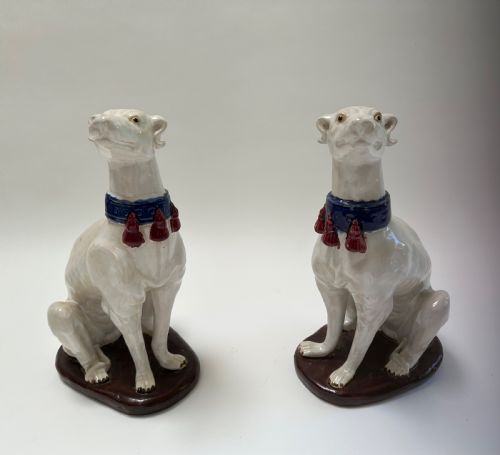


Ceramic Whippet Figures
These ceramic whippet figures capture the slender grace of the breed through decades of Staffordshire and continental modelling, offering a charming focal point for any mantle.
Ceramic Whippet Figures
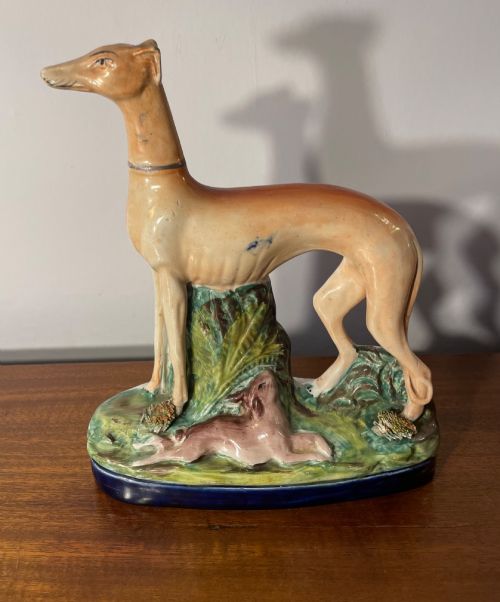
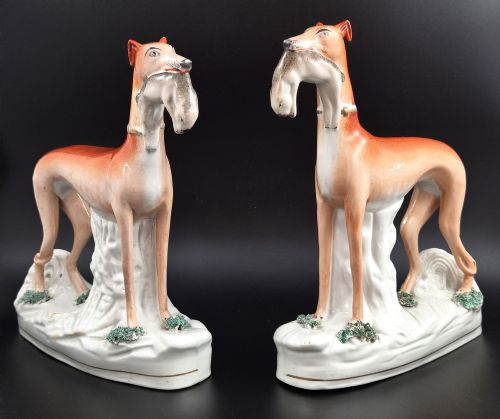
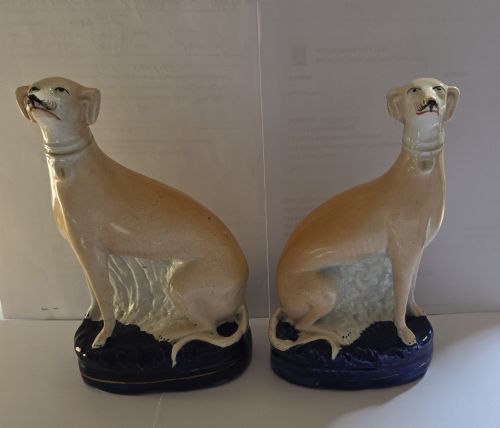
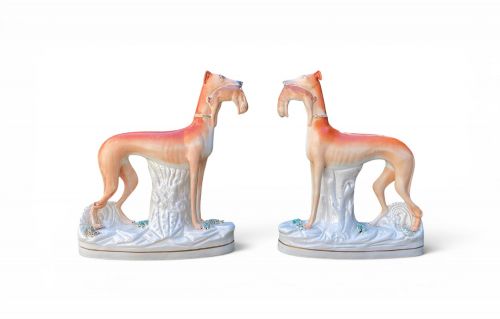
When you search for ceramic whippet figures, you encounter a selection spanning the nineteenth and twentieth centuries, predominantly featuring Victorian Staffordshire pottery traditions alongside Italian majolica and continental porcelain. The pieces range from standard mantel ornaments to functional desk accessories like inkwells and quill holders, often modelled as seated pairs accompanied by hares.
You are most likely to meet Victorian Staffordshire pairs on this page, reflecting the enduring popularity of greyhounds and whippets in nineteenth-century domestic interiors. These domestic figures include both rustic country pottery interpretations and more refined porcelain examples produced by known makers such as Thomas Parr.
Materials and construction
Potters relied primarily on earthenware and porcelain body pastes, shaping the hounds through press moulding before applying lead glazes and enamel paint to render markings and collars. Many Victorian pieces incorporated detailed gilding or gold leaf highlights on the collars and bases to catch the candlelight.
Continental workshops utilised majolica techniques with rich coloured glazes fired onto earthenware bodies, creating glossy surfaces that differed from the drier finish of earlier Staffordshire pottery. Functional forms like inkwells and quill holders integrated hollow sections into the base design to hold writing equipment securely.
Some Victorian whippets wear surprisingly polite human expressions while contemplating an unlucky ceramic hare.
Assessing quality and modelling
Glazing technique also dictates the overall merit of a piece, with controlled enamel painting and smooth lead glazes elevating the appearance. Pieces that retain crisp gold leaf detailing and undamaged enamel work represent the better end of the survivorship spectrum.
Thomas Parr·Rosenthal
The Ceramic Whippet Figures Glossary
- Staffordshire pottery
- Earthenware produced in the potteries of Staffordshire, England, encompassing both utilitarian wares and decorative animal figures. This regional output forms the backbone of nineteenth-century domestic ceramic collections.
- Lead glaze
- A glossy coating containing lead oxide applied to earthenware before firing to seal the porous clay body. It imparts a characteristic reflective sheen to early ceramic surfaces.
- Majolica
- Opaque tin-glazed earthenware decorated with brightly coloured metallic oxide pigments. The technique produces vibrant hues particularly favoured in Italian and revivalist ceramics.
- Quill holder
- A desk accessory featuring a modelled figure with built-in channels or loops designed to rest writing quills. These dual-purpose items combined desk utility with animal ornamentation.
Ceramic Whippet Figures: Frequently Asked Questions
How do I date ceramic whippet figures?
Dating relies on observing the glazing style, base construction, and painting techniques, with nineteenth-century Staffordshire pieces showing drier earthenware bodies compared to twentieth-century porcelain.
Secondary clues include the presence of functional elements like inkwells or quill holders, which were particularly popular during the Victorian era.
Were these figures meant for display only?
Many nineteenth-century ceramic whippets served purely as decorative mantel ornaments arranged in symmetrical pairs.
However, a significant number functioned as practical desk accessories, incorporating inkwells and quill holders for use in studies and libraries.
Why do some whippets have hares?
The inclusion of hares reflects the hunting heritage associated with greyhounds and whippets during the Victorian period. Potters frequently paired the hounds with captured hares to emphasise the sporting theme.
These compositions were intended to celebrate rural pursuits within the home.
How do I clean antique ceramic dogs?
Maintenance requires only gentle dusting with a soft, dry brush to prevent the accumulation of dirt in the crevices of the glaze. Avoid using water or chemical cleaners, which can damage delicate enamel paint and gold leaf highlights.