

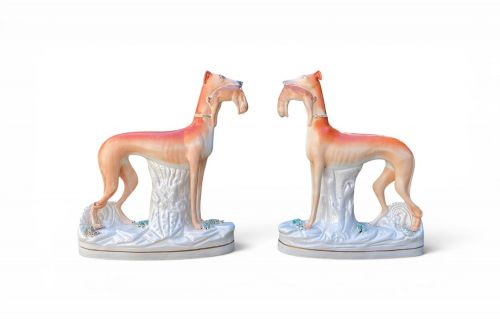


Antique Staffordshire Greyhound
An antique staffordshire greyhound brings the charm of nineteenth-century domestic pottery into your home through modelled earthenware figures and functional desk accessories.
Antique Staffordshire Greyhound
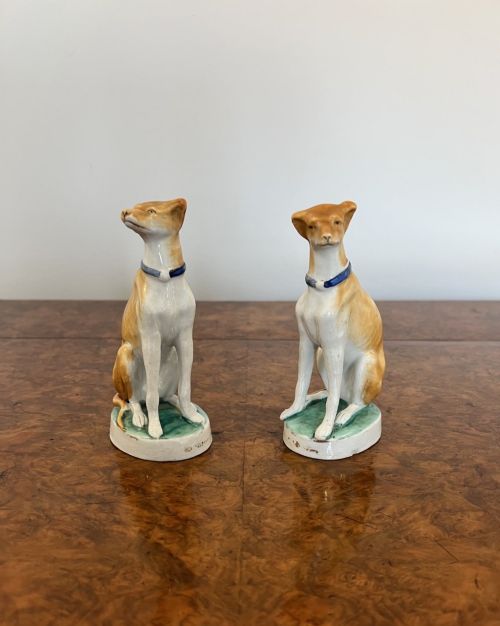
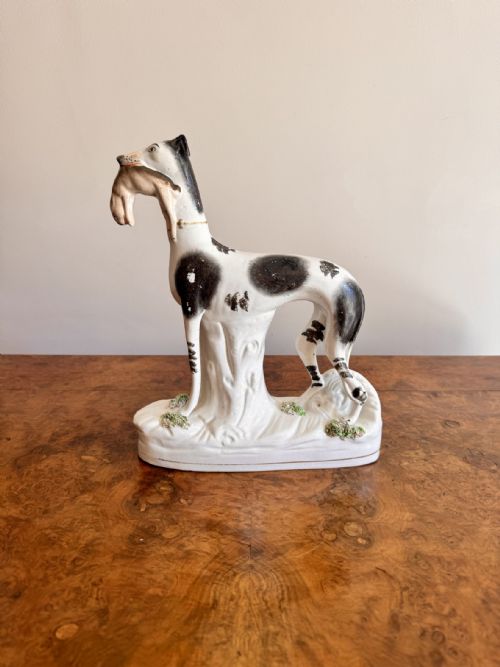
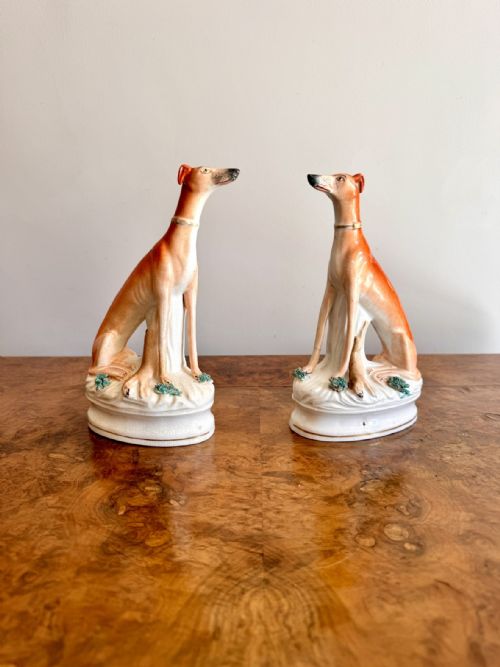
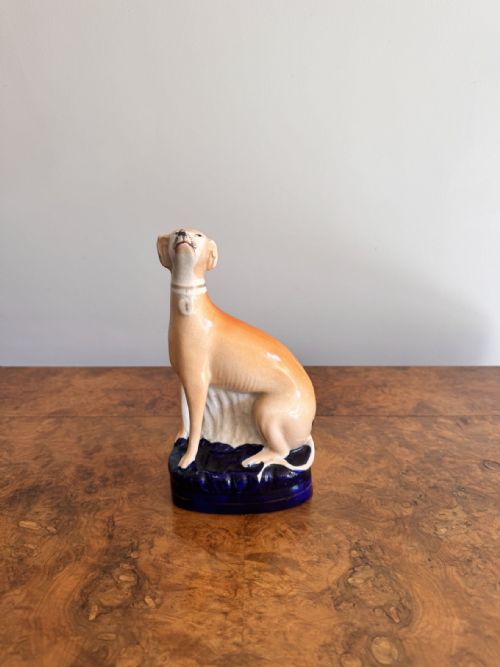
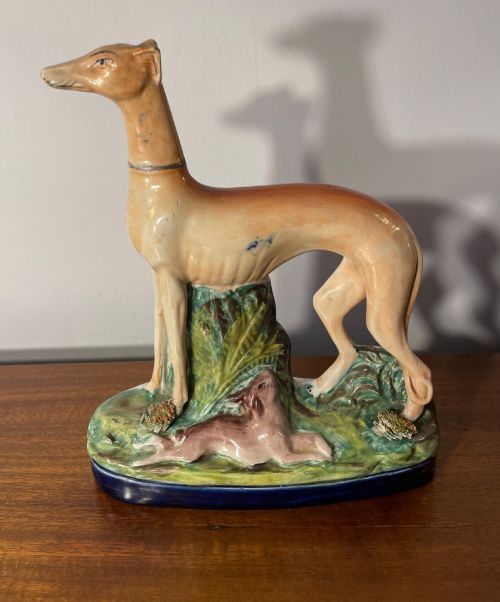
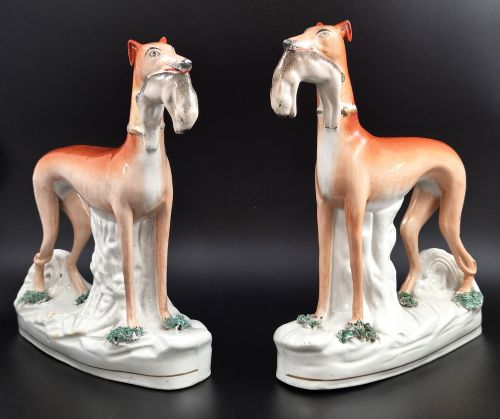
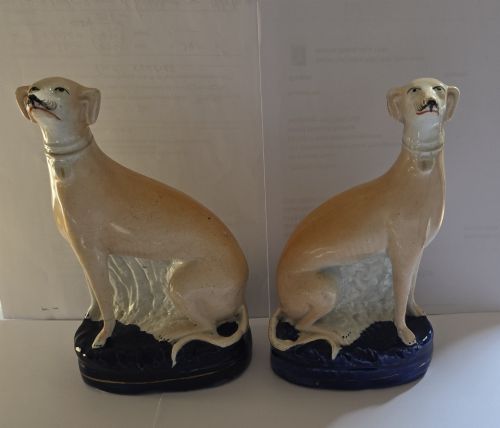
These figures capture the sleek lines of hounds and whippets, frequently modelled as seated pairs accompanied by hares. The forms range from simple decorative shelf ornaments to practical desk accessories such as inkwells and quill holders.
Most examples hail from the Victorian period, spanning the middle decades of the nineteenth century. You will encounter single figures alongside matched pairs, representing the bread-and-butter output of Staffordshire potteries during this era.
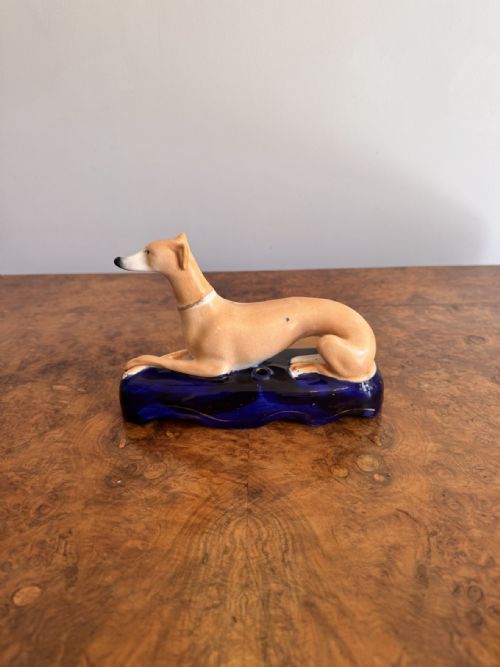
Makers often incorporated functional elements directly into the sculptured base, turning a simple ceramic dog into a desk ornament or pen holder. The scale varies from standard mantelpiece ornaments to unusually large display pieces.
Materials and production methods
Potters shaped these items using local earthenware, formed in moulds and finished by hand before firing. The porous clay body provided a stable base for the subsequent decorative layers.
Antique Staffordshire Greyhound Retail Price Guide 2026
Typical asking prices for staffordshire greyhound among the pieces listed under this phrase on Sellingantiques today, from the lower quarter to the upper quarter. They describe what is for sale here now, not the wider market.
Listings for this phrase feature earthenware materials decorated with lead glaze, enamel paint, and gold leaf across Victorian periods.
Judging the quality of ceramic greyhounds
The application of enamel paint and glaze dictates visual appeal, with better pieces showing careful brushwork rather than hasty, overlapping colours. Consistency in the firing process and the preservation of original gold leaf also elevate certain examples.
Thomas Parr
The Antique Staffordshire Greyhound Glossary
- Earthenware
- A porous pottery body fired at lower temperatures than stoneware or porcelain. It requires a glaze to become impermeable to liquids.
- Lead glaze
- A glossy coating containing lead oxide, commonly used on nineteenth-century pottery to give a smooth, shiny finish. This glaze enhances the underlying colours of the clay and paint.
- Enamel paint
- Opaque vitreous colours applied over the fired glaze and fixed with a second, gentler firing. It allows for bright surface decoration on ceramic figures.
- Quill holder
- A desk accessory designed with small apertures to hold writing quills or pens. These often take the form of seated dogs on modelled bases.
Antique Staffordshire Greyhound: Frequently Asked Questions
Were all antique staffordshire greyhound figures made in pairs?
Many survive as matched pairs intended for mantelpiece display, though single figures and functional desk accessories also appear frequently in the listings.
Potters produced both single models and pairs to suit different domestic spaces and budgets during the nineteenth century.
How do I distinguish an inkwell from a standard figurine?
Inkwells feature a small ceramic or metal lidded insert embedded in the base or beside the hound for holding ink.
Quill holders share a similar desk-accessory format but include small cylindrical channels specifically shaped for pens rather than ink reservoirs.
What periods do these ceramic dogs come from?
The recorded pieces date primarily from the nineteenth century, with Victorian examples appearing most frequently.
Production spans from early figures around eighteen hundred up to later Victorian pieces produced toward the end of the century.
What materials make up these pottery figures?
Potters utilised earthenware as the primary ceramic body, finished with a glossy lead glaze to seal the clay.
Enamel paint and gold leaf were then applied over the glaze to add colour and detail to the animals and their bases.