



Victorian Greyhound Statue
A victorian greyhound statue brings the alertness and elegance of the breed into nineteenth-century interiors through bronze and Staffordshire pottery.
Victorian Greyhound Statue
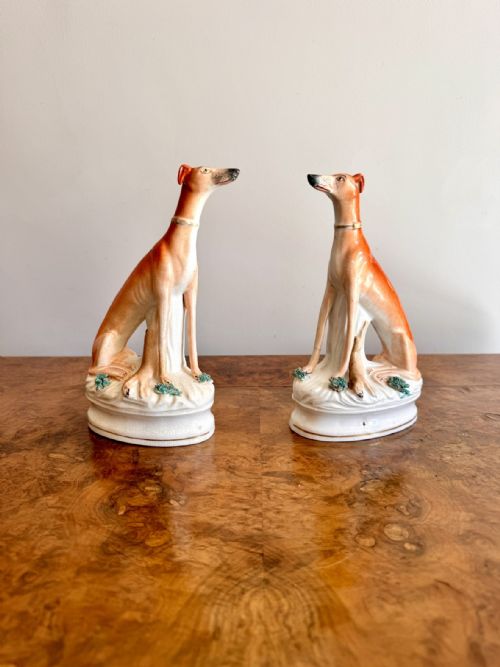
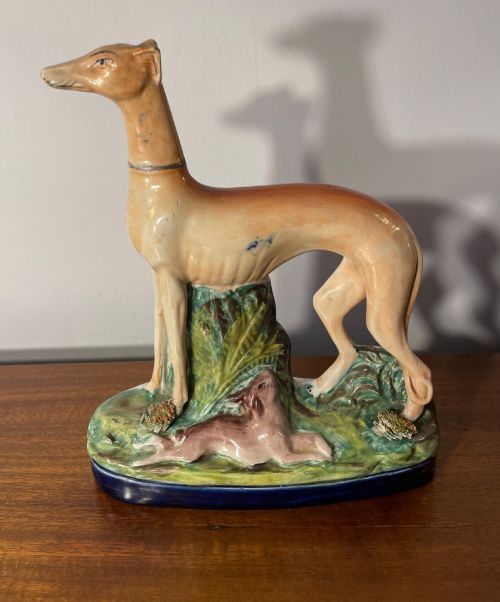
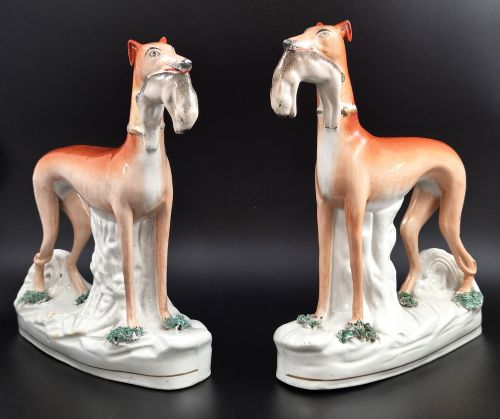
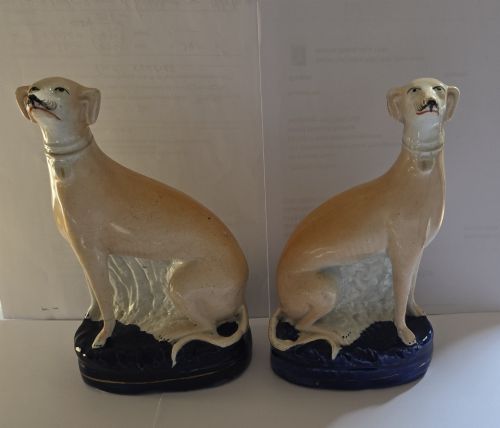
A victorian greyhound statue captures the slender grace of sighthounds through nineteenth-century Staffordshire ceramic figures and French animalier bronzes. Buyers most commonly encounter ceramic pairs from Staffordshire potteries, often modelled as seated hounds accompanied by hares or serving as quill holders. These decorative sculptures reflect the era's fascination with domestic animals and sporting subjects.
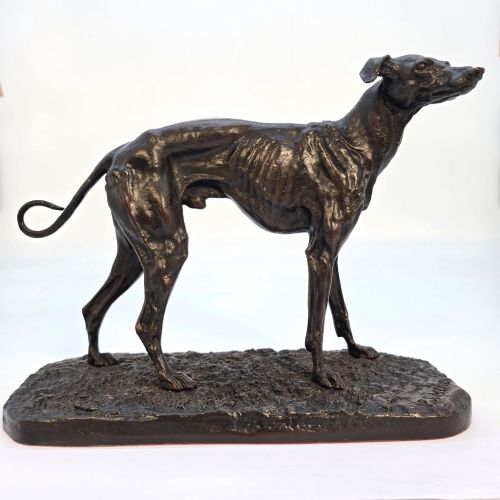
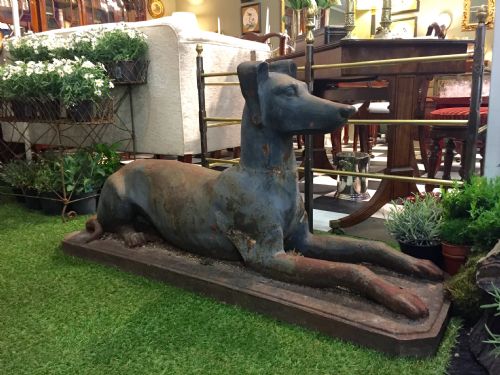
Beyond pottery figures, the selection includes heavy cast metal representations created by prominent animalier sculptors working in bronze. These pieces range from small desk paperweights to substantial sculptural studies depicting hounds in seated or resting poses. Each version demonstrates the Victorian attention to anatomical accuracy and the textures of the coat.
How they were made
Staffordshire pieces employ earthenware shaped in moulds, finished with lead glazes and hand-applied enamel paint to render the markings and collars of the dogs. Potters fired these figures in kilns before applying surface decoration, sometimes incorporating gold leaf highlights on collars or bases.
Bronze sculptures utilise the lost-wax casting method, allowing artisans to capture fine details in the muscle structure and fur. Founders then finished the metal with patination ranging from warm brown tones to darker surfaces, occasionally mounting the bronze upon marble bases.
Victorian Greyhound Statue Retail Price Guide 2026
Typical asking prices for victorian greyhound statue among the pieces listed under this phrase on Sellingantiques today, from the lower quarter to the upper quarter. They describe what is for sale here now, not the wider market.
Listings feature materials spanning earthenware, bronze, lead glaze, enamel paint, and gold leaf across the nineteenth century.
What varies in quality
The distinction between tiers rests upon the crispness of modelling and the fidelity of the casting or ceramic mould. Superior bronzes display sharp muscular definition and subtle patination handled by known animalier sculptors, whereas lesser metalwork appears softer in detail.
P. J. Mène·Alfred Dubucand·Joseph Francois Victor Chemin
The Victorian Greyhound Statue Glossary
- Animalier
- A nineteenth-century artistic movement focusing on the realistic depiction of animals, particularly predators, horses, and hounds. Sculptors in this tradition studied live subjects extensively in menageries.
- Staffordshire
- A broad term for pottery produced in the Staffordshire region of England, famous for utilitarian and decorative earthenware figures during the Victorian era. These mantelpiece ornaments were widely exported.
- Lead Glaze
- A shiny glass-like coating applied to pottery before firing, providing a smooth waterproof surface. It gives early earthenware its characteristic reflective sheen.
- Patina
- The surface coloration and texture developed on bronze through age or chemical treatment by the foundry. A rich patina adds visual depth to animalier sculptures.
Victorian Greyhound Statue: Frequently Asked Questions
Were these statues meant as toys?
These figures served strictly as ornamental items for display on mantelpieces, sideboards, and desks rather than as playthings. Many double as functional objects such as quill holders or paperweights.
Pottery pairs brought rural sporting motifs into middle-class parlours, while bronze studies appealed to collectors of fine animalier art.
How do I spot a matched pair?
Matched pairs of Staffordshire greyhounds face one another symmetrically, mirroring pose, size, and decorative markings. They were cast and painted as companion pieces for opposite ends of a mantelpiece.
Single figures often lost their counterpart over time, making intact pairs considerably more desirable to collectors.
What is an animalier bronze?
An animalier bronze is a nineteenth-century sculpture focused on realistic animal anatomy and behaviour. French workshops produced many of the finest examples, capturing dogs in natural, unposed moments.
These works often bear the signature of the sculptor cast directly into the bronze base.
Why do some have hares?
The inclusion of hares reflects the Victorian association of greyhounds with coursing and rural field sports. Ceramic modellers frequently placed a captured hare at the feet of the seated hound.
This compositional element added narrative interest and visual balance to the pottery figures.