


Antique Ceramic Pen Stand
An antique ceramic pen stand is a desk accessory that keeps writing implements close at hand while adding period character to a workspace.
Antique Ceramic Pen Stand
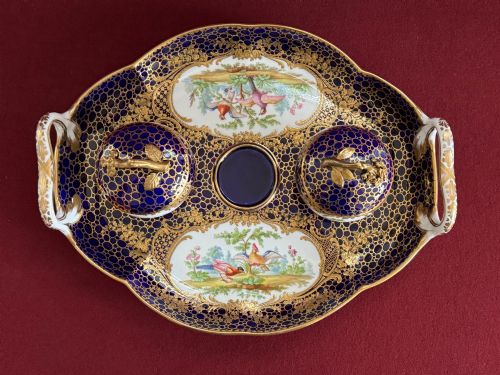
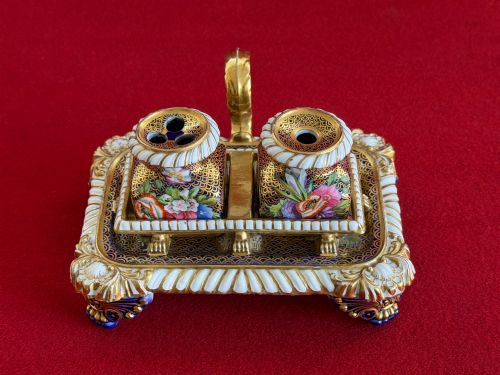
When you search for an antique ceramic pen stand, you encounter desk accessories created during the Regency and Victorian periods, often taking the form of inkstands, inkwells, and quill holders. These pieces range from refined porcelain productions to robust earthenware figures modelled as animals.
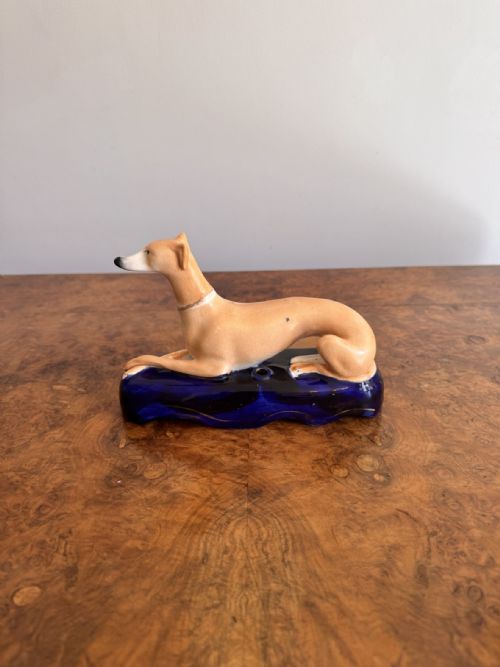
The versions most frequently met on this page include Staffordshire pottery figures incorporating quill holders alongside inkwells, usually depicting greyhounds or whippets. Alongside these figural pieces, collectors find porcelain and earthenware desk sets decorated in floral patterns or blue and white Dutch Delft designs.
Materials and construction
Makers shaped these desk pieces from various ceramic bodies including earthenware, bone china, and tin-glazed faience, applying hand-painted or transferred enamels and sometimes detailing the surfaces with gold leaf. Porcelain items often received glossy glazes and stylistic influences from continental factories.
Listings feature items from the Regency and Victorian periods, spanning earthenware, bone china, and tin-glazed faience.
Judging quality in ceramic desk wares
Quality rests in the crispness of the modelling and the precision of the hand-painting, particularly on figural Staffordshire pieces where painted eyes and facial expressions define the character of the animal. Superior examples display careful detailing without blurring in the blue and white Delft glazes or enamel colours.
The sophistication of the porcelain body and the refinement of gilding separate standard production pieces from high-status works originating from prominent makers like Minton or Spode.
Spode·Minton
The Antique Ceramic Pen Stand Glossary
- Quill Holder
- A ceramic support designed specifically to hold writing feathers or quills beside an inkwell. These often form part of a larger desk stand.
- Tin-Glazed Earthenware
- Pottery covered with an opaque white glaze containing tin oxide, providing a smooth surface for painted decoration. This technique underpins Dutch Delft pieces.
- Bone China
- A type of soft-paste porcelain containing bone ash, known for its bright white body and translucency. It allowed makers to produce thinner, more refined inkstands.
- Faience
- European tin-glazed earthenware, frequently decorated in blue and white to imitate imported porcelain. It appears in late nineteenth-century Dutch desk wares.
Antique Ceramic Pen Stand: Frequently Asked Questions
What is an antique ceramic pen stand?
An antique ceramic pen stand is a desk accessory made from materials like earthenware or porcelain during periods such as the Regency and Victorian eras. These items were designed to hold writing instruments and ink.
They appear as simple inkstands or as decorative figural pieces featuring animals like greyhounds that incorporate quill holders.
How were ceramic inkstands used?
These desk accessories sat on writing tables to provide a stable well for ink and a designated place to rest quill pens. They kept writing materials organised and protected desk surfaces.
Many pieces combined multiple functions, holding both ink and pens within a single ceramic tray or figural base.
How do I identify Victorian Staffordshire desk pieces?
Victorian Staffordshire pieces often take the form of animals, particularly greyhounds or whippets, modelled in earthenware with painted details and a clear glaze. They frequently incorporate circular holders for quills beside the ink receptacle.
Studying the modelling style and the style of the hand-painting helps distinguish these nineteenth-century ceramics from later reproductions.
How should I care for an antique pen stand?
Keep ceramic desk stands away from direct sunlight and dusting them gently with a dry cloth to protect the glaze and enamel decorations. Avoid using chemical cleaners or immersing them in water.
If the piece contains metal ink inserts, remove them carefully during cleaning to prevent moisture damage to the surrounding ceramic body.