


White Porcelain Dog Ornaments
White porcelain dog ornaments bring character to a mantelpiece, offering charming displays of Victorian and later ceramic sculpture.
White Porcelain Dog Ornaments
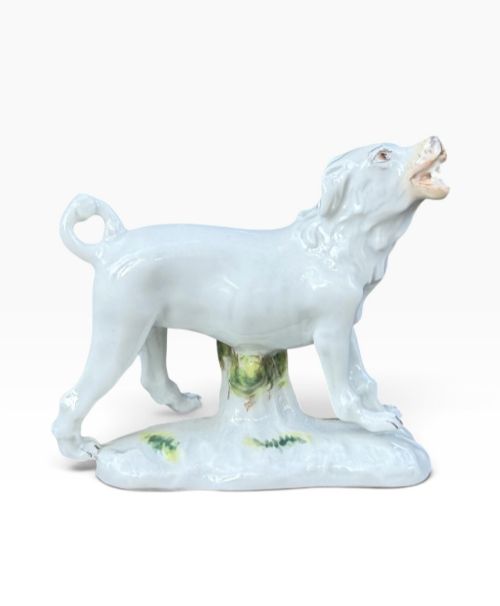
When you search for white porcelain dog ornaments, you encounter decorative figurines, sculptures and lamp bases shaped as spaniels, poodles, greyhounds and spitz dogs. These pieces originate predominantly from nineteenth-century Victorian workshops, alongside continental factories and early twentieth-century makers.
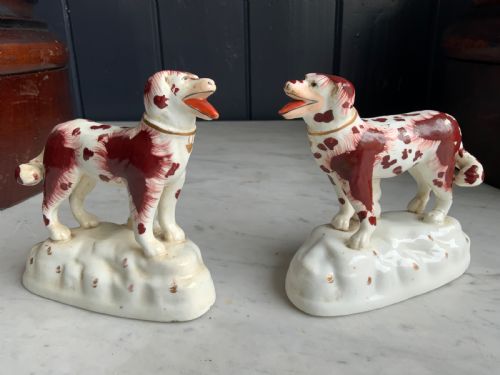
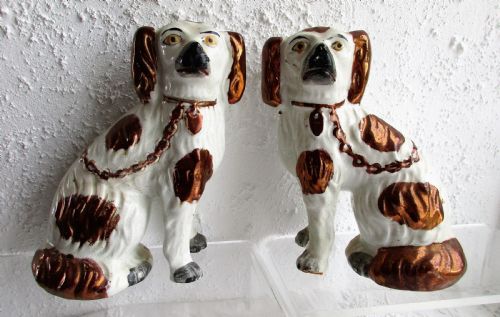
The most common versions met on this page are pairs of Staffordshire spaniels and poodles, often finished with gilt or enamel details. Collectors also find individual figures, miniature groups, and functional items such as table lamps.
Representing breeds from spaniels to hunting dogs, these decorative objects serve primarily as mantel ornaments. They reflect the domestic tastes of the Victorian era and subsequent decades.
How they were made
Potters shaped these figures using porcelain, earthenware and ceramic bodies, sometimes employing parian ware for unglazed biscuit sculptures. Moulds formed the basic shape of the dogs, which workshops then refined by hand.
Glazing sealed the ceramic body, while artisans applied enamel paints and gilt highlights over or under the glaze. Encrusting and copper lustre details appeared on specific regional and period variants.
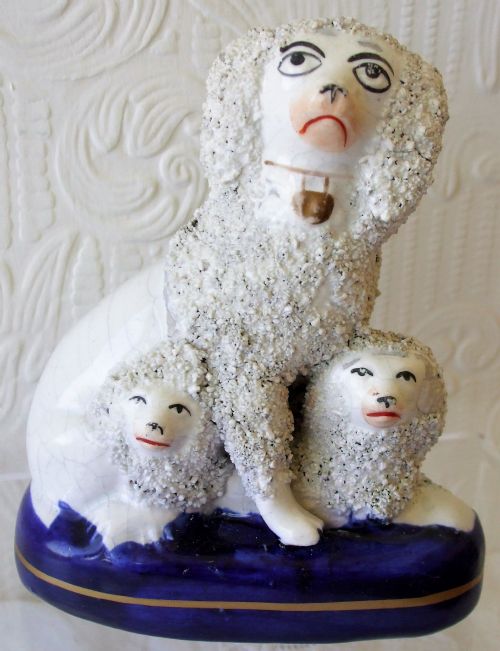
Some poodles arrive accompanied by tiny sculpted pups clinging to their sides, adding an extra layer of charm.
What varies in quality
The application of gilt and enamel colours influences the visual appeal of a piece, with careful detailing marking superior craftsmanship. Complete pairs and matching sets command greater interest than mismatched or solitary figures.
Thomas Parr·Royal Dolton·Beswick
The White Porcelain Dog Ornaments Glossary
- Bisque
- Unglazed white ceramic body fired once before decoration. Parian sculpture often utilises this matte material.
- Parian
- A fine white porcelain resembling marble, developed during the nineteenth century for sculptural figures. It captures intricate detail without needing a glossy glaze.
- Staffordshire
- Pottery originating from the Stoke-on-Trent region in England. Makers there produced numerous figures of spaniels, poodles and greyhounds.
- Enamel
- Opaque glass-like paint fused to pottery during firing. Artisans used it to colour the eyes, snouts and collars of ceramic dogs.
White Porcelain Dog Ornaments: Frequently Asked Questions
Were these ceramic dogs purely decorative?
Most white porcelain dog ornaments served as mantelpiece decorations, arranged in mirror-image pairs to ornament nineteenth-century parlours. Certain pieces incorporated functional elements, such as the German spitz dog configured as a table lamp.
Miniature figures and sets of puppies offered smaller-scale display options for cabinets and smaller surfaces. Figure groups sometimes depicted dogs alongside human figures or musicians.
What dog breeds are commonly represented?
Spaniels and poodles dominate the available figures, reflecting popular household pets of the nineteenth and early twentieth centuries. Greyhounds and hunting dogs also appear among the sculptural works.
Specialist breeds like the German spitz and Japanese puppies appear in continental and international pieces. Each breed reflects the specific ceramic traditions of its region of origin.
How should I clean porcelain dog ornaments?
Dust these ceramic and porcelain figures gently with a soft, dry brush to prevent the accumulation of dirt in crevices. Avoid submerging antique pieces in water, particularly if they feature delicate enamel paints or gilt highlights.
Handle the ornaments with care, supporting both the base and the body. Keep them away from direct sunlight to preserve the painted details and glaze over time.