


19th Century Porcelain Dogs
These 19th century porcelain dogs bring a traditional mantelpiece presence into the room through modeled figures and glazed earthenware.
19th Century Porcelain Dogs
When buyers search for 19th century porcelain dogs, they encounter figural ceramics made across the Victorian period, including spaniels, greyhounds, poodles, and hounds. These decorative ornaments take the form of symmetrical pairs, single shelf figures, quill holders, and lamp bases.
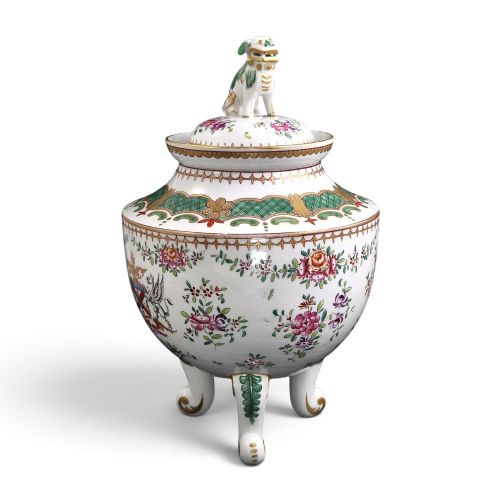
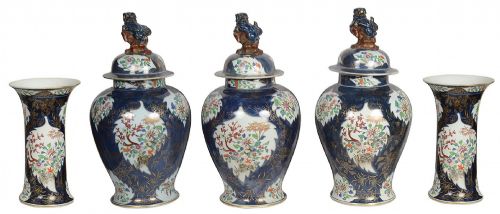
The evidence shows British Staffordshire pottery sitting alongside Continental porcelain from makers like Samson Paris and Minton, as well as Japanese and Chinese export figures such as Dogs of Fo. Victorian examples frequently appear with white and gilt finishes or copper lustre highlights on blue cushions.
Most entries span the decades from 1845 to 1890, capturing both naturalistic hunting dog sculptures and domestic mantelpiece companions. Buyers will find these figures categorized variously as decorative ornaments, sculptures, and pottery figure groups.
How they were made
Potters shaped these figures using slip casting or pressing clay into moulds, followed by earthenware or porcelain body preparation. Artisans then applied lead glazes, enamel paints, and gold leaf highlights before firing the pieces in kilns.
The recorded periods span the Victorian era, Qing Dynasty, and Japanese Meiji period through decorative ornaments and table lamps.
What varies in quality
The richness and stability of the gilt application, gold leaf, and copper lustre finishes dictate the upper tier of the range. Additionally, the survival of matching pairs with original hand-painted decoration and unblemished glaze depth commands greater regard among collectors.
Thomas Parr·Minton·Copeland·Samson Paris·John Durham
The 19th Century Porcelain Dogs Glossary
- Staffordshire pottery
- Earthenware produced in the Stoke-on-Trent region of England. This term covers the mass of Victorian mantel dogs and figural groups found in domestic collections.
- Parian
- A fine-grained, unglazed bisquit porcelain developed in the nineteenth century. It was named for its resemblance to Parian marble and used primarily for sculptural figures.
- Copper lustre
- A metallic glaze technique that imparts a reflective, coppery sheen to ceramic surfaces. It appears frequently on nineteenth-century Staffordshire dogs and pottery.
- Dogs of Fo
- Traditional Chinese guardian figures depicted as stylized lions. They are also known as temple dogs and appear in various ceramic forms throughout the nineteenth century.
- Enamel
- Opaque glass-like pigments applied over fired glaze and fixed in a muffle kiln. This material provides the bright colours on hand-painted canine figures and vases.
19th Century Porcelain Dogs: Frequently Asked Questions
How were Staffordshire dogs displayed?
Victorian households traditionally placed pairs of spaniels on either end of the mantelpiece facing inward toward the clock. They served as domestic ornaments and symbols of loyalty in the nineteenth-century parlour.
Some variations also incorporated functional elements, such as quill holders for writing desks or lamp fittings adapted for household illumination.
What is the difference between porcelain and pottery dogs?
Pottery dogs typically utilise an earthenware body finished with lead glaze or enamel colours, common in Staffordshire production. Porcelain versions, such as those from continental Europe or Asian export kilns, feature a denser, vitrified white body.
Parian pieces represent a specialised unglazed porcelain designed specifically to imitate carved white marble sculptures.
How can I date 19th century dog figures?
Dating relies on stylistic markers, base characteristics, and recorded manufacturer periods spanning from the 1840s to the 1890s. Victorian pieces often exhibit specific glazing techniques, such as copper lustre or gilt highlights on blue cushions.
Marked pieces or documented pairs associated with makers like Thomas Parr or Minton provide clearer chronological anchors.
Are these figures always found in pairs?
While many Victorian spaniels and greyhounds were manufactured and sold as symmetrical pairs for mantel displays, single figures also appear in the record. Specialised pieces like quill holders, lamp bases, and larger sculptural groups frequently exist as standalone items.
Collectors encounter both matched pairs and individual figures across different ceramic traditions.