

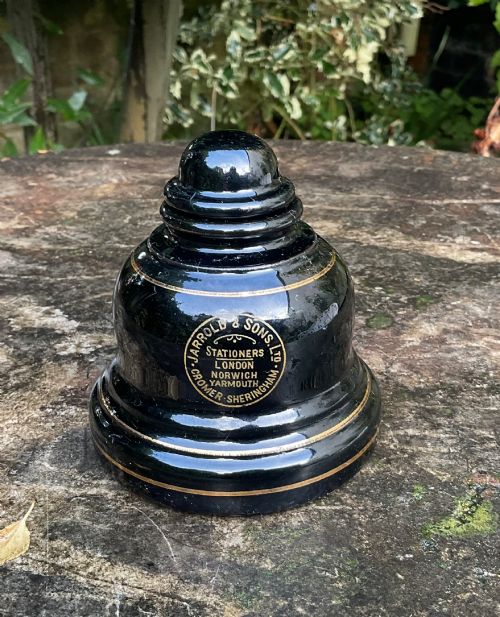
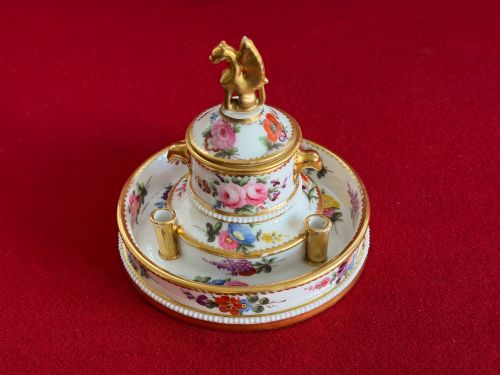

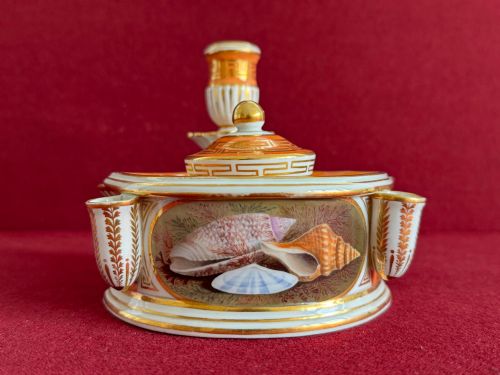
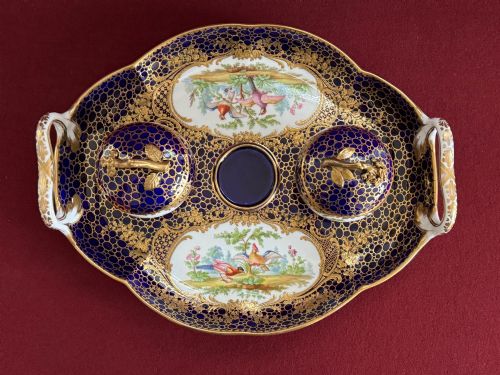


Antique Porcelain Inkwell
These antique porcelain inkwell pieces bring the tactile weight of 1820 to 1930 writing desks into modern spaces through painted glazes and sculpted ceramic forms.
Antique Porcelain Inkwell
An antique porcelain inkwell is a desk accessory designed to hold wet ink for a quill or nib, ranging from single ceramic pots to elaborate inkstands fitted with brass bases.
The pieces available span the Regency, Georgian, and 19th Century periods, incorporating styles from Chinoiserie and Rococo to Japanese Meiji Period designs.
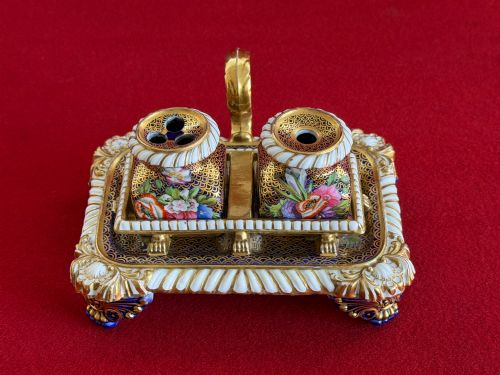
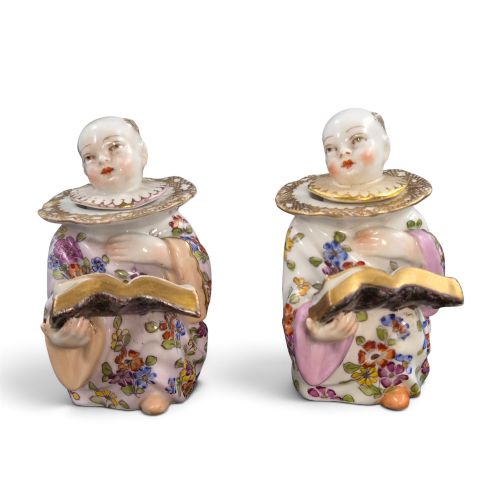
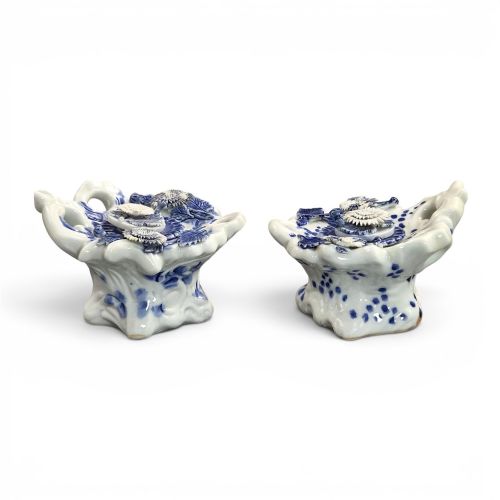
Buyers frequently encounter figural designs, such as pairs of Chinese singing boys by Edmé Samson, alongside floral motifs like the chrysanthemum decoration found on Hirado Mikawachi porcelain.
How they were made
Maker workshops utilised porcelain bodies shaped into figural and vessel forms, frequently finished with cobalt glaze and highlighted by hand-applied gold leaf.
Decorative surface techniques include compartmentalised dragon motifs and enamel work, while some continental examples integrate structural brass bases to support the ceramic body.
Antique Porcelain Inkwell Retail Price Guide 2026
Typical asking prices for porcelain inkwell among the pieces listed under this phrase on Sellingantiques today, from the lower quarter to the upper quarter. They describe what is for sale here now, not the wider market.
Listings feature items spanning the Georgian, Regency, and 19th Century periods, constructed from porcelain, enamel, gold leaf, cobalt glaze, and brass.
What varies in quality
Quality separates simple utilitarian desk vessels from ambitious factory productions by makers such as Flight Barr & Barr or Edmé Samson, where sculptural ambition and detailed painting elevate the object.
The precision of the cobalt glaze and the application of gold leaf dictate the visual depth of the piece, alongside the integration of secondary materials like brass mounts.
Edmé Samson·Flight Barr And Barr·Meissen
The Antique Porcelain Inkwell Glossary
- Porcelain
- A hard, fine-grained ceramic material fired at high temperatures, forming the white body of these inkwells.
- Cobalt glaze
- A deep blue mineral pigment applied beneath or over the glaze before firing, producing rich tones seen in dragon compartments.
- Gold leaf
- Extremely thin sheets of beaten gold applied to the ceramic surface for decorative highlights.
- Chinoiserie
- A European artistic style reflecting Chinese aesthetic motifs, commonly expressed through figural inkwell subjects.
- Meiji Period
- The era in Japanese history spanning the late 19th century, influencing the decorative vocabulary of imported ceramic pieces.
Antique Porcelain Inkwell: Frequently Asked Questions
What periods do these inkwells cover?
The pieces span the Georgian and Regency eras through the 19th century up to 1930.
Most examples originate from the earlier decades of the 19th century, reflecting neoclassical and revivalist tastes.
Were these used as standalone items?
Some pieces were made as individual vessels or pairs, while others formed part of larger desk accessories and inkstands.
More complex versions incorporate brass bases and multiple compartments for writing implements.
What decorative styles appear on them?
Styles range from European Rococo and Continental designs to Chinoiserie and Japanese Meiji Period motifs.
Decoration often includes hand-painted florals like chrysanthemums or figural subjects.
Which factories produced them?
Recorded makers include English porcelain manufacturers like Flight Barr & Barr alongside continental works such as Meissen and Edmé Samson.
Japanese kilns including Hirado Mikawachi also contributed export pieces to this tradition.