


Hand Painted Shell Porcelain
Hand painted shell porcelain brings maritime forms into domestic displays, offering collectors delicate marine contours enriched with historic hand-applied pigments and gilding.
Hand Painted Shell Porcelain
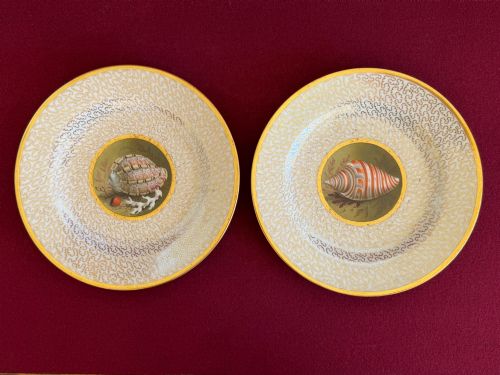
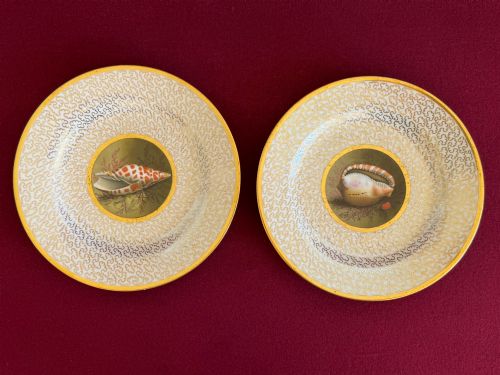
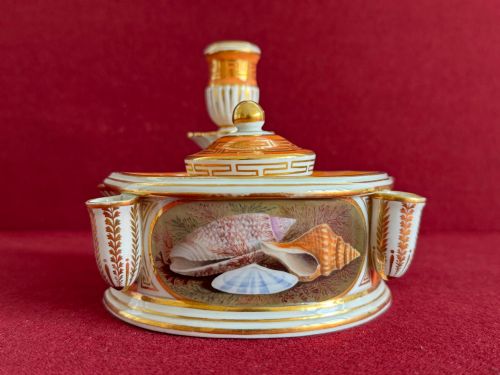
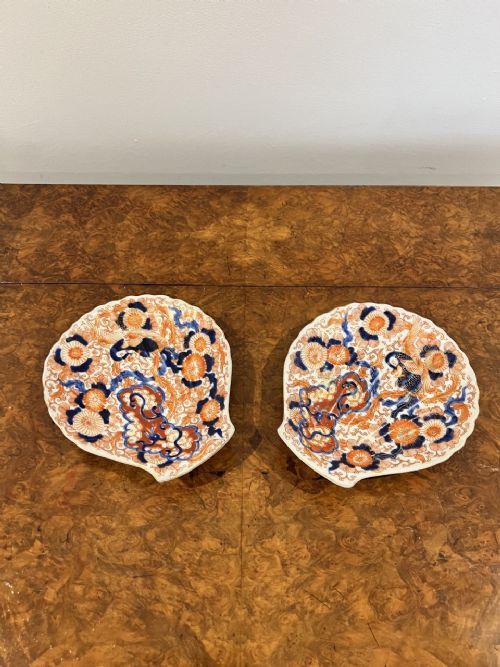
When you search for hand painted shell porcelain, you encounter items shaped like natural marine shells, ranging from cabinet plates and dishes to cream boats, lidded vases, and baskets. These objects translate the organic curves of scallop and conch shells into refined ceramic forms designed for display and formal service.
The pieces available on this page span the eighteenth century, the Regency period, the Victorian era, and into nineteen-twenty, encompassing soft-paste porcelain, bone china, and standard porcelain bodies. You will frequently find Japanese Imari designs alongside English factory productions from Worcester and Rockingham.
Forms vary from simple shell-shaped plates and dishes to more complex sculptural compositions, such as centrepieces featuring cherubs supported by shells, or ewers with lamprey handles. Each piece demonstrates how ceramicists adapted marine motifs to suit contemporary taste across successive decorative styles.
How they were made
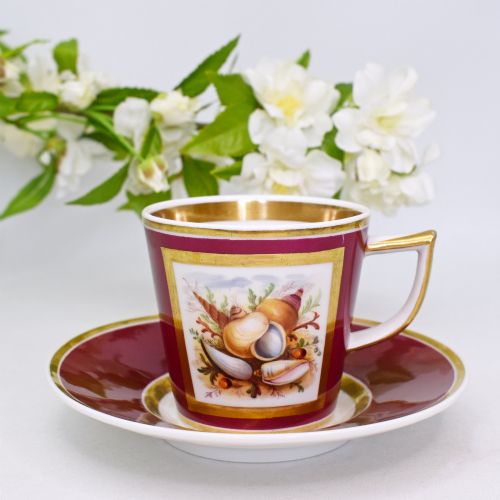
Makers shaped soft-paste porcelain and bone china into fluted and ribbed shell contours, often finishing the rims with gold leaf or enamel accents. Artisans hand-painted floral sprays, landscapes, and Japanese Imari patterns directly onto the glazed ceramic body before firing.
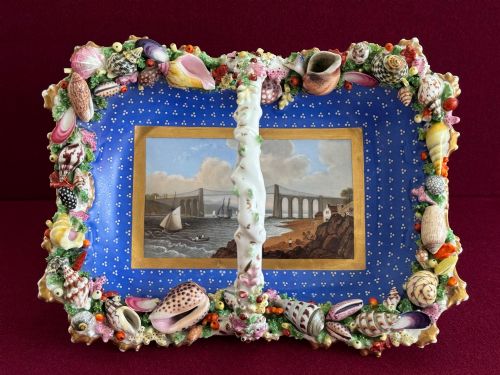
Specialised forms involved intricate modelling, such as applied lamprey handles on cream boats or cherubs supporting shell basins on centrepieces. Factories utilised precise hand-brushing for botanical studies and topographical views, exemplified by pieces depicting specific locations like the Menai Bridge.
Listings feature periods from the eighteenth century through to nineteen-twenty, utilising porcelain, bone china, enamel, and gold leaf.
What varies in quality
The distinction between standard and superior pieces lies in the precision and complexity of the hand-painting, particularly in the execution of detailed floral sprays, landscapes, and Imari motifs. Finer examples display crisp brushwork and clean gilding that enhance the naturalistic fluting of the shell form.
The ambition of the form also separates baseline production from high-end output, with sculptural additions like lamprey handles or cherub supports requiring advanced moulding and finishing skills. Furthermore, the historical significance of the maker, such as documented Worcester periods, influences the overall standing of the object.
Yates Leeds·Barr Flight and Barr·Royal Worcester·Chamberlain Worcester
The Hand Painted Shell Porcelain Glossary
- Soft-Paste Porcelain
- An early ceramic composition made from glass frit and white clay mixtures rather than true china clay. It fires at lower temperatures and possesses a warm, translucent body.
- Bone China
- A porcelain type incorporating animal bone ash, resulting in a strong, highly white and translucent ceramic body. It became a staple of English manufacturing during the nineteenth century.
- Japanese Imari
- A decorative style inspired by imported Japanese wares, characterised by a palette of underglaze blue, iron red, and abundant gold leaf. English factories frequently adopted this aesthetic for shell-shaped plates.
- Enamel
- Opaque glass-based colour applied over or under the glaze to create vibrant painted details on ceramic surfaces. Artisans fired these pigments multiple times to secure permanent adherence.
- Gilt Edge
- A decorative border applied using gold leaf or gold powder, painted along the rim of a dish or plate. This finish catches the light and frames the painted centre.
Hand Painted Shell Porcelain: Frequently Asked Questions
What is hand painted shell porcelain?
Hand painted shell porcelain comprises ceramic dishes, plates, baskets, and vessels moulded into marine shell shapes and decorated with hand-applied enamels and gold leaf.
These pieces reflect the historic popularity of natural history and maritime motifs in domestic interiors, produced by major factories across several centuries.
How were shell dishes used?
Many shell-shaped plates and dishes served as decorative cabinet pieces or as specialised tableware for serving sweetmeats, nuts, or cream.
Larger items like centrepieces and lidded vases functioned as prominent focal points on dining tables or mantelpieces during formal gatherings.
How do I date a piece?
Dating relies on factory marks, ceramic body composition, and stylistic cues such as Regency neoclassical borders or late Victorian floral painting.
Comparing the paste type and pattern numbers against factory records helps establish the specific production era.
Can I use these antiques daily?
Because of their age, delicate hand-painted enamels, and fragile porcelain bodies, these items are generally suited for display rather than everyday use.
Gentle dusting and careful handling preserve the fragile gilding and delicate ceramic handles over time.