


Antique Writing Desk Accessory
An antique writing desk accessory brings order and character to a workspace, offering tangible craftsmanship from the nineteenth and early twentieth centuries.
Antique Writing Desk Accessory
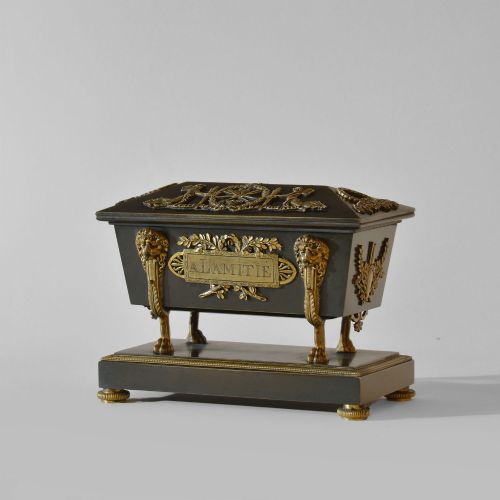
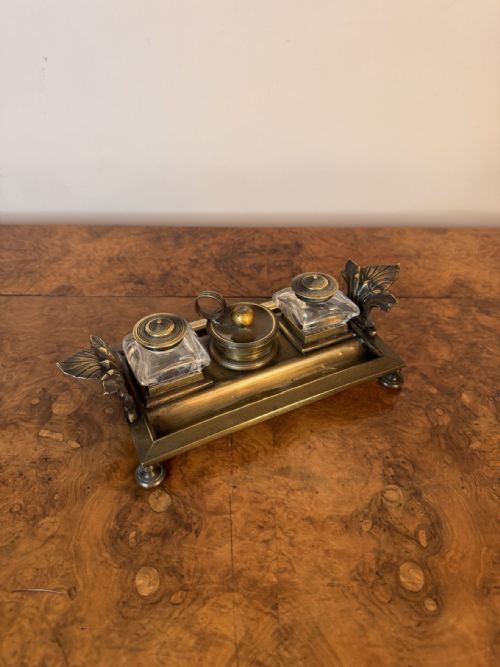
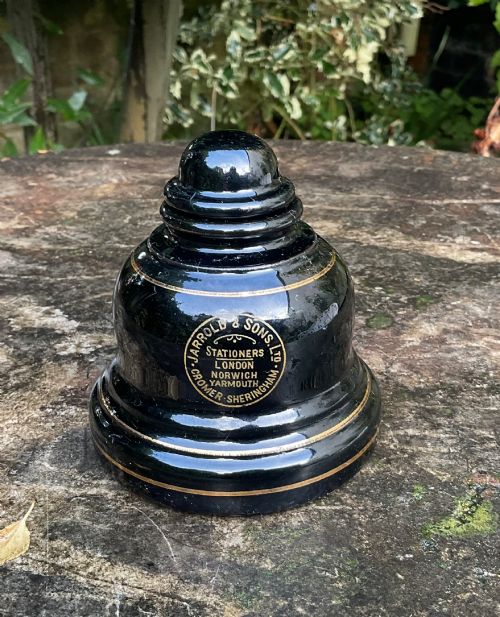
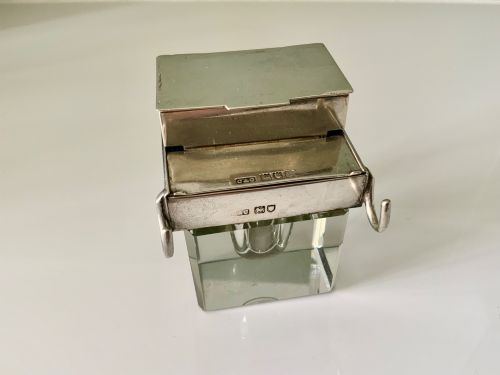
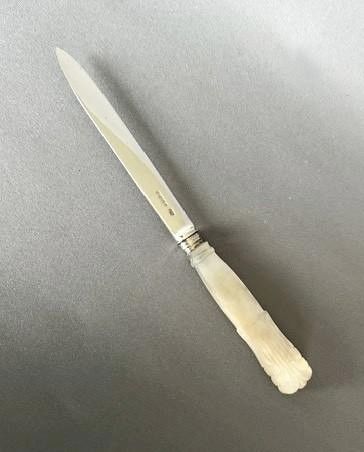
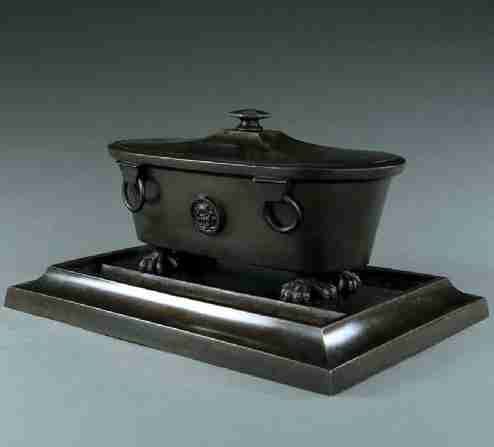
An antique writing desk accessory encompasses items designed for correspondence and desk management, ranging from inkwells and standishes to stationary cabinets, blotters, and dip pens. The selections on this page span the Victorian and Edwardian periods alongside earlier Georgian and Regency examples, reflecting the daily administrative needs of past households.
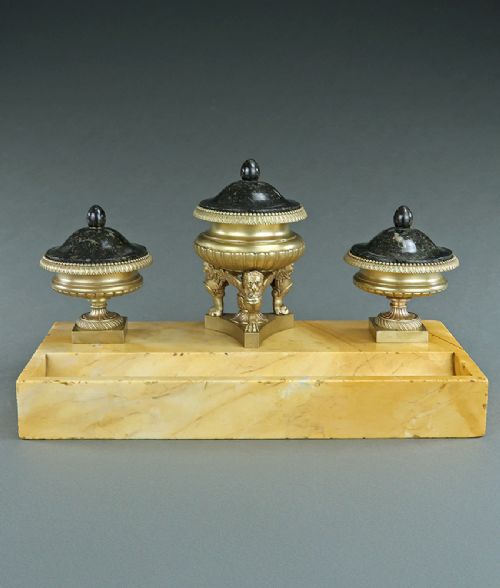
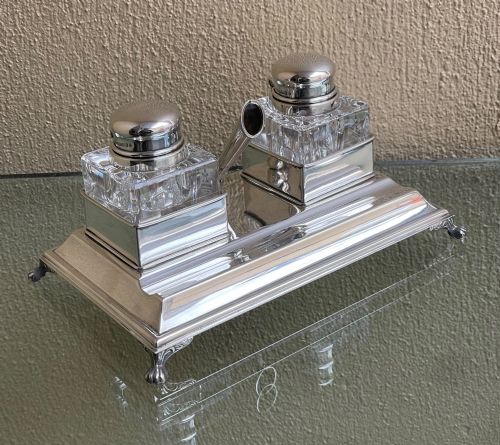
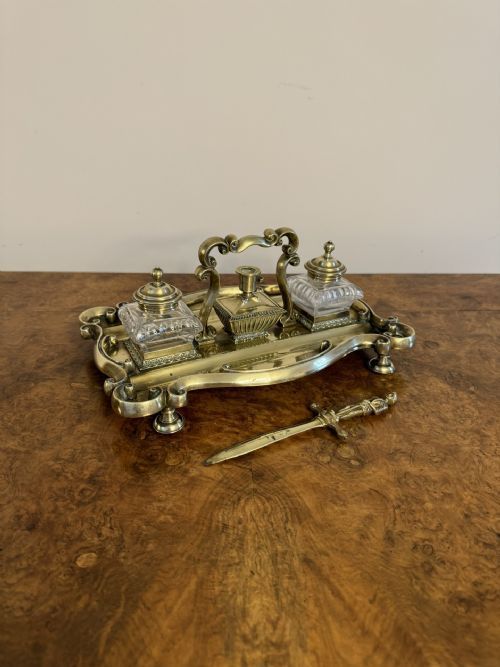
Buyers frequently encounter glass and silver-plated inkstands, brass desk sets, and capstan inkwells originating from British workshops and continental makers. These pieces often incorporate practical compartments for sealing wax, stamps, and pens alongside central reservoirs.
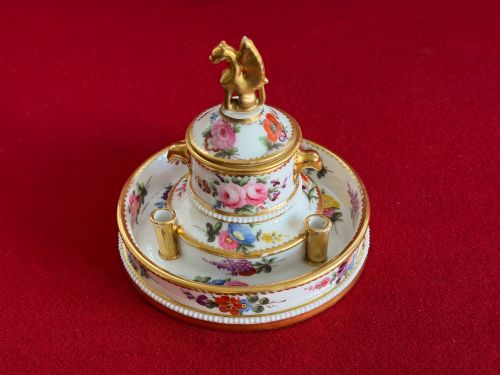
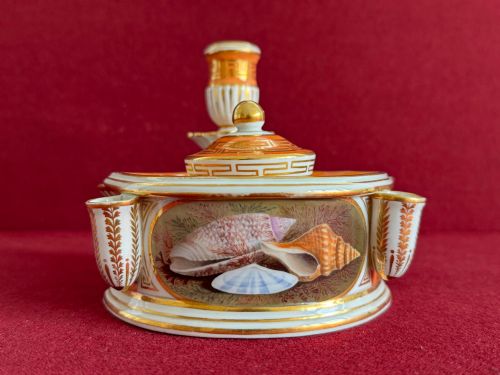
More specialised forms include travelling inkwells, brush pots, vesta cases, and novelty items fashioned from materials like walnut, bronze, and porcelain.
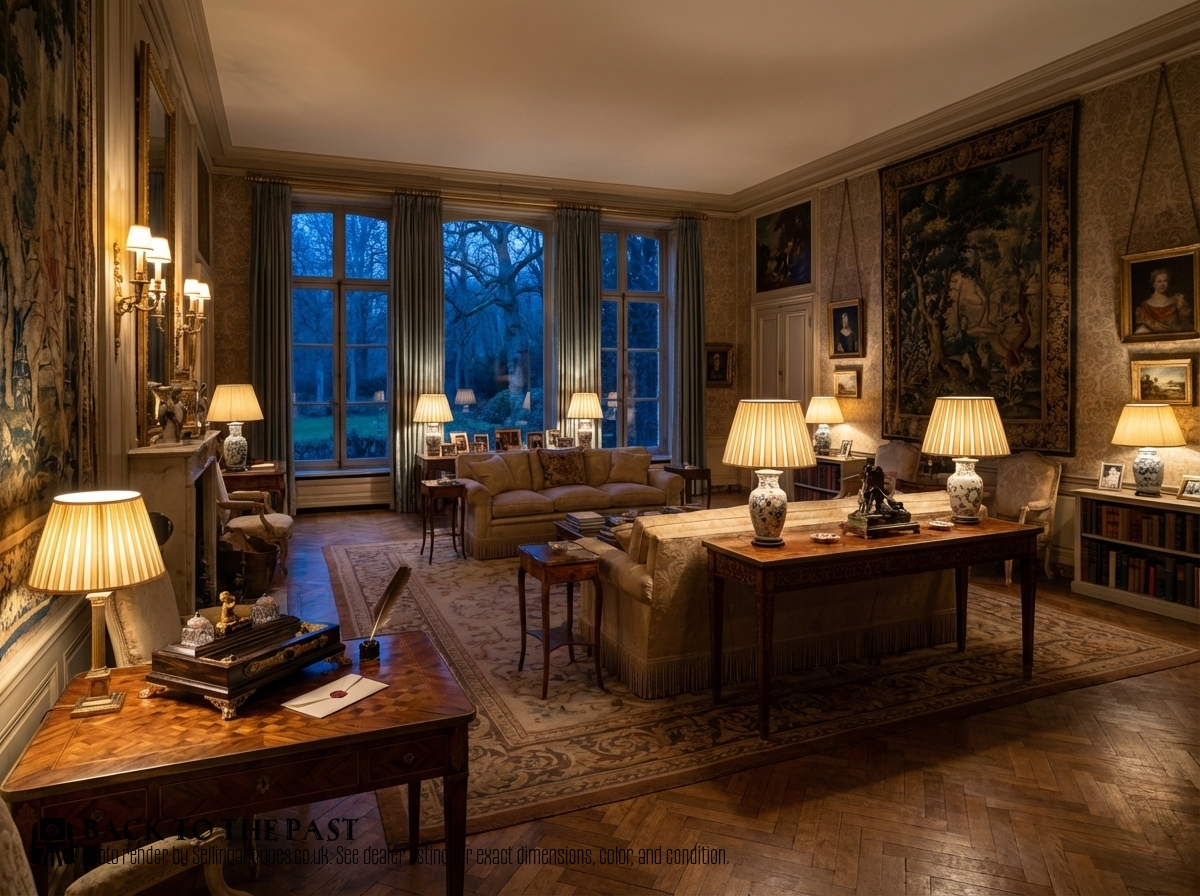
Materials and Technique
Silversmiths and metalworkers shaped sterling silver, silver plate, brass, bronze, and copper into inkstands and pen rests, frequently employing casting and chasing techniques to achieve intricate surface details. Glass and cut glass formed the heavy reservoirs designed to hold ink securely without tipping.
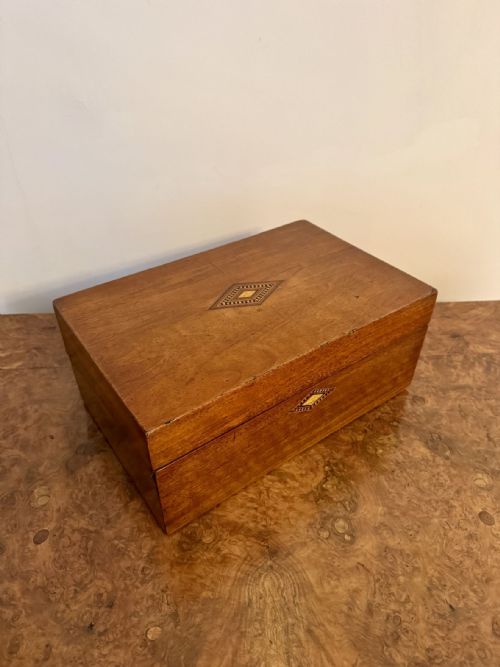
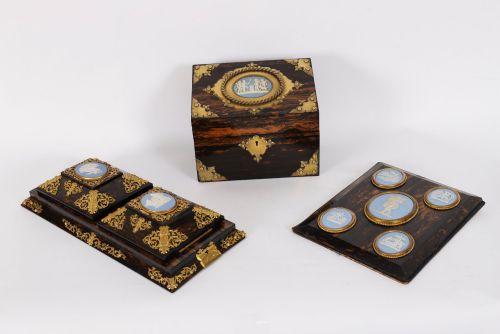
Cabinetmakers utilised timber varieties such as walnut, coromandel, and ebony for stationary boxes and desk stands, sometimes incorporating brass banding, Boulle work, or marble bases.
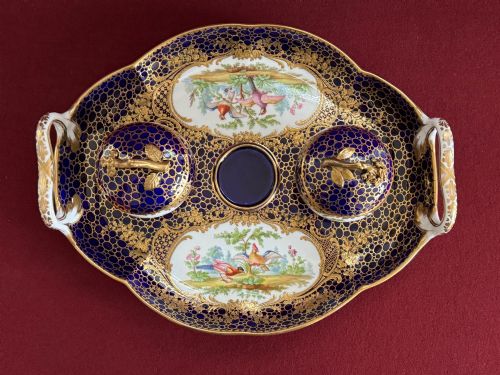
Specialised decorative methods such as champlevé enamel, tortoiseshell inlay, and porcelain painting appeared on pieces from French and English makers alike.
Antique Writing Desk Accessory Retail Price Guide 2026
Typical asking prices for writing desk accessory among the pieces listed under this phrase on Sellingantiques today, from the lower quarter to the upper quarter. They describe what is for sale here now, not the wider market.
Listings feature diverse materials including solid silver, silver plate, walnut, bronze, brass, porcelain, glass, and marble across Victorian, Edwardian, and earlier periods.
Assessing Quality
The standard of an antique writing desk accessory depends on the precision of its assembly and the integrity of its materials, such as the weight of cast silver and the clarity of cut glass inserts. Pieces executed by documented firms display superior chasing, heavier gauges of metal, and finely fitted internal compartments.
Condition and completeness distinguish finer examples, particularly when original glass liners remain intact within silver capstan inkwells or hinged metal mounts retain their proper tension.
Artistry elevates certain items, seen in naturalistic bronze animal figures, hand-painted porcelain panels, or elaborate marquetry that demonstrates exceptional artisanal skill.
Henry Matthews·Sampson Mordan & Co·Elkington·Walker And Hall·Wilkinson & Co·Mabie Todd & Co·A.Cohen & Co Ltd
The Antique Writing Desk Accessory Glossary
- Inkstand
- A portable tray or stand holding one or more inkwells, sanders, and pen holders for a desktop.
- Standish
- An alternative term for a structured inkstand, often fitted with drawers and lidded containers for writing implements.
- Capstan Inkwell
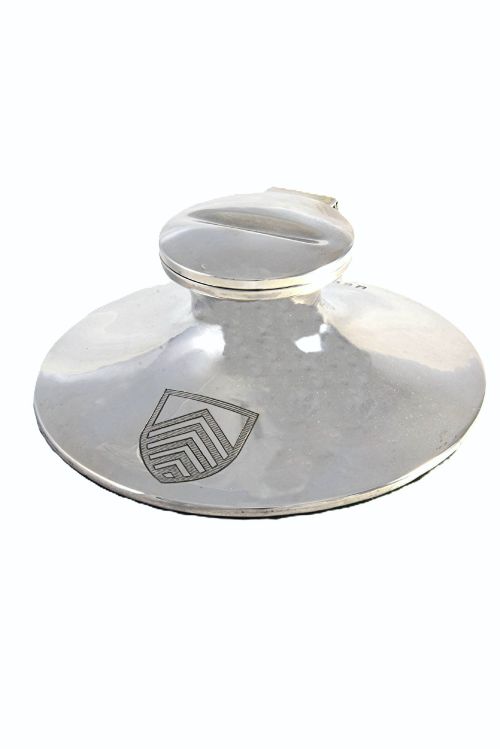
- A desk accessory shaped like a nautical capstan, featuring a wide base tapering upwards to a hinged lid.
- Vesta Case
- A small pocket-sized or desk-mounted box designed to hold matches.
- Champlevé
- An enamelwork technique where recesses are gouged into a metal surface and filled with vitreous paste before firing.
- Boulle Work
- A style of marquetry utilising tortoiseshell and brass inlay, popular in French furniture and desk accessories.
Antique Writing Desk Accessory: Frequently Asked Questions
What is an antique writing desk accessory?
These items comprise functional equipment used for handwriting correspondence before the widespread adoption of ballpoint pens. They include inkwells for holding liquid ink, stands to organise paper, and small boxes for sealing wax.
They reflect the domestic and professional writing habits of the nineteenth and early twentieth centuries, constructed to sit permanently upon a library desk or travel securely in luggage.
How do I date an antique inkstand?
Dating relies heavily on hallmarks found on silver components, registry marks, and stylistic indicators such as the heavy ornamentation of Victorian pieces or the geometric lines of Art Deco design.
Materials also offer clues, as early nineteenth-century pieces frequently feature turned hardwoods and hand-cut glass, while later Edwardian examples often utilise machine-stamped metal mounts.
Were these items used for daily writing?
Yes, people relied on these desk accessories daily to draft letters, record accounts, and sign documents using dip pens or early fountain pens.
Inkwells required regular replenishment and cleaning, while sanders or blotters dried the wet ink before folding the paper.
How do I care for antique metal and glass desk items?
Silver and brass components require gentle dusting and occasional cleaning with appropriate non-abrasive polishes to preserve their patina without removing fine detail.
Glass inkwell inserts should be washed carefully by hand in warm water, avoiding harsh chemicals that might damage aged crystal or glued collars.
What is the difference between an inkwell and an inkstand?
An inkwell is simply the small vessel that holds the ink itself, fitted with a lid to prevent evaporation and dust accumulation.
An inkstand is a larger tray or base that incorporates one or more inkwells alongside dedicated rests for pens, stamps, and sealing wax.