








Antique Brass Inkstand
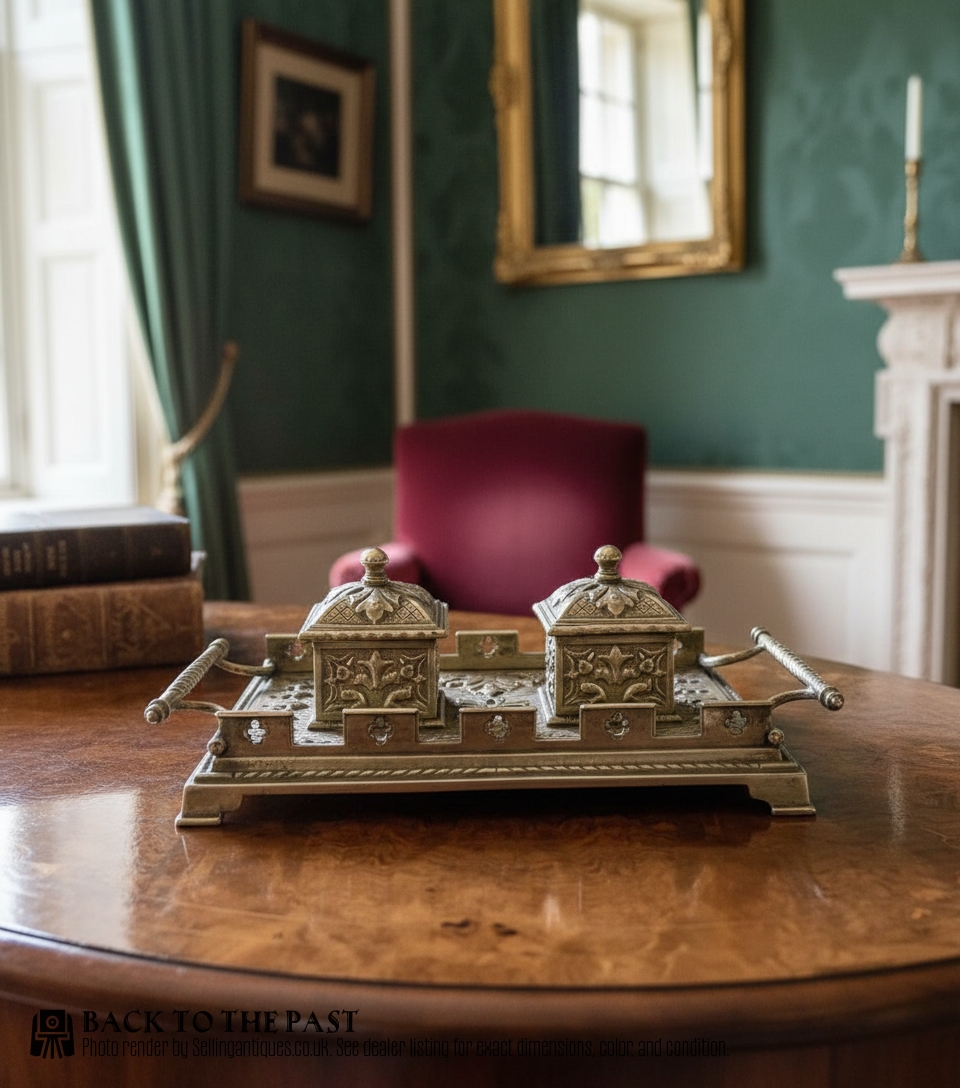
An antique brass inkstand brings the tactile weight of nineteenth-century correspondence straight to your desktop.
Antique Brass Inkstand
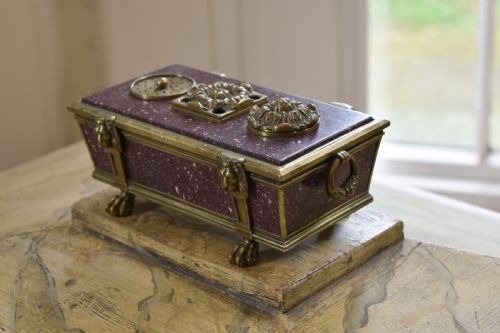
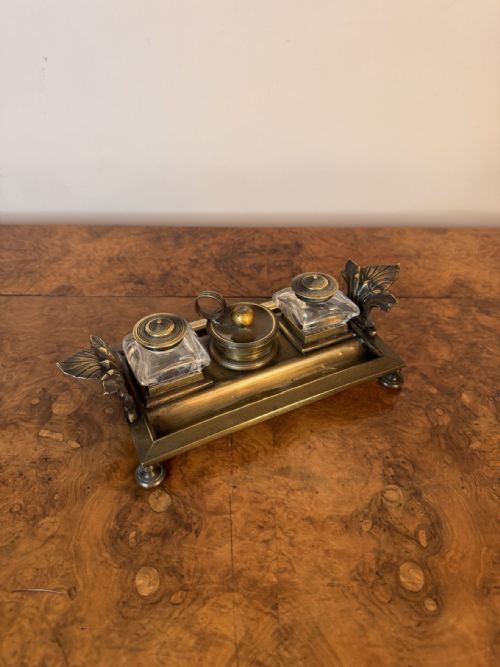
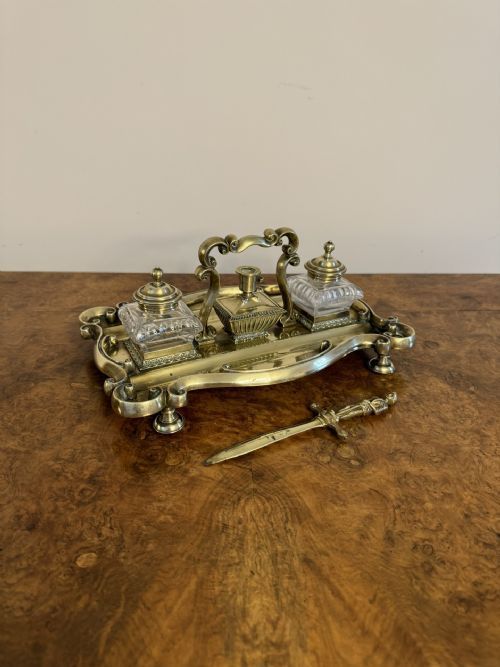
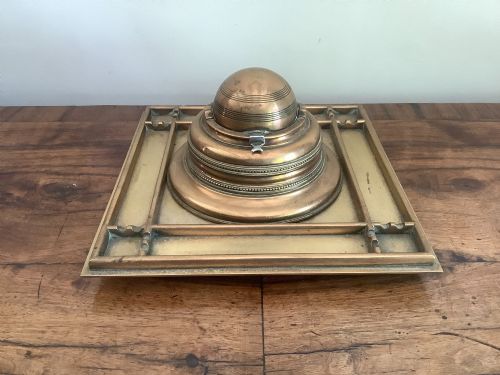
An antique brass inkstand is a desk accessory designed to hold one or more inkwells, pen rests and sometimes stationery compartments. You will most frequently encounter Victorian examples cast in brass, often combined with cut glass inserts or mounted on timber bases.
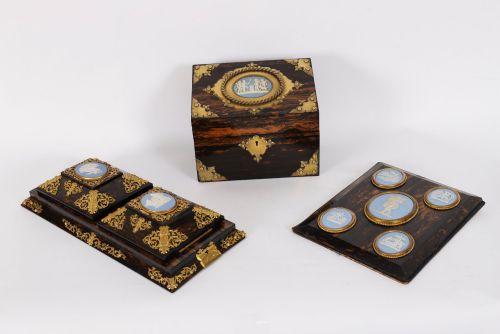
The selections span from simple English brass desk tidies to ornate French ormolu and marble designs and flowing Art Nouveau bronzes. These pieces served as functional centrepieces for the writing tables of grand households and parlours.
Earlier eighteenth-century pieces appear as standishes, while later Victorian and Edwardian iterations frequently incorporate figural motifs like lizards, owls, frogs and horseshoes alongside pen trays.

Materials and Construction
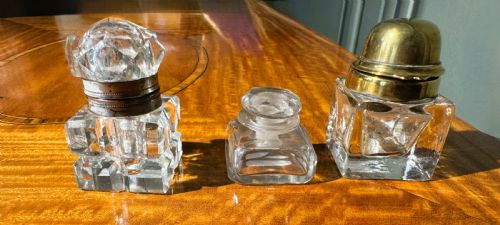
Foundry casting formed the solid brass and ormolu frames, which were then chased, polished or gilt to achieve crisp detail. Makers combined these metal mounts with heavy cut glass or crystal ink pots fitted with hinged brass lids.
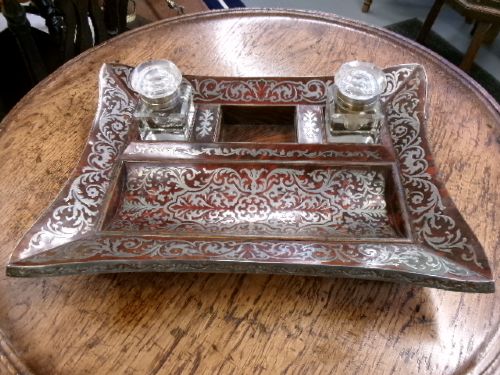
Many elevated examples incorporate luxury carcase woods like coromandel, walnut, mahogany and oak, frequently enhanced with Boulle work, mother-of-pearl inlay or tortoiseshell. Natural stone elements such as Sienna marble, green onyx and agate cabochons provide solid foundations for the metalwork.
Antique Brass Inkstand Retail Price Guide 2026
Typical asking prices for brass inkstand among the pieces listed under this phrase on Sellingantiques today, from the lower quarter to the upper quarter. They describe what is for sale here now, not the wider market.
Design influences span Georgian, Regency, Victorian, French Empire, Napoleon III, Art Nouveau and Edwardian styles.
Evaluating Craftsmanship
The crispness of the metal casting dictates the initial tier of quality, distinguishing sharp figural details and hand-chased foliage from soft, mass-produced commercial output. Weight and substance also matter, as superior stands utilise heavier gauge brass and substantial bases of marble or dense exotic hardwoods.
The integrity of the fittings defines the upper echelon, particularly whether the original cut glass or crystal ink inserts remain intact and match the stand. Well-executed marquetry, secure hinge mechanisms and signed maker details elevate a piece from a standard desk accessory to a notable desk set.
James Cartland & Sons·Kralik or Loetz·J.M. Paillard, Paris
The Antique Brass Inkstand Glossary
- Standish
- An early term for a complete desk stand incorporating inkwells, sanders for drying ink, and pen holders. These portable writing trays were essential desk equipment before the invention of the fountain pen.
- Ormolu
- Gilt bronze produced by applying a finely ground high-carat gold mercury amalgam to a cast bronze object. This French technique yields a warm, durable metallic lustre found on nineteenth-century luxury items.
- Boulle Work
- An elaborate form of marquetry utilising tortoiseshell and brass inlaid in contrasting patterns. Named after the royal cabinetmaker André-Charles Boulle, it frequently decorates nineteenth-century French desk sets.
- Cabochon
- A gemstone or hardstone polished to a convex domed surface rather than faceted. These decorative cabochons are often bezel-set directly into brass desk accessories.
- Stationery Caddy
- A desktop organizer featuring upright compartments for holding writing paper and envelopes alongside ink receptacles.
Antique Brass Inkstand: Frequently Asked Questions
What is the difference between an inkstand and an inkwell?
An inkstand is the complete tray or stand that holds one or more inkwells, often including space for pens, wafers or sanders. An inkwell is simply the individual vessel that contains the liquid ink.
Many antique sets feature a tray with removable glass or crystal ink pots resting neatly within dedicated recesses.
How do I date a brass inkstand?
Dating relies on a combination of stylistic clues, manufacturing techniques, and materials. Heavy cast brass with figural animal motifs or aesthetic movement influences typically points to the Victorian era.
Art Nouveau pieces display characteristic flowing organic lines, while earlier eighteenth-century standishes feature simpler, more restrained Georgian proportions.
Were these stands made only in England?
English workshops produced vast numbers of utilitarian and decorative brass and oak desk sets, but France was a major centre for high-end luxury goods. French pieces frequently utilise ormolu, gilt bronze, Sienna marble and intricate Boulle marquetry.
Continental makers also contributed distinctive porcelain and bronze designs during the late nineteenth and early twentieth centuries.
Are the glass inserts usually original?
Finding an antique desk set with its original matching cut glass or crystal ink bottles is a significant bonus. Because glass pots were fragile and prone to chipping or staining from ink, replacements were frequently fitted over the decades.
Matching the collar size, glass tint, and cut pattern to the brass housing helps determine originality.