

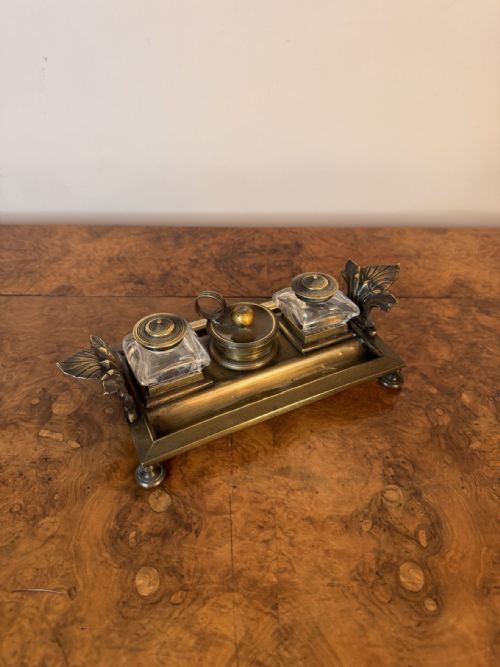
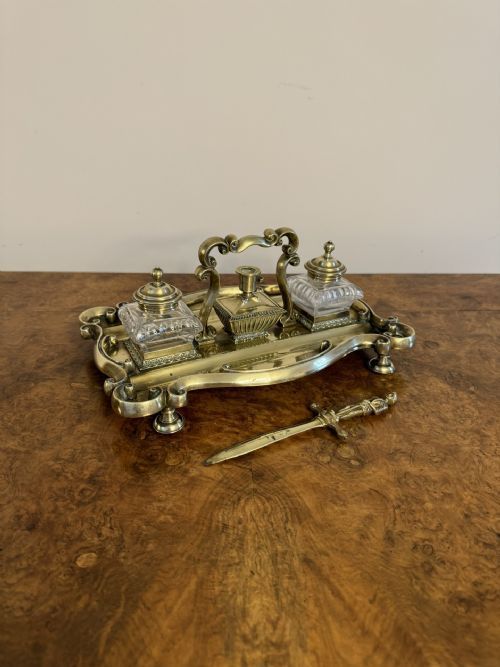



Vintage Brass Writing Set
A vintage brass writing set brings the weight of the nineteenth century into the study, offering lidded inkwells and pen rests designed for correspondence.
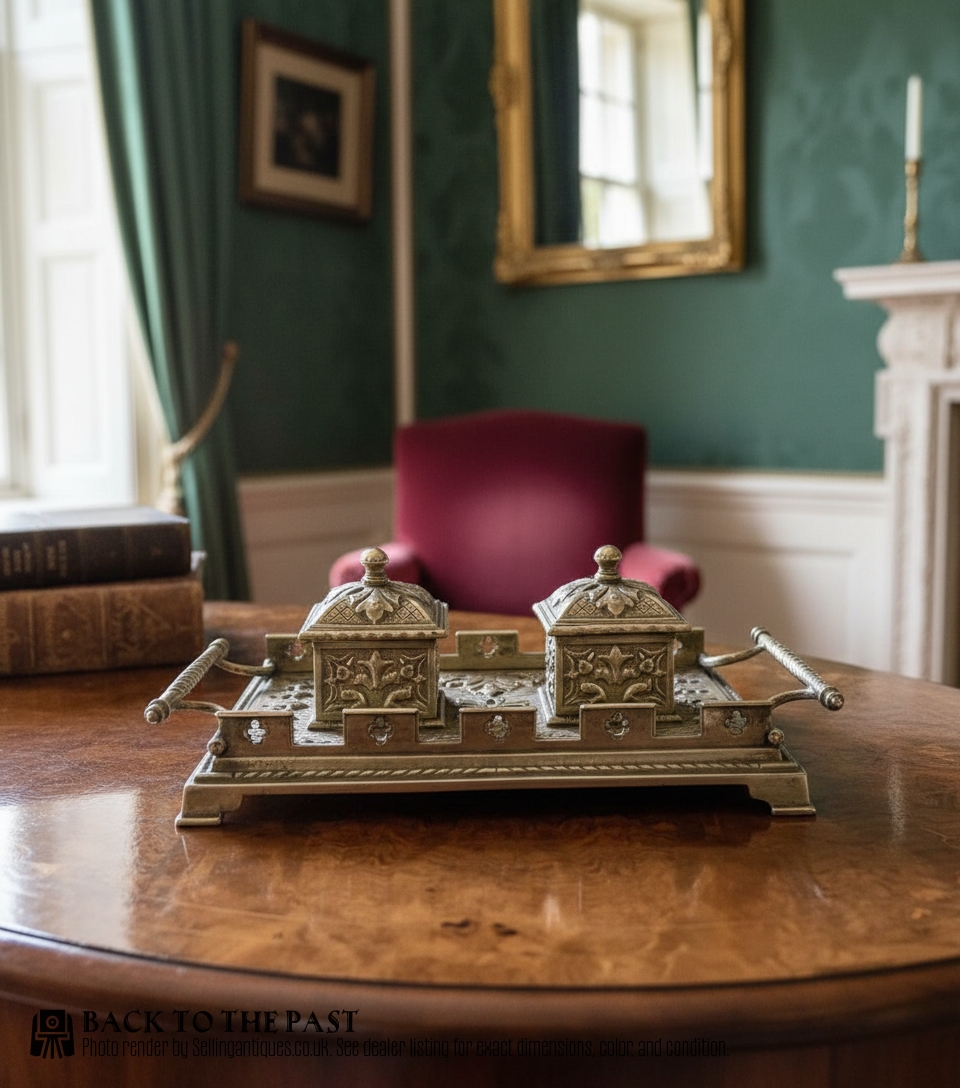
Vintage Brass Writing Set
A vintage brass writing set comprises desk accessories built around inkwells, stands, and letter holders from periods ranging through the Victorian and Edwardian eras. Buyers searching for a vintage brass writing set encounter desktop equipment made to hold ink bottles, pens, and blotting paper in daily correspondence.
Most examples combine solid metal bases with fitted ink pots in glass or ceramic, often mounted on wooden trays of mahogany, walnut, or oak. The forms span simple single inkstands to double-sided compartments with drawers and scientific instruments.
Originating largely from British and continental workshops, these pieces reflect the heavy paperwork requirements of past offices and domestic libraries. Pieces survive from the mid-nineteenth century onward, carrying the patina of decades of dip pens and iron gall ink.

How they were made
Metal components rely on cast and chased brass, ormolu, and gilded bronze, often combined with cut glass inserts and ceramic pots. Wood elements like burr walnut, coromandel, and mahogany provide structured bases, while marble and onyx add substantial weight to inkstands.
Joining techniques involve visible screws, pins, and mounts that secure metal frameworks to wooden trays or stone plinths. Engraving, champlevé enamel, and moulded novelty shapes complete the decorative surface treatment of the metalwork.
Vintage Brass Writing Set Retail Price Guide 2026
Typical asking prices for vintage brass writing set among the pieces listed under this phrase on Sellingantiques today, from the lower quarter to the upper quarter. They describe what is for sale here now, not the wider market.
Desk accessories take whimsical animal forms here, including playing kittens, a stern bulldog, and an imposing brass owl.
What varies in quality
Weight and metal gauge separate heavier cast pieces from thinner stamped metal, while the presence of original glass ink bottles with matching lids dictates completeness. Better examples retain intricate chased details on figural mounts and sturdy hinges on integrated drawers.

James Cartland and Sons·Elkington
The Vintage Brass Writing Set Glossary
- Inkstand
- A portable tray or stand holding one or more inkwells and pen rests for a desktop. These pieces formed the centrepiece of Victorian and Edwardian writing furniture.
- Ormolu
- Gilt bronze mounted on decorative metalwork, popular in nineteenth-century French and English decorative pieces. The technique imparts a rich golden finish to brass and bronze bases.
- Champlevé
- An enamelling technique where troughs are dug into a metal surface and filled with vitreous enamel before firing. This method creates colourful patterned borders on nineteenth-century desk sets.
- Rocker ink blotter
- A curved wooden or metal tool fitted with blotting paper used to dry wet ink on manuscript pages. They appear frequently alongside inkstands in desk accessory collections.
- Desk tidy
- A compartmentalised tray designed to organise envelopes, nibs, and wax seals on a writing table. These pieces keep loose stationery orderly within a study.
Vintage Brass Writing Set: Frequently Asked Questions
What pieces comprise a complete writing set?
A complete set usually includes a heavy metal tray fitted with one or two glass ink bottles, matching lids, and dedicated rests for dip pens.
Many examples also incorporate compartments for stamps, letter racks, or small drawers for spare nibs and sealing wax.
How do I date a brass inkstand?
Dating relies on stylistic clues like Victorian ornamentation, Edwardian proportions, or Art Nouveau whiplash curves, alongside the construction of the metal and wood.
Maker marks, registration numbers, and the type of glass used in the ink inserts also help narrow down the decade of production.
Are the glass ink pots usually original?
Many sets retain their heavy cut glass or moulded glass inserts, often featuring star-cut bases and matching ground-glass stoppers or metal-rimmed lids.
Replacement bottles occur frequently due to breakage, so matching the collar size and glass tint to the brass stand is important.
How should I clean antique brass?
Maintenance requires preserving the accumulated dark patina rather than polishing the metal to a bright, modern shine.
Dusting with a soft brush and applying microcrystalline wax protects the brass surface and any underlying wood or marble from moisture.