



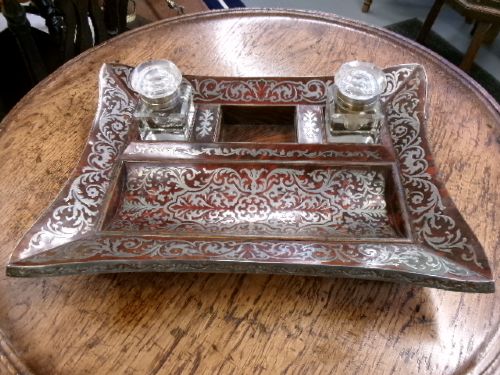


Antique Brass Desk Set
These antique brass desk sets bring order and weight to a working surface through fitted inkwells, stands and stationery racks.

Antique Brass Desk Set
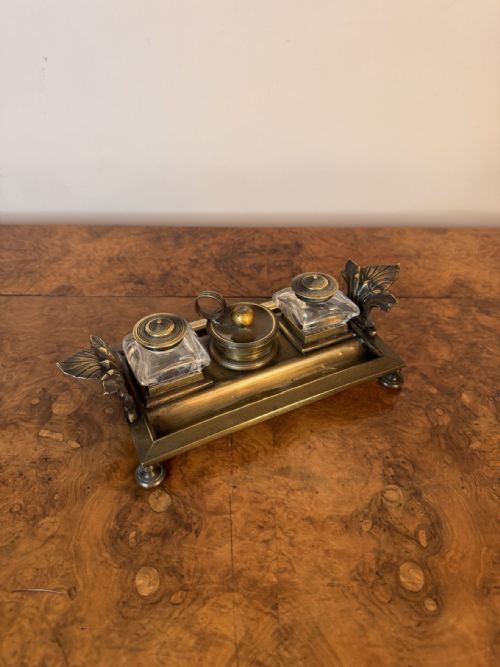
An antique brass desk set gathers the implements of correspondence into a single coordinated arrangement, typically combining inkwells, pen trays and stationery holders. When searching for this phrase, buyers encounter matching desk accessories, inkstands and companion pieces designed for writing tables.
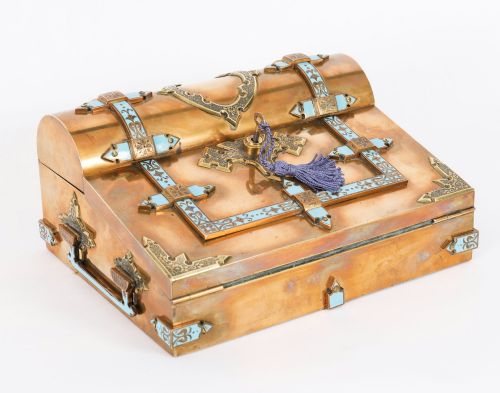
The versions most frequently met on this page date from the Victorian and Edwardian eras, spanning the latter half of the nineteenth century into 1900. These pieces incorporate brass fittings alongside timber bases, glass inserts and ceramic mounts.
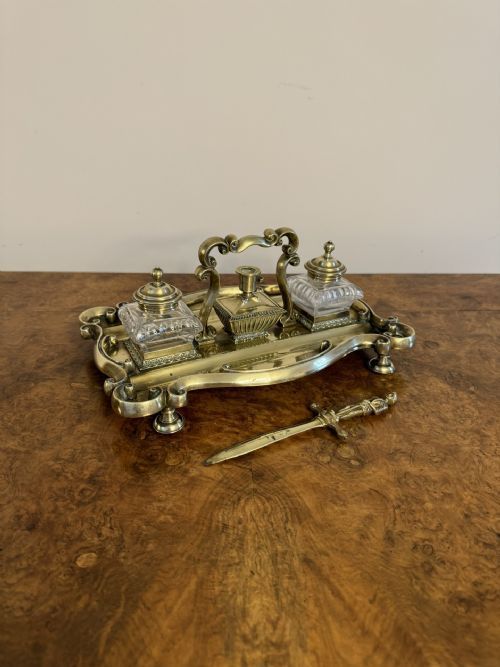
Forms range from compact brass-bound walnut boxes to ornate cast-brass desk stands and French mahogany stationery racks. Each variant serves the traditional desk function of keeping writing materials organised and accessible.
How they were made
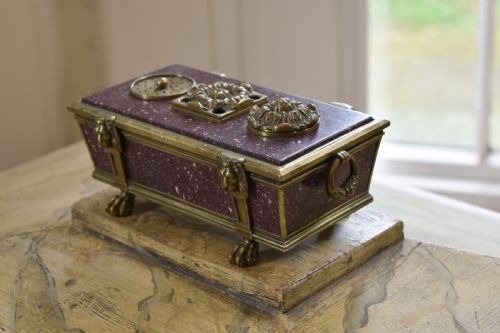
Construction relies heavily on cast-brass components combined with cabinet timbers such as walnut, mahogany and burl walnut. Artisans mounted polished metalwork onto wooden bases, securing inkwells and pen rests with threaded fixings and brass straps.
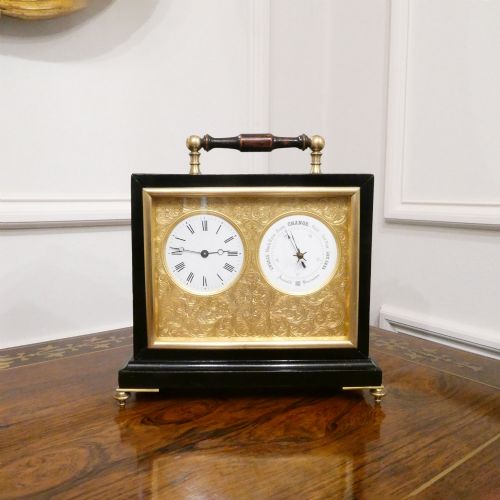
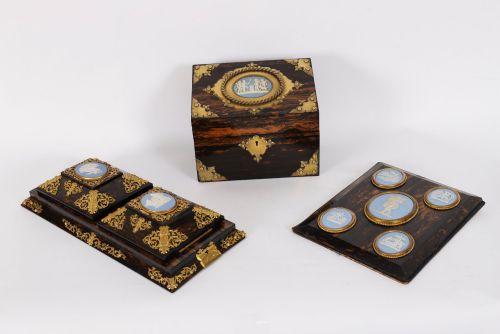
Detailing involves ornamental casting, incised decoration and the integration of contrasting materials including glass, jasperware, malachite and black slate. Selected pieces incorporate signed metalwork and clock movements produced by specialist makers.
Antique Brass Desk Set Retail Price Guide 2026
Typical asking prices for brass desk set among the pieces listed under this phrase on Sellingantiques today, from the lower quarter to the upper quarter. They describe what is for sale here now, not the wider market.
Listings feature Victorian and Edwardian pieces combining brass, walnut, mahogany, glass and jasperware.
What varies in quality
Quality reveals itself in the crispness of the brass casting and the complexity of the overall design, distinguishing plain utilitarian pieces from highly ornate examples. The integration of secondary decorative media, such as fitted porcelain inserts or semi-precious stone mounts, elevates the character of the construction.
The choice and treatment of the underlying timber base also dictate the standard, with figured woods like burl walnut and mahogany displaying superior grain and joinery. Complete sets retaining original glass inkwells and matching components demonstrate higher preservation than assembled groupings.
Seth Thomas·James Howell·J.M. Paillard, Paris
The Antique Brass Desk Set Glossary
- Inkstand
- A fitted tray or stand designed to hold one or more inkwells alongside pens and sealing wax. These pieces form the central component of many desk arrangements.
- Stationery rack
- An upright divider frame used to hold envelopes, writing paper and correspondence upright on a desk surface. They frequently appear combined with inkstands and pen trays in larger sets.
- Jasperware
- A fine-grained stoneware developed with contrasting applied white reliefs against a coloured background, often incorporated into desk set mounts. Josiah Wedgwood popularised this ceramic technique.
- Malachite
- A vibrant green copper carbonate mineral used in polished decorative plaques and mounts on nineteenth-century luxury items. It provides a striking contrast against brass and dark wood.
- Cast-brass
- Metal shaped by pouring molten alloy into moulds to create decorative frameworks, inkwell collars and ornate stands. This technique allows for intricate surface relief and structural rigidity.
Antique Brass Desk Set: Frequently Asked Questions
What is included in an antique desk set?
These sets typically comprise a brass-mounted tray or stand fitted with glass inkwells, pen rests, and sometimes stationery racks or companion clocks. They were designed to hold all necessary writing implements in one orderly place.
Survivors from the nineteenth and early twentieth centuries often combine brass with timber bases like walnut or mahogany, reflecting the desk accessories of the period.
How do I date an antique brass desk set?
Dating relies on stylistic clues, manufacturing techniques, and materials such as Edwardian cast brass, Victorian walnut, or Empire Revival mahogany. Comparing the combination of metals and fitted components helps narrow down the decade of production.
Signed pieces or those bearing maker marks provide more precise chronological anchors, while general design motifs point towards specific periods like eighteen-eighty or nineteen-hundred.
How were these sets used on a desk?
They served as the main administrative hub for writing letters, signing documents, and managing household or business correspondence. The inkwells held liquid ink for dip pens, while trays kept nibs and blotting materials at hand.
Heavier brass and timber construction ensured the stands remained stable during vigorous writing and prevented ink bottles from tipping over on the table.
How do I care for brass and walnut desk sets?
Maintenance involves gentle cleaning of the brass surfaces to preserve their natural finish without stripping historical patina. Timber bases benefit from occasional waxing to nourish the grain and protect the wood from drying out.
Keeping glass inkwells clean and avoiding harsh chemical polishes ensures the mixed materials retain their original character and integrity over time.