



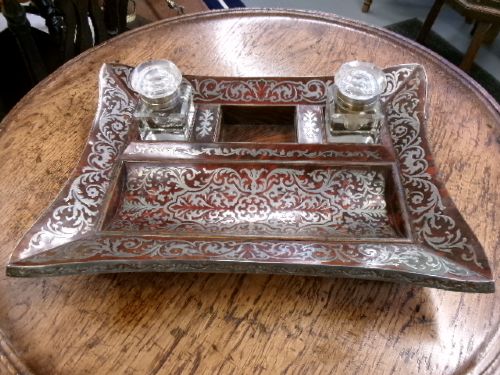


Brass Inkstand Desk Set
A brass inkstand desk set brings orderly elegance to a writing table, housing inkwells and pen rests in heavy cast metal.

Brass Inkstand Desk Set
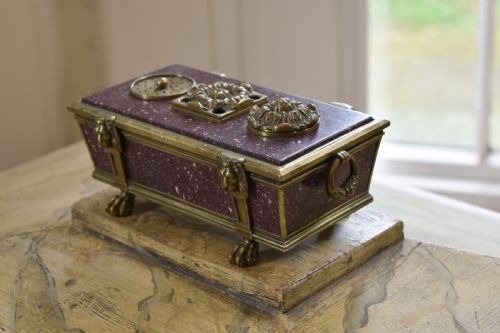
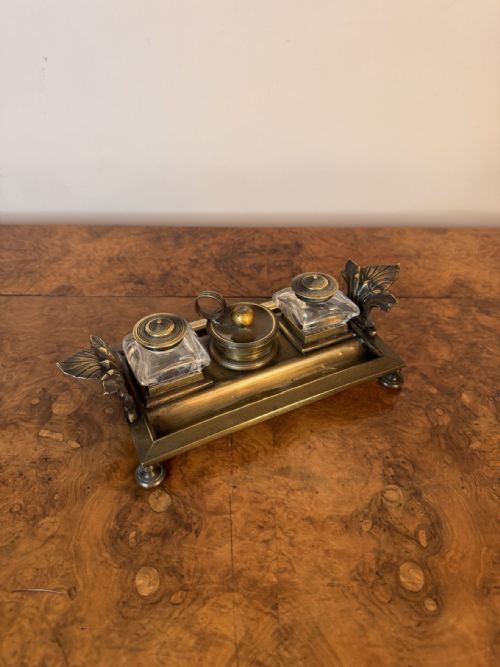
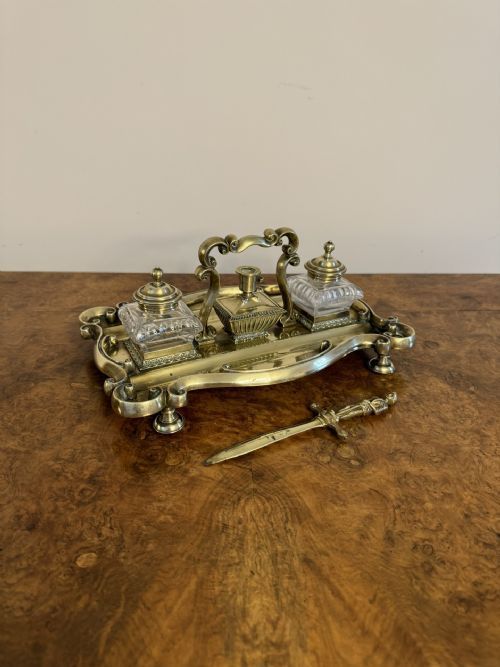
A brass inkstand desk set serves as a portable or stationary writing accessory designed to hold ink bottles, pens, and paper items neatly upon a desk. These items range from simple nineteenth-century brass stands to elaborate Victorian configurations incorporating multiple inkwells and compartments.
The versions most commonly met on this page combine cast brass frames with fitted glass bottles, frequently mounted on wooden bases or marble plinths. Pieces span from the eighteenth century through the Edwardian era, taking forms such as standishes, companion sets, and ink tidies.
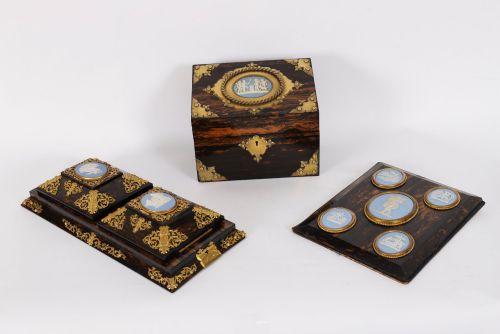
Makers utilised various decorative vocabularies, including French Napoleon III, Art Nouveau, and Victorian Gothic Revival, adapting the core brass structure to suit changing domestic tastes. Buyers encounter both plain utility models and heavily decorated desk furnishings featuring cabochons, enamel, or figural castings.
Materials and Construction
Foundry work and metal casting form the basis of these pieces, utilising brass, ormolu, and gilt bronze shaped into stands, frames, and hinged lids. Metal components often receive chased or cast surface detail before being combined with other media.
Glassmakers supplied the heavy cut-glass or plain glass ink bottles that sit within the metal rings, frequently accompanied by ceramic, porcelain, or marble inserts. Natural elements such as agate cabochons and stag antler appear alongside enamel work to enrich the finished desk furniture.
Brass Inkstand Desk Set Retail Price Guide 2026
Typical asking prices for brass inkstand desk set among the pieces listed under this phrase on Sellingantiques today, from the lower quarter to the upper quarter. They describe what is for sale here now, not the wider market.
Listings demonstrate desk sets constructed from brass, ormolu, and gilt bronze, frequently combined with coromandel wood, mahogany, marble, and cut glass.
Distinctions in Quality
The refinement of the casting and chiselling separates standard utilitarian pieces from exceptional examples, showing crisp relief in floral, foliate, or figural motifs. Superior metalwork retains its sharp edges and well-defined decorative borders rather than appearing softened from worn moulds.
The choice and treatment of subsidiary materials indicate the grade of the piece, particularly where exotic woods, intricate Boulle work, or high-grade marble bases are employed. Matching sets retain their original ink bottles and coordinated components rather than replacement glassware.
Structural integrity of the fitted elements, including functioning hinges on inkwell lids and properly seated drawers within the wooden bases, distinguishes better workshops. Heavier gauge brass and substantial bases provide the physical weight expected in quality desk equipment.
James Cartland & Sons·J.M. Paillard, Paris·Moser
The Brass Inkstand Desk Set Glossary
- Standish
- An early term for a desk stand that holds ink, sand, and pens. These portable writing trays often incorporate small bell or drawer compartments.
- Ormolu
- Gilt-bronze mounted furniture and decorative items produced by applying a gold amalgam to a bronze base. This technique creates a rich golden finish popular in French decorative arts.
- Boulle work
- Marquetry technique utilising brass and tortoiseshell inlaid into wooden furniture surfaces. This decorative method appears on sophisticated nineteenth-century desk stands.
- Champlevé
- Enamelling method where troughs are dug into a metal surface and filled with vitreous paste before firing. The technique produces colourful patterns on brass desk accessories.
- Cabochon
- A gemstone or mineral polished smooth rather than faceted into flat planes. Agate cabochons frequently adorn the corners or frames of mid-nineteenth-century desk sets.
Brass Inkstand Desk Set: Frequently Asked Questions
Are the ink bottles usually original?
Many surviving desk sets retain their original cut-glass or moulded ink bottles, often featuring matching brass collars or hinged lids. Finding a set with matching glass adds significantly to its completeness.
Replacement bottles do occur frequently due to the fragile nature of glass over time. Examining the fit within the brass aperture helps determine if the bottles belong to the original stand.
What is the difference between an inkstand and a desk set?
An inkstand specifically centres on the inkwell and pen rest mounted on a tray or base. These focused pieces are designed primarily for writing tasks.
A desk set encompasses a broader collection of matching accessories, which might include stationary racks, blotters, and multiple inkwells. Both categories share similar brass construction techniques and decorative styles.
How should I clean antique brass?
Maintenance requires gentle dusting with a soft, dry cloth to protect the aged patina and any applied gilding. Harsh metal polishes should be avoided as they remove the historical surface colour.
If the piece incorporates wood, marble, or tortoiseshell, cleaners must be kept strictly away from those sensitive materials. Professional advice is recommended if deeper restoration of the metal surface becomes necessary.