




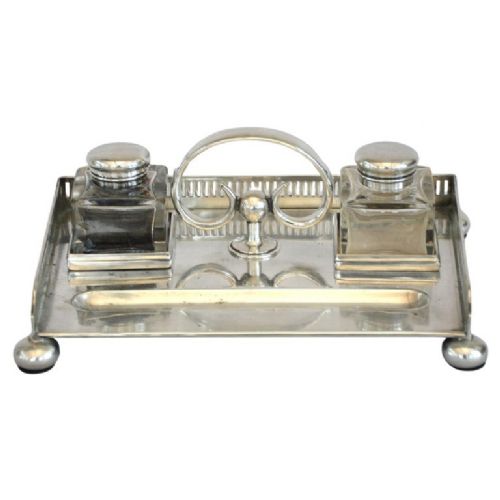


Double Glass Inkstand
A double glass inkstand brings order to the writing desk while holding twin reservoirs of ink.
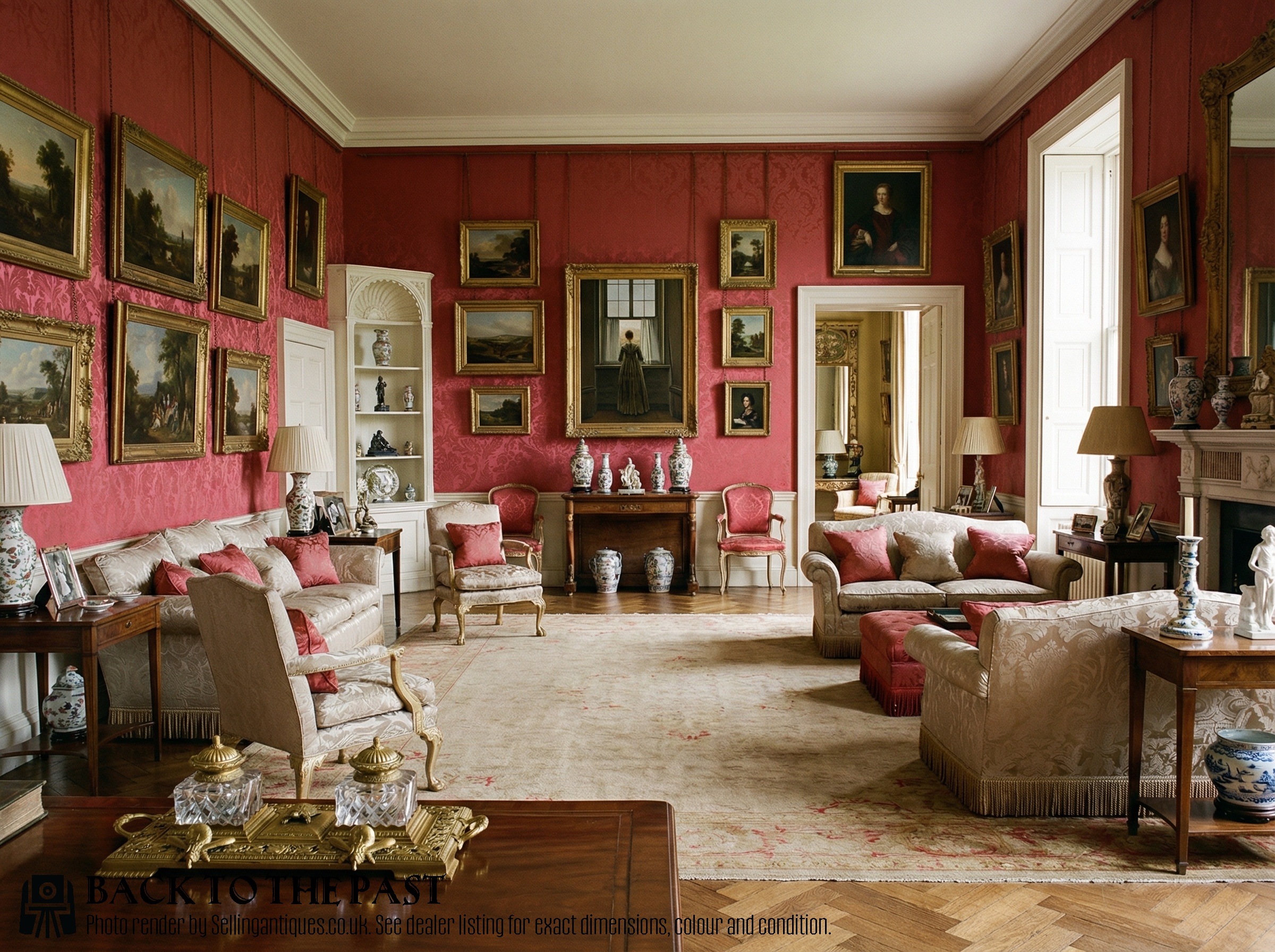
Double Glass Inkstand
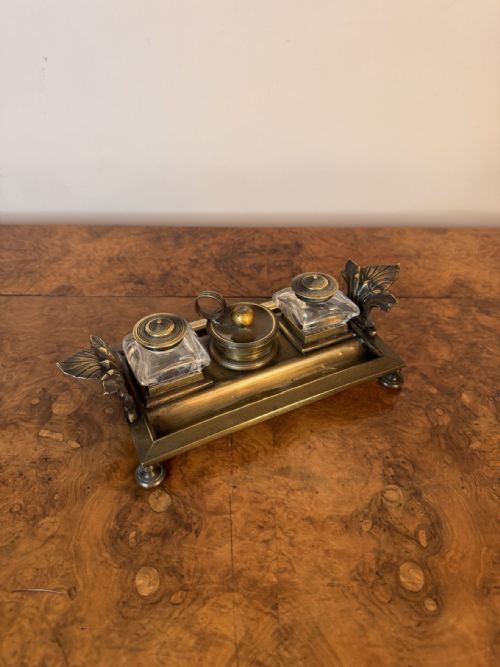
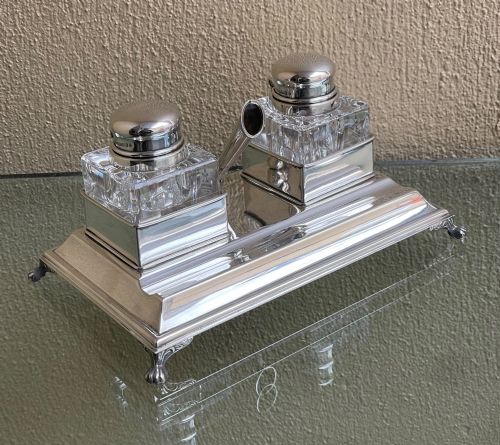
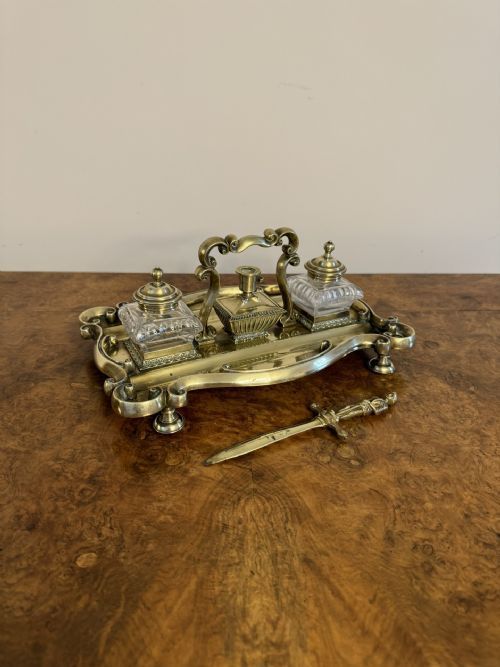
A double glass inkstand serves as a functional centrepiece for the nineteenth and early twentieth century desk, holding two inkwells alongside pen trays or candle holders. These pieces appear frequently from the Victorian and Edwardian eras, fashioned in brass, silver plate, sterling silver, and various woods.
The form ranges from simple wooden and brass trays to elaborate French or Black Forest carved designs incorporating clocks, drawers, and chambersticks. Cut glass inkwells sit within mounted frames, often retaining their original hinged lids and glass inserts.
Makers and silversmiths structured these stands to manage correspondence before the advent of the ballpoint pen, requiring sturdy bases to anchor the heavy glass bottles.
Materials and construction
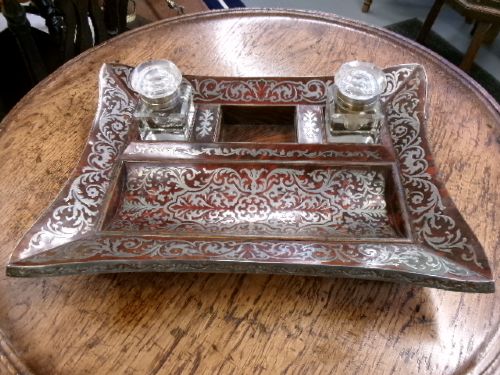
Casting and plating form the backbone of metal examples, utilising brass, silver plate, and sterling silver over heavy frames. Woodworkers shaped oak, walnut, mahogany, and ebony, frequently embellishing the surfaces with boulle work, brass mounts, or hand-carved motifs.
Glasscutters fashioned the heavy ink reservoirs using lead crystal and cut glass techniques, pairing the vessels with hinged metal collars and lids. Silver components bear hallmarks from assay offices in London, Birmingham, and Sheffield to designate metal purity and date.
Double Glass Inkstand Retail Price Guide 2026
Typical asking prices for double glass inkstand among the pieces listed under this phrase on Sellingantiques today, from the lower quarter to the upper quarter. They describe what is for sale here now, not the wider market.
Listings feature periods spanning from the eighteenth century through the 1930s, encompassing Victorian, Edwardian, and Art Deco designs.
Distinctions in craftsmanship
The calibre of a double glass inkstand rests upon the weight of the metal mountings and the crispness of any hand-carving or brass chasing. Pieces featuring matched cut glass bottles with undamaged collars and fully operational hinged lids command greater interest.
Substantial hardwood bases, intricate marquetry, and comprehensive silver hallmarks elevate certain examples above standard utilitarian desk accessories.
Walker And Hall·James Cartland And Sons·Daniel Holy Of Sheffield·Moser
The Double Glass Inkstand Glossary
- Standish
- A portable desk stand or tray fitted with inkwells, pen holders, and sometimes a sander or bell. It served as a central writing accessory in affluent households.
- Boulle work
- An elaborate form of marquetry utilising tortoiseshell and brass inlay, popular in French desk sets from the nineteenth century.
- Chamberstick
- A short candlestick fitted with a handle and a drip pan, occasionally incorporated into the frame of a larger desk stand.
- Hallmark
- An official stamp applied to precious metals indicating the standard of silver, the assay office, and the date of manufacture.
Double Glass Inkstand: Frequently Asked Questions
How do I date a silver inkstand?
Silver examples typically carry hallmarks that indicate the assay office, maker, and exact year of production. Researching these stamped codes provides a reliable timeline.
Style, construction methods, and mounting designs offer secondary clues for dating unmarked or mixed-material pieces.
Are the glass inkwells usually original?
Many surviving stands retain their original heavy cut glass bottles, which fit precisely into the designated collars. Replacements do occur due to breakage over the decades.
Matching glass thickness and base dimensions helps determine if the bottles belong to the original stand.
What woods were used for desk stands?
Cabinetmakers utilised dense hardwoods such as oak, walnut, mahogany, and ebony to support the weight of metal mounts and glass inkwells. Burr walnut and inlaid veneers appeared on higher-end decorative pieces.
Carved wooden examples from the Black Forest frequently employed local softwoods or fruitwoods.
How were these stands used daily?
The dual inkwells allowed a writer to maintain two colours of ink, typically black and red, for regular correspondence and accounting. Pen trays kept dipping pens within reach beside the bottles.
Additional compartments or drawers stored nibs, stamps, and sealing wax.