




Antique Glass Ink Bottle
An antique glass ink bottle brings tactile weight and period character to a desk.

Antique Glass Ink Bottle
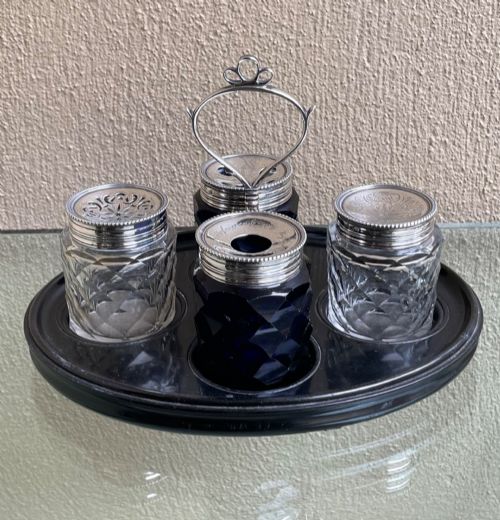
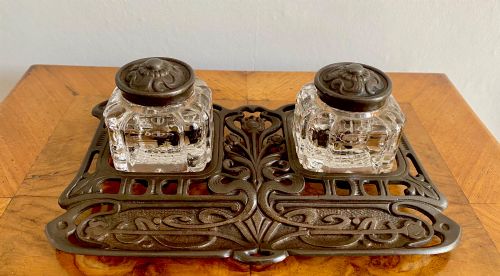
An antique glass ink bottle serves as a desktop reservoir for writing fluid, typically paired with mounts of sterling silver, silver plate, or brass. These pieces appear across Victorian, Edwardian, and Georgian periods, often housed within fitted inkstands or desk sets alongside wood, horn, or leather.
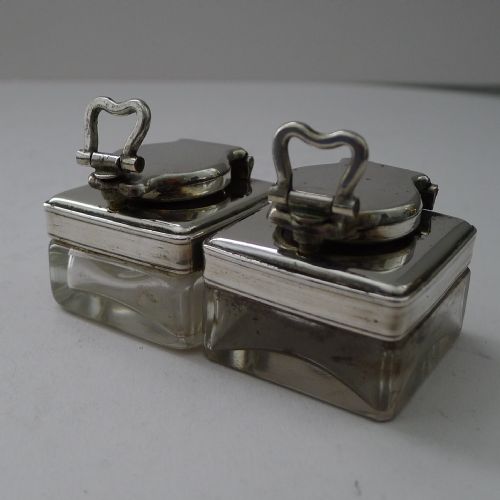
The version most commonly encountered on this page combines a heavy glass or cut glass body with a hinged metal lid, designed to sit securely upon a desk or travel within a fitted case. Many examples retain their original glass inserts, showing the practical forms used in daily correspondence before the advent of the fountain pen.
How they were made
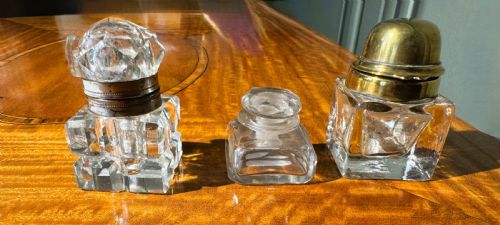
Makers shaped the vessels using heavy blown or cut glass to provide the stability required when dipping a quill or steel nib. Metal collars and hinged lids in sterling silver, silver plate, or brass were then fitted to the glass necks, often secured with cork or leather seals for travel.
Composites of multiple materials appear frequently, combining glass bodies with bases of ebony, oak, walnut, papier-mâché, or horn. Metal mounts frequently carry hallmarks or registration dates that record the exact year and assay office of production.
The listings show glass combined with sterling silver, silver plate, brass, ebony, oak, walnut, papier-mâché, and horn across Victorian, Edwardian, and Georgian periods.
What varies in quality
Quality rests upon the clarity and weight of the glass, the crispness of any cut facets, and the substantial nature of the metal fittings. Heavier glass bodies combined with robust sterling silver mounts or well-figured wooden stands represent the finer end of production.
The survival of original components dictates desirability. Pieces retaining their matching glass inserts, intact hinged lids, and untouched desk stands command greater attention than those with later replacements or mismatched parts.
James Cartland & Sons
The Antique Glass Ink Bottle Glossary
- Inkstand
- A portable or stationary desk stand holding one or more ink bottles alongside pen trays and sometimes sanders or taper sticks.
- Cut glass
- Glass decorated by cutting facets or patterns into the surface using a wheel, adding weight and brilliance to the bottle.
- Hallmark
- Official marks stamped onto silver and gold items indicating the maker, assay office, and year of testing.
- Treen
- Small handmade wooden objects produced as decorative or utilitarian items.
- Papier-mâché
- A composite material made of paper pulp or layers of paper bound with glue, pressed and varnished for desk accessories.
Antique Glass Ink Bottle: Frequently Asked Questions
How do I date an antique ink bottle?
Dating relies heavily on metal hallmarks stamped onto silver mounts, or stylistic clues within the associated wooden stands and desk accessories.
Changes in glass manufacturing techniques, such as pontil marks and mould seams, also help narrow down the period of production.
Were these bottles meant for travel?
Many examples were specifically designed as travel inkwells, featuring screw-down lids or secure leather cases to prevent leaks in transit.
Stationary desk models remained heavier and relied on open stands or fitted desk sets.
What is the difference between an inkwell and an inkstand?
An inkwell is simply the individual vessel or container that holds the ink.
An inkstand is a larger desk accessory that incorporates one or more inkwells alongside space for pens, wafers, or sand.
How should I clean an antique glass ink bottle?
Gentle washing with warm water and mild soap removes dried ink residue from the interior without damaging the glass.
Harsh abrasives and chemical cleaners must be avoided, particularly near silver mounts or fragile paper and leather surfaces.