

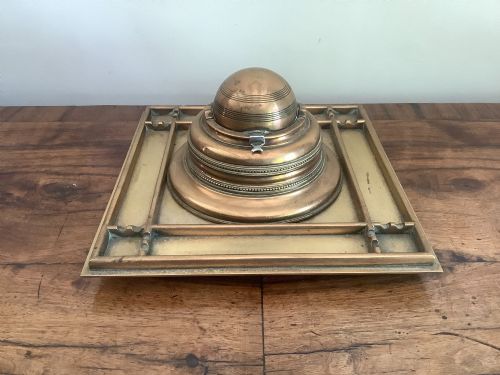


Antique Desk Inkstand Tray
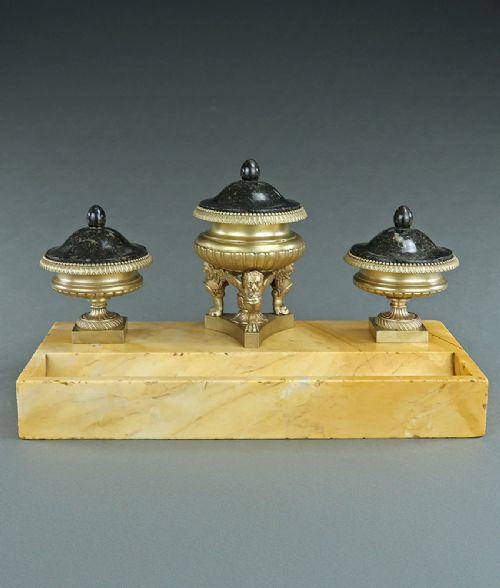
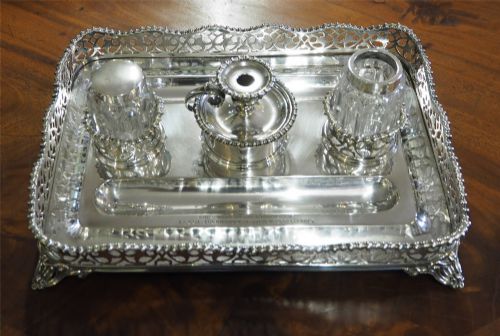
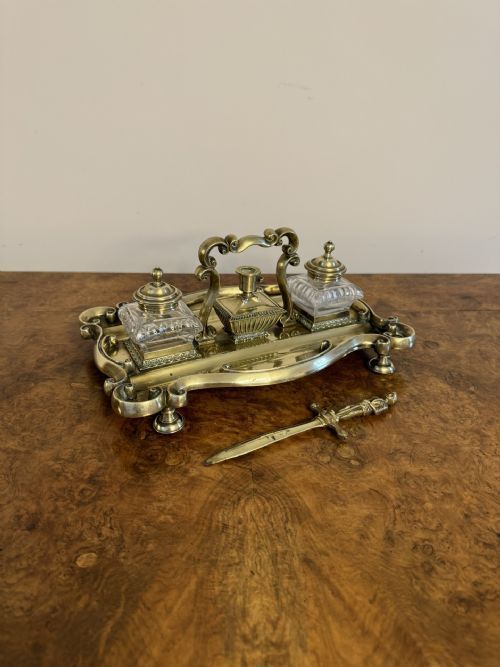
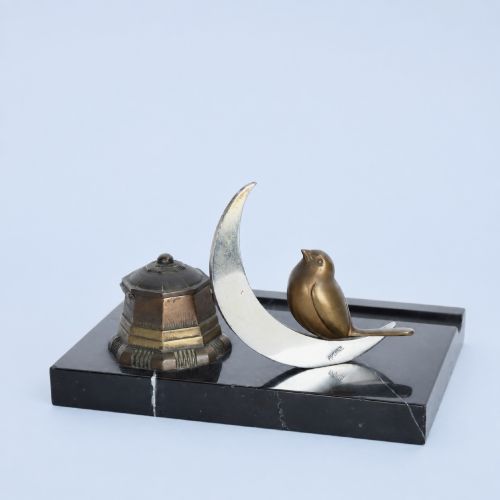
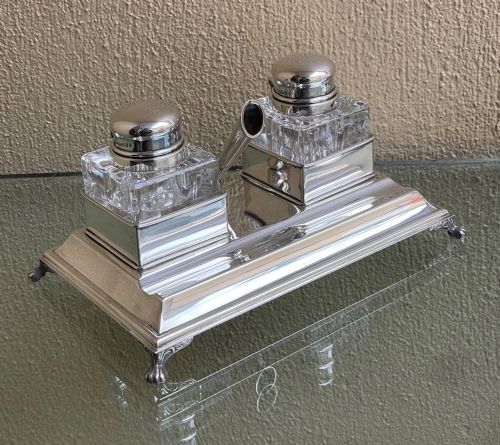
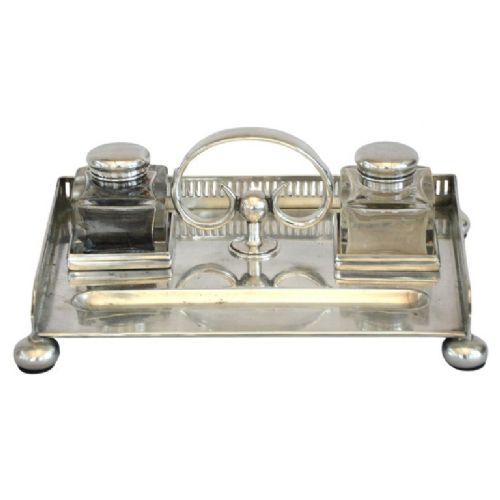
An antique desk inkstand tray organises the writing table, holding inkwells and pens in brass, silver, wood or bronze.
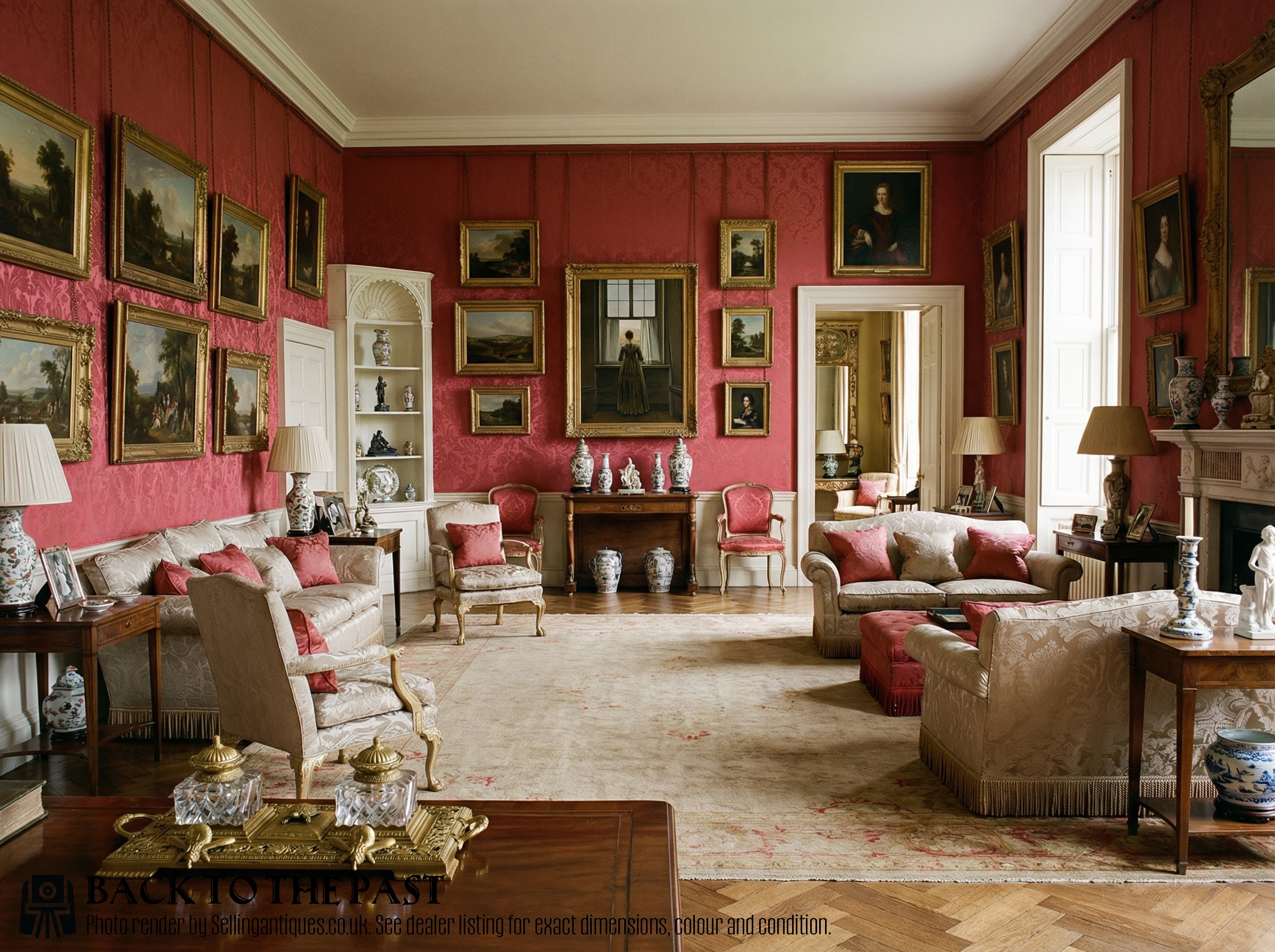
Antique Desk Inkstand Tray
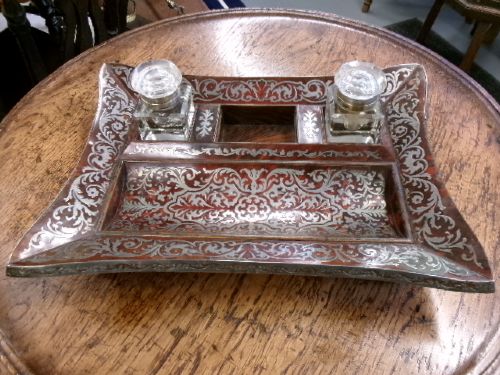
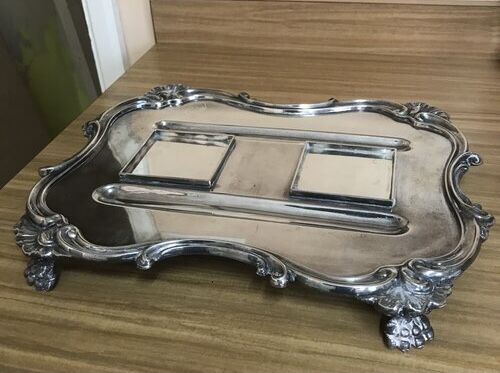
When searching for an antique desk inkstand tray, you encounter pieces designed to hold inkwells, sanders, and pens upon a writing table. These accessories appear most frequently in Victorian brass, silver plate, and inlaid exotic woods, reflecting the heavy correspondence of the nineteenth century.
Forms range from simple pen trays with a single well to elaborate double-inkstands incorporating chambersticks and bell pulls. The selection spans utilitarian brass items alongside decorative pieces in porcelain, bronze, and tortoiseshell.
Origins include English workshops, French foundries, and German carvers, showing diverse regional tastes in desk furniture. Most examples date from the nineteenth century, encompassing styles from Regency restraint to ornate Rococo and Art Nouveau curves.
Materials and construction methods
Metals form the core of many pieces, utilising cast brass, patinated bronze, and silver plate over copper or Britannia metal. Silversmiths hammered and chased solid silver mounts, while foundries cast heavy bronze and brass bases with intricate detailing.
Cabinetmakers constructed wooden trays from dense timbers like coromandel, walnut, and rosewood, often employing brass stringing, mother-of-pearl inlay, and boulle work. Carved wood examples utilise softer timbers shaped into animal forms, while papier-mâché trays feature hand-painted lacquer finishes.
Glassmakers blew and cut heavy lead crystal for the accompanying inkwell inserts, fitting them with hinged silver or brass lids. Ceramics appear through Delft faience and Minton porcelain, fired and glazed to provide a smooth surface for resting quibs and steel nibs.
Among the writing accessories, a carved wooden cat stands ready to hold ink.
Distinguishing quality in desk trays
The weight of the metal and density of the timber dictate the baseline quality of the piece. Solid cast bronze and heavy gauge silver plate demonstrate substantial heft compared to hollow stampings or thin veneers.
Detailing in the chased ornamentation, hand engraving, and precision of marquetry inlay separate standard production from masterwork output. Superior items retain their original glass or crystal inkwells with matching hallmarks and well-fitted hinged lids.
Elkington·Walker And Hall·Harrods·WMF·Robert Garrard·Rupert Favell·Lefebvre
The Antique Desk Inkstand Tray Glossary
- Standish
- An alternative term for an inkstand, often denoting a more substantial portable tray that holds writing implements, sanders, and sealing wax drawers. These portable writing cabinets sat upon desks or travelled inside carriages.
- Boulle work
- Marquetry technique utilising tortoiseshell and brass inlaid in contrasting floral or arabesque patterns. Named after the French cabinetmaker André-Charles Boulle, it appears frequently on mid-nineteenth-century desk stands.
- Faience
- Tin-glazed earthenware, characteristic of Dutch Delft inkstands decorated in blue and white. The glaze provides an opaque white surface suitable for hand-painted cobalt designs.
- Ormolu
- Gilded bronze mounted onto decorative objects and furniture, popular in French and English Empire pieces. The mercury gilding process imparts a warm, durable golden lustre to cast brass or bronze bases.
- Chamberstick
- A low candlestick attached directly to the base of an inkstand, designed to hold a wax taper for melting sealing wax. These multi-functional desk accessories provided both illumination and the means to seal letters.
Antique Desk Inkstand Tray: Frequently Asked Questions
What is the difference between an inkstand and an inkwell?
An inkstand refers to the complete tray or base unit that accommodates one or more inkwells, pen rests, and sometimes accessory pots for sand or wafers. It serves as the primary desk organiser.
An inkwell is simply the individual glass or ceramic vessel with a lid that holds the liquid ink itself, which may sit inside an inkstand or stand alone.
How were antique inkstands used on a desk?
These trays sat centrally on a partner desk or writing table to provide immediate access to writing materials during correspondence. The inkwells held the ink for dipping quill or steel nib pens, while the tray channels kept pens from rolling away.
Additional compartments often held sanders for drying wet ink, wafer boxes for sealing letters, and taper sticks for melting sealing wax.
How can I date an antique desk inkstand tray?
Dating relies on stylistic clues, construction methods, and maker's marks stamped into the metal or engraved on silver mounts. Regency and early nineteenth-century pieces often feature clean neoclassical lines, whereas Victorian examples tend towards heavier ornamentation and ornate cast brass.
Silver components frequently bear assay office hallmarks and date letters that pinpoint the exact year of manufacture.
Can I still use an antique inkstand for writing?
Many antique inkstands remain fully functional for modern use if the glass or crystal inkwells are intact and free from cracks. Collectors often use them with modern fountain pens or dip pens.
Check that the hinged metal lids open smoothly and that the internal collars seat properly to prevent ink from drying out quickly.