


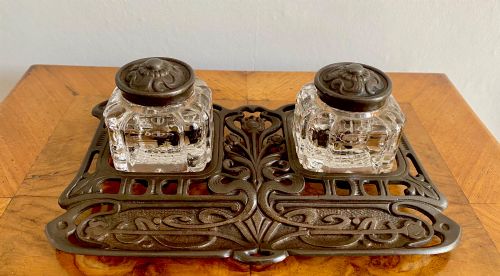


Brass Double Inkwell Stand
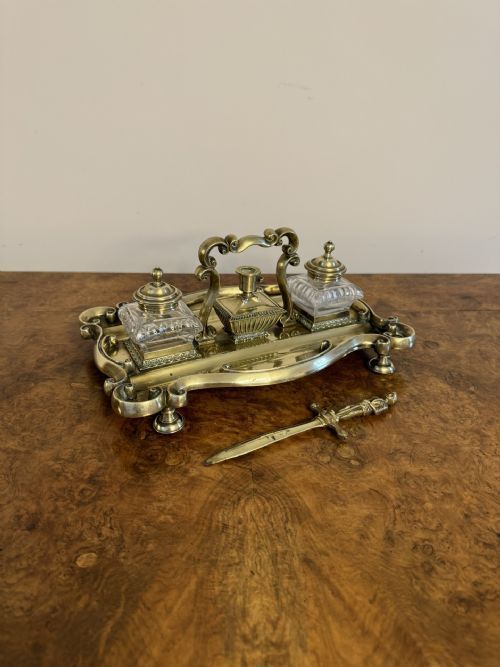
A brass double inkwell stand anchors a desk with heavy metalwork and paired glass, offering the weighty presence every writer needs.
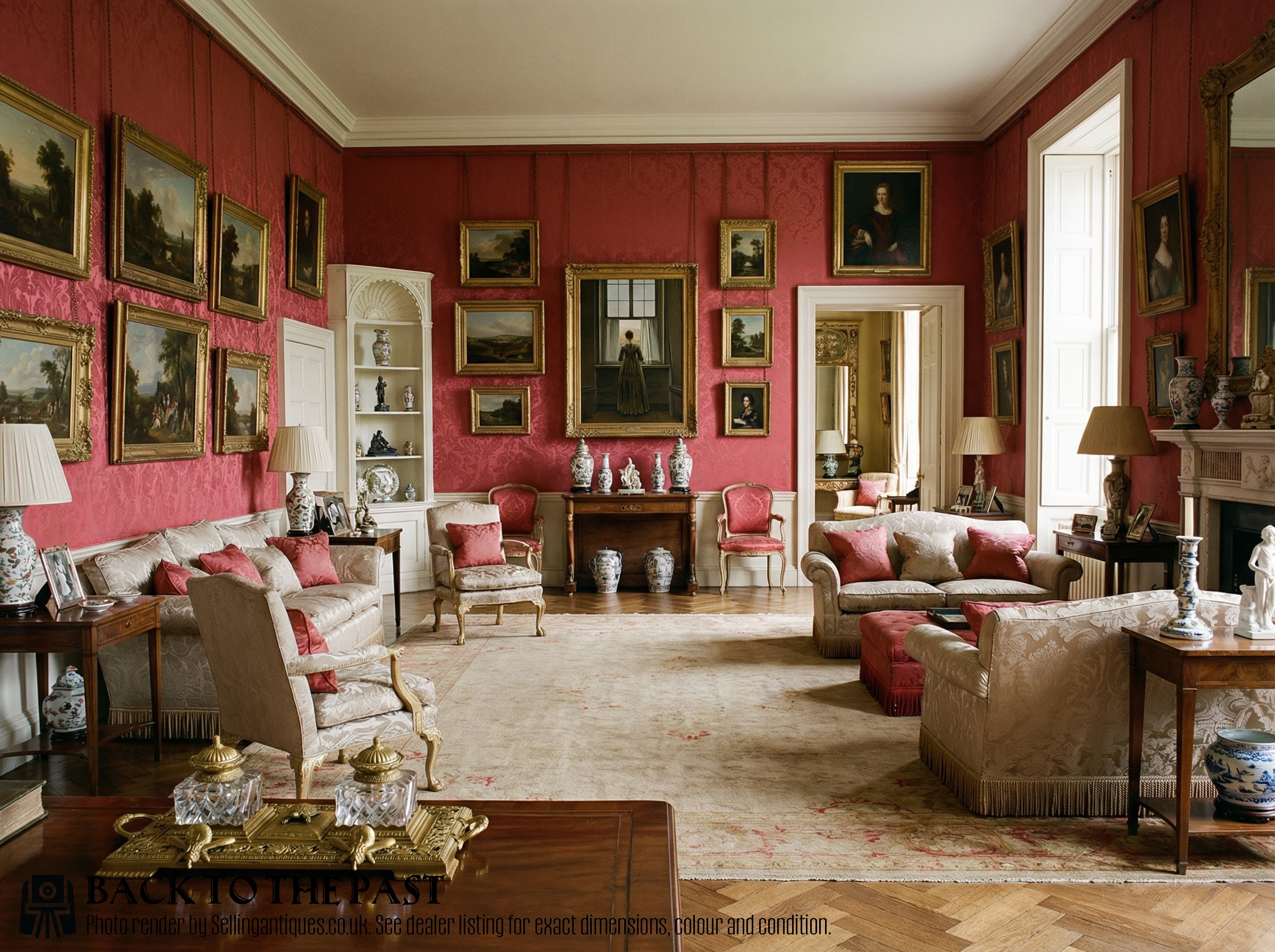
Brass Double Inkwell Stand
A brass double inkwell stand brings together dual ink reservoirs within a mounted base, serving as a central desk accessory for correspondence. These pieces most frequently emerge from the Victorian and Edwardian periods, alongside mid-nineteenth-century examples.
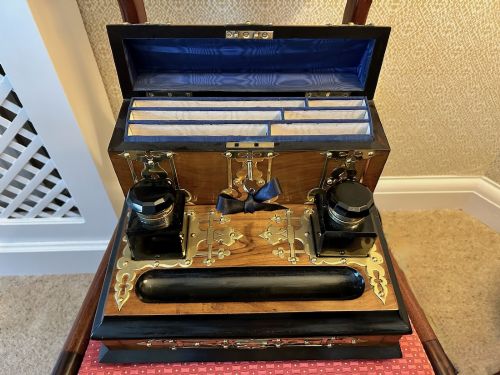
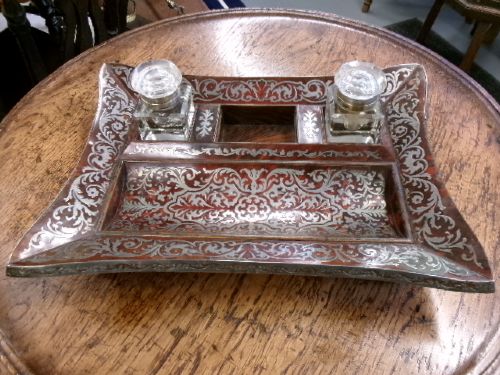
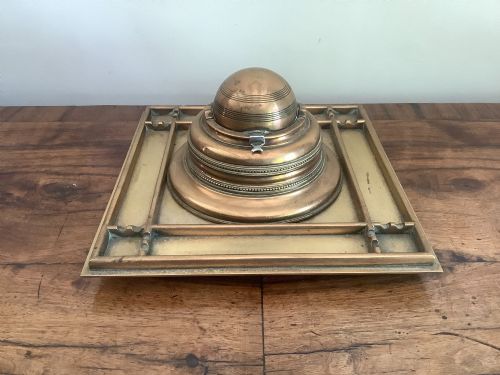
The form appears in various configurations, including walnut and mahogany desk sets, Boulle work stands, and freestanding ormolu designs. Many incorporate wooden trays or drawers, while others rely entirely on cast brass and cut glass components.
How they were made
The construction relies heavily on cast brass combined with glass ink bottles, often mounted to timber bases such as walnut, mahogany, or burr walnut. Ormolu and tortoiseshell appear on finer French-influenced examples, utilising intricate inlay and metal mounts.
Casting techniques produce the ornate borders and heavy feet characteristic of Victorian and Art Nouveau workshops. Wood elements are shaped and polished to frame the metalwork and secure the twin inkwells.
The listings span from 1850 through the Edwardian era, incorporating materials like mahogany, walnut, ormolu, and tortoiseshell alongside brass.
What varies in quality
The standard of a brass double inkwell stand depends on the crispness of the brass casting and the integrity of the fitted materials. Finer specimens display detailed ornamentation and substantial timber bases rather than lightweight pressed metal.
The presence of original cut glass ink bottles elevates a piece significantly, particularly when matching the contours of the stand. Superior examples also integrate functional drawers or secondary materials like tortoiseshell and Boulle work with precision.
James Cartland & Sons
The Brass Double Inkwell Stand Glossary
- Ormolu
- Gilded bronze or brass applied to decorative objects and furniture mounts. It provides a bright golden finish that catches the light on nineteenth-century desk stands.
- Boulle work
- An elaboration of marquetry using tortoiseshell and brass inlay, named after a French cabinetmaker. It transforms a simple writing stand into a decorative centrepiece.
- Inkstand
- A tray or stand holding inkwells, pens, and sanders for a desk. These items organise writing materials within arm's reach.
- Burr walnut
- Wood taken from the growth growths of a walnut tree, yielding swirling grain patterns. It adds rich visual texture to Victorian desk accessories.
Brass Double Inkwell Stand: Frequently Asked Questions
What is a brass double inkwell stand?
A brass double inkwell stand is a desk accessory designed to hold two separate ink bottles, usually mounted on a metal or wooden tray.
These pieces served as the centrepiece for correspondence in nineteenth- and early twentieth-century offices and homes.
How were these stands used?
They held black and red ink for writing letters, keeping the bottles stable and accessible on a desk.
Many included additional compartments for pens, stamps, or small stationery items in an integrated drawer.
How do I date an inkstand?
Dating relies on the stylistic clues of the metalwork, wood veneers, and glass cutting techniques present in the piece.
Victorian stands often feature heavy cast brass and ornate decoration, while Edwardian versions tend towards lighter construction.
Are the ink bottles usually original?
Many stands retain their original cut glass ink bottles, though replacements are common due to breakage over time.
Matching glass inserts that fit the specific collar and well shape indicate a higher degree of completeness.