





Cut Glass Brass Inkwell
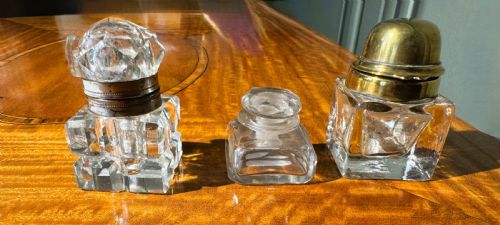
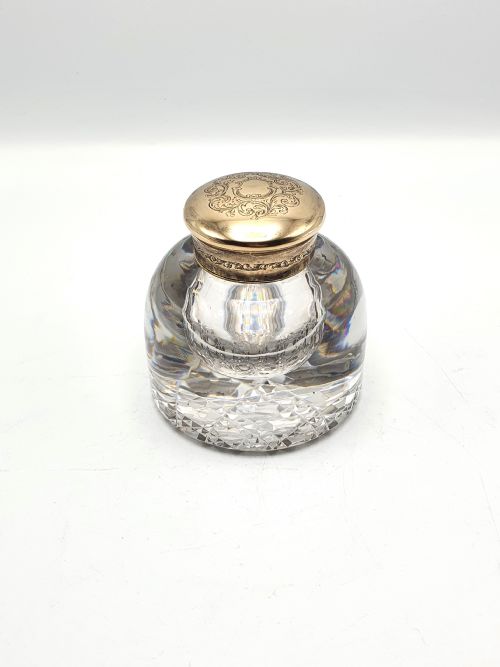
A cut glass brass inkwell anchors a writing desk with heavy metalwork and deep crystal facets that catch the light.

Cut Glass Brass Inkwell
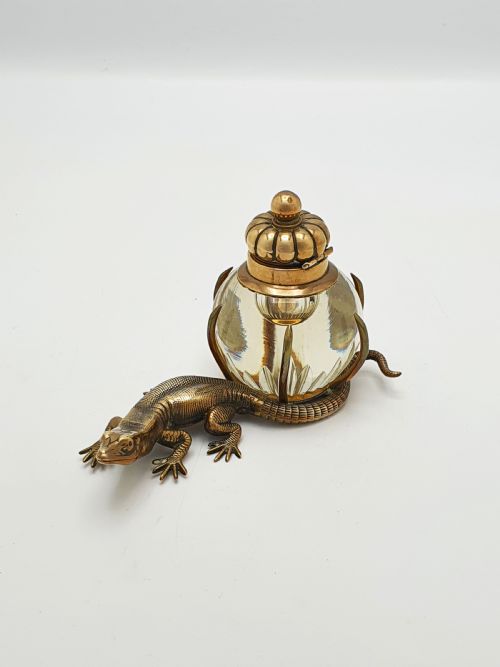
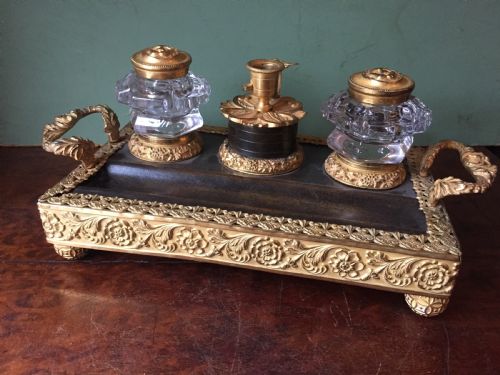
When you search for a cut glass brass inkwell, you find desk accessories designed to hold liquid ink for dipping pens. These pieces range from simple desk stands holding a single cut glass ink pot to elaborate inkstands incorporating ormolu, gilt bronze, and fine woods like coromandel and oak. You are most likely to meet Victorian examples featuring heavy cast brass mounts alongside faceted glass or crystal vessels.
The forms span individual inkwells, double inkwells, and larger desk sets that combine the ink pots with pen trays or desk clocks. Origins stretch from English workshops to French Empire and Austrian Secessionist designs, reflecting the varied tastes of the nineteenth and early twentieth centuries.

How they were made
Makers combined heavy brass, ormolu, or gilt bronze frames with thick glass or crystal that was deeply cut by hand to create refractive patterns. Secondary materials such as coromandel wood, oak, tortoiseshell, and mother-of-pearl formed the bases and body panels of the more complex desk stands.
Metal components were cast and chased, whilst glass vessels were blown and wheel-cut to produce sharp geometric or floral facets that fit securely into metal collars.
Listings feature brass, cut glass, coromandel wood, oak, and ormolu across nineteenth and early twentieth-century periods.
What varies in quality
The distinction between standard and superior pieces rests on the crispness of the brass casting and the depth of the glass cutting. Better examples exhibit finely detailed chasing on the metal mounts, substantial glass weight with sharp, clean facets, and fitted hinged lids that close flush against polished collars.
Secondary materials also drive quality distinctions, where dense timbers like coromandel or elaborate figural bronze castings elevate the piece far beyond simple utility.
James Cartland & Sons·Moser
The Cut Glass Brass Inkwell Glossary
- Cut glass
- Glass that has been shaped and patterned by holding it against a revolving wheel. This process produces deep, sharp facets that refract light.
- Ormolu
- Gilt bronze mounted on decorative objects, created by applying a gold amalgam to bronze and heating it. It provides a bright golden finish.
- Inkstand
- A tray or stand holding one or more inkwells, often with space for pens and sealing wax. These formed the central equipment of a nineteenth-century desk.
- Coromandel wood
- A dense, heavy timber with dark brown and black grain patterns, imported from Asia. It was frequently used for luxury Victorian desk accessories.
- Napoleon III style
- A nineteenth-century French design movement reviving earlier historic aesthetics with rich ornamentation and inlay. It often incorporates tortoiseshell and brass marquetry.
Cut Glass Brass Inkwell: Frequently Asked Questions
What is a cut glass brass inkwell?
A cut glass brass inkwell is a desk accessory comprising a glass or crystal ink pot with decorative facets, fitted into a heavy brass collar and base. These items were essential desktop tools for holding liquid ink during the eras of dip pens.
They range from single standalone ink pots to elaborate multi-piece inkstands featuring hinged lids and pen rests.
How do I date a brass inkstand?
Dating relies on observing stylistic markers, material combinations, and manufacturing techniques characteristic of periods like the Victorian, Regency, or Art Deco eras. Heavier cast brass work alongside specific wood veneers like coromandel often points to mid-to-late nineteenth-century production.
Maker marks, where present on the metal components, help narrow down the exact workshop and decade of origin.
How were these inkwells used?
They sat upon writing desks, secretary desks, and library tables to provide a ready supply of ink for quill or metal-nib pens. The heavy glass pots prevented tipping, while hinged metal lids kept the ink from drying out too quickly.
Many included integrated trays to hold pens when not in use.
How do I clean cut glass?
Cleaning involves washing the glass vessel in warm, soapy water with a soft cloth to remove dried ink residue or dust. A soft brush helps clear out stubborn buildup within the deep cut facets without scratching the surface.
Harsh abrasives must be avoided to preserve the clarity and polish of the crystal.
Are these inkwells still functional?
Most antique inkwells function adequately for holding ink and using with dip pens today. Collectors typically display them as decorative antiques rather than daily writing implements due to the age of the materials and delicate hinges.
Care should be taken with original interior liners and metal collars to prevent corrosion.