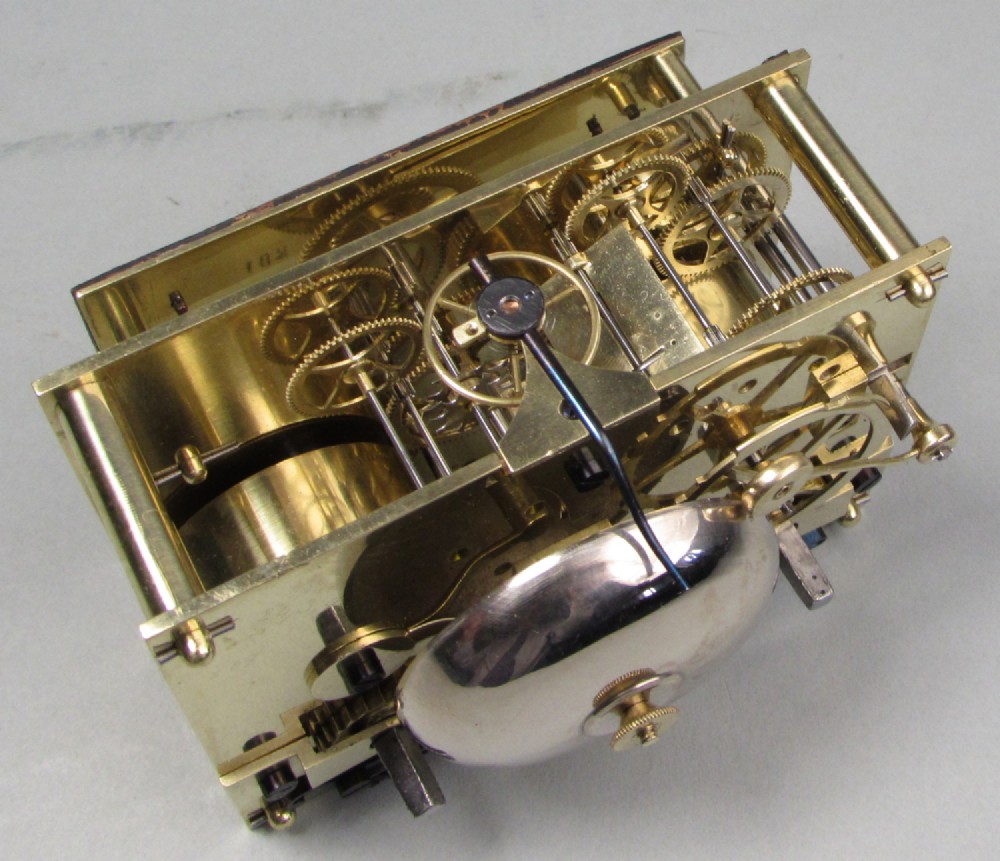
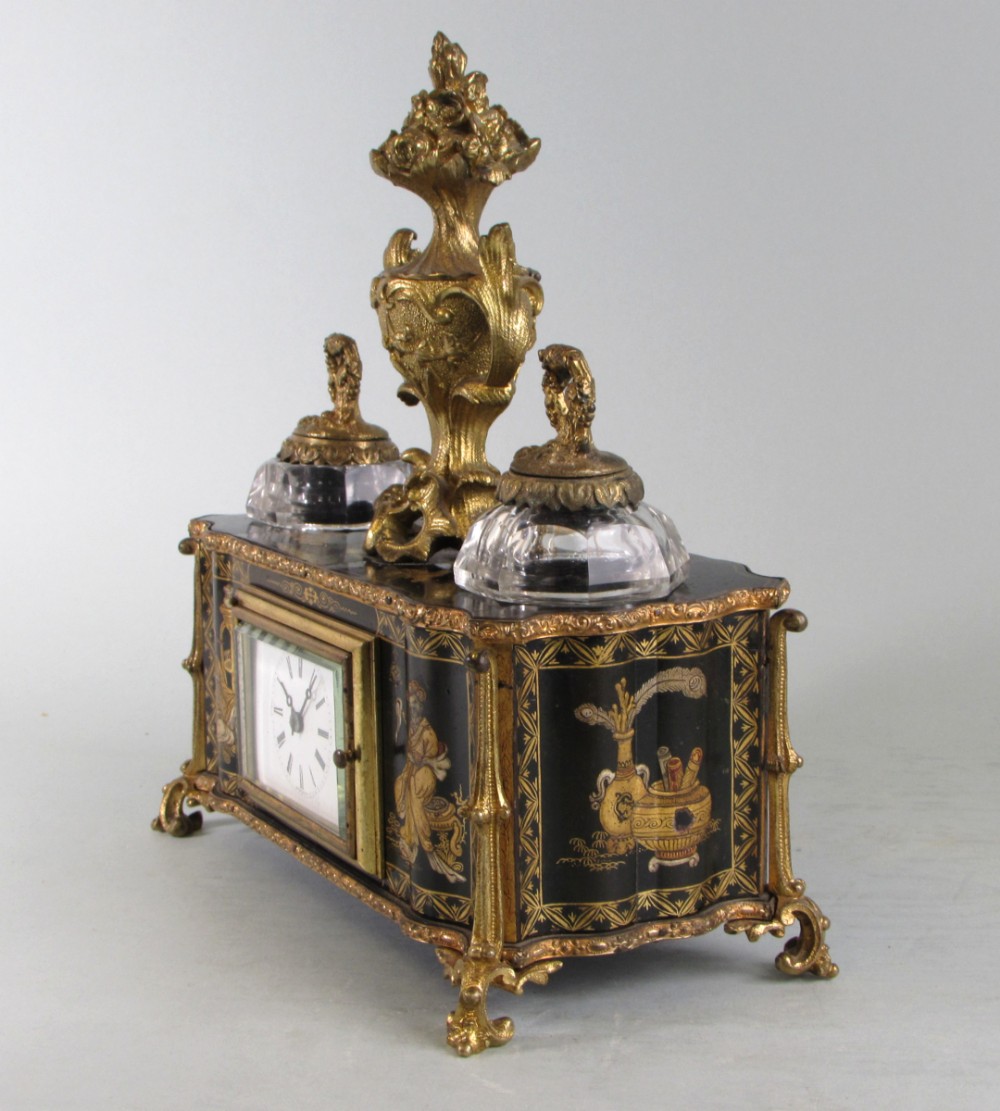
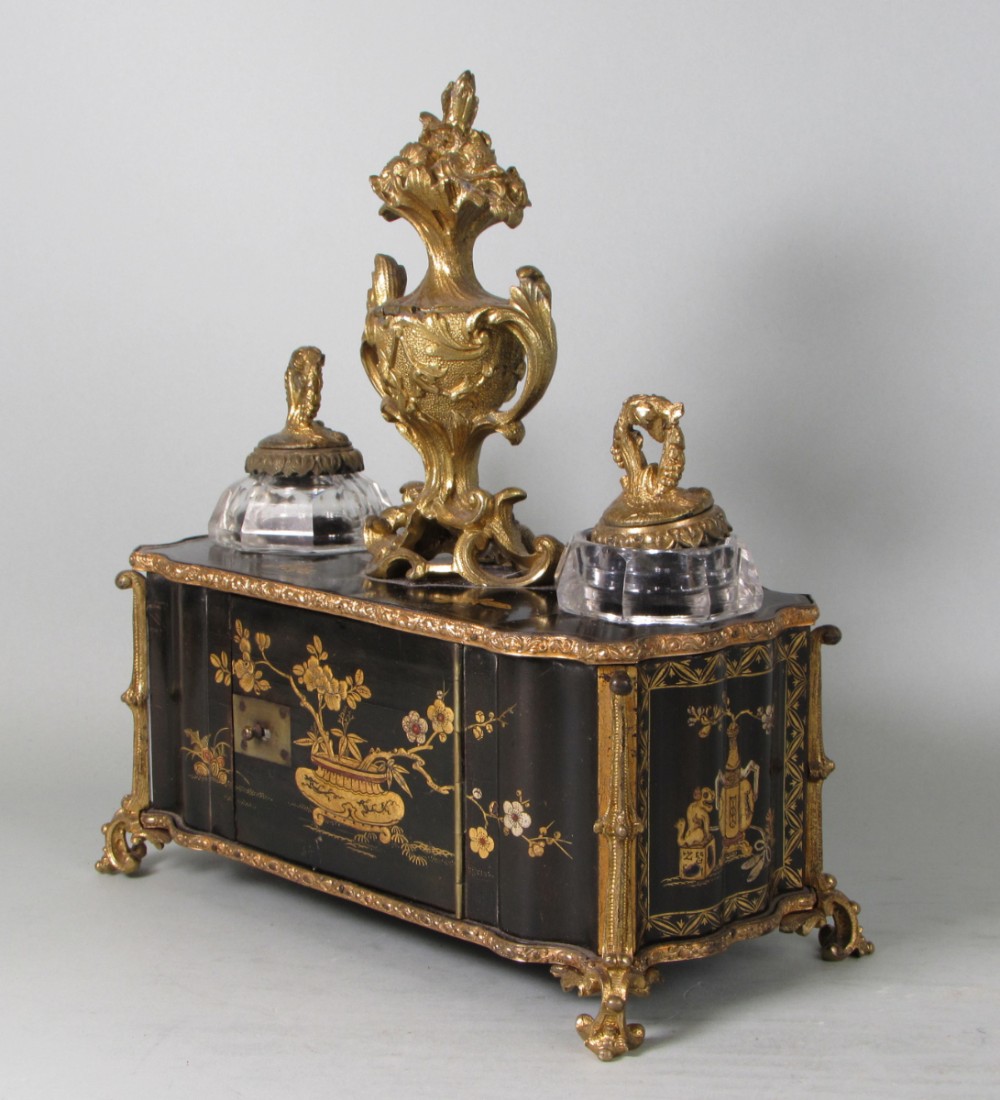
Leigh Extence Antique Clocks has dated this Antique Chinoiserie Inkstand Clock to the 1860s.
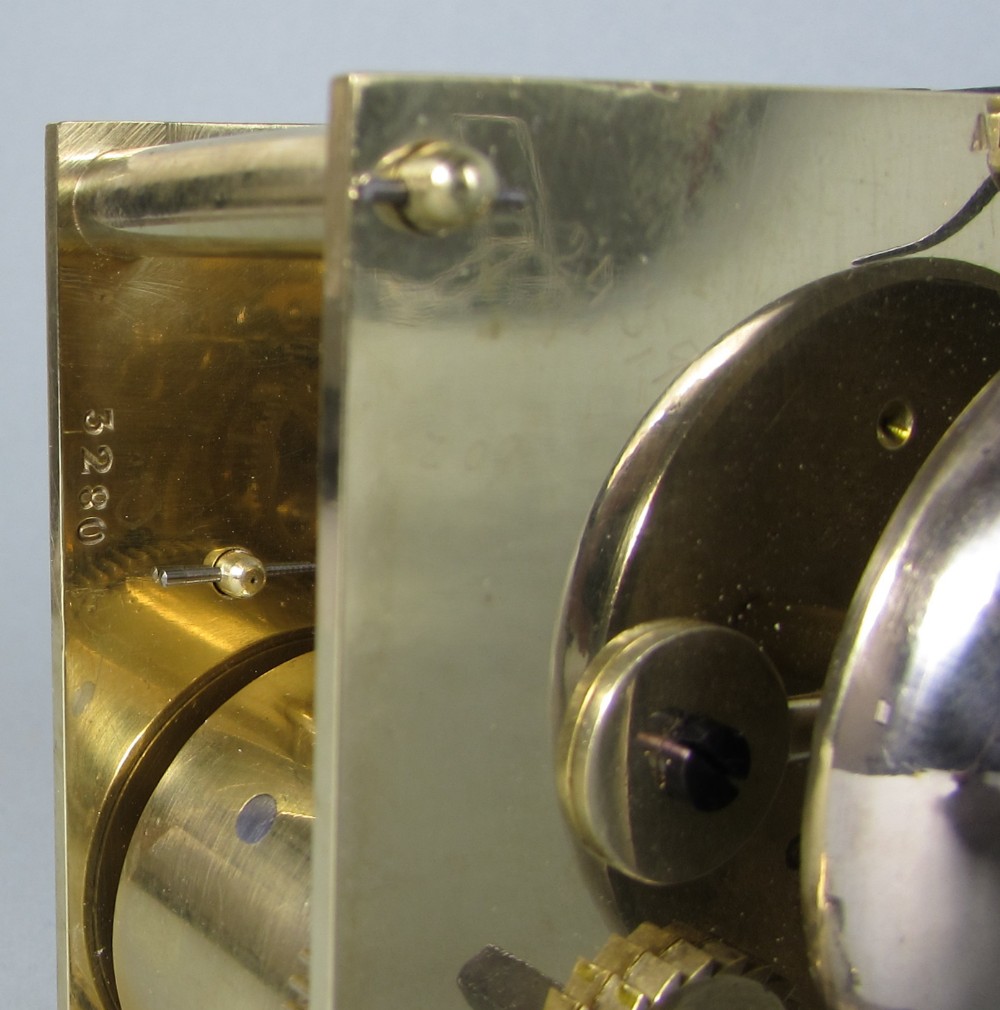
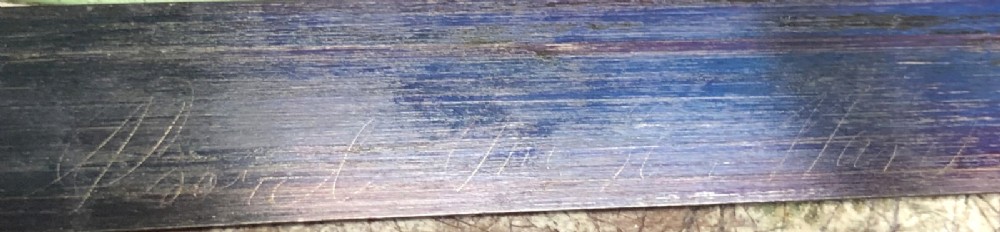
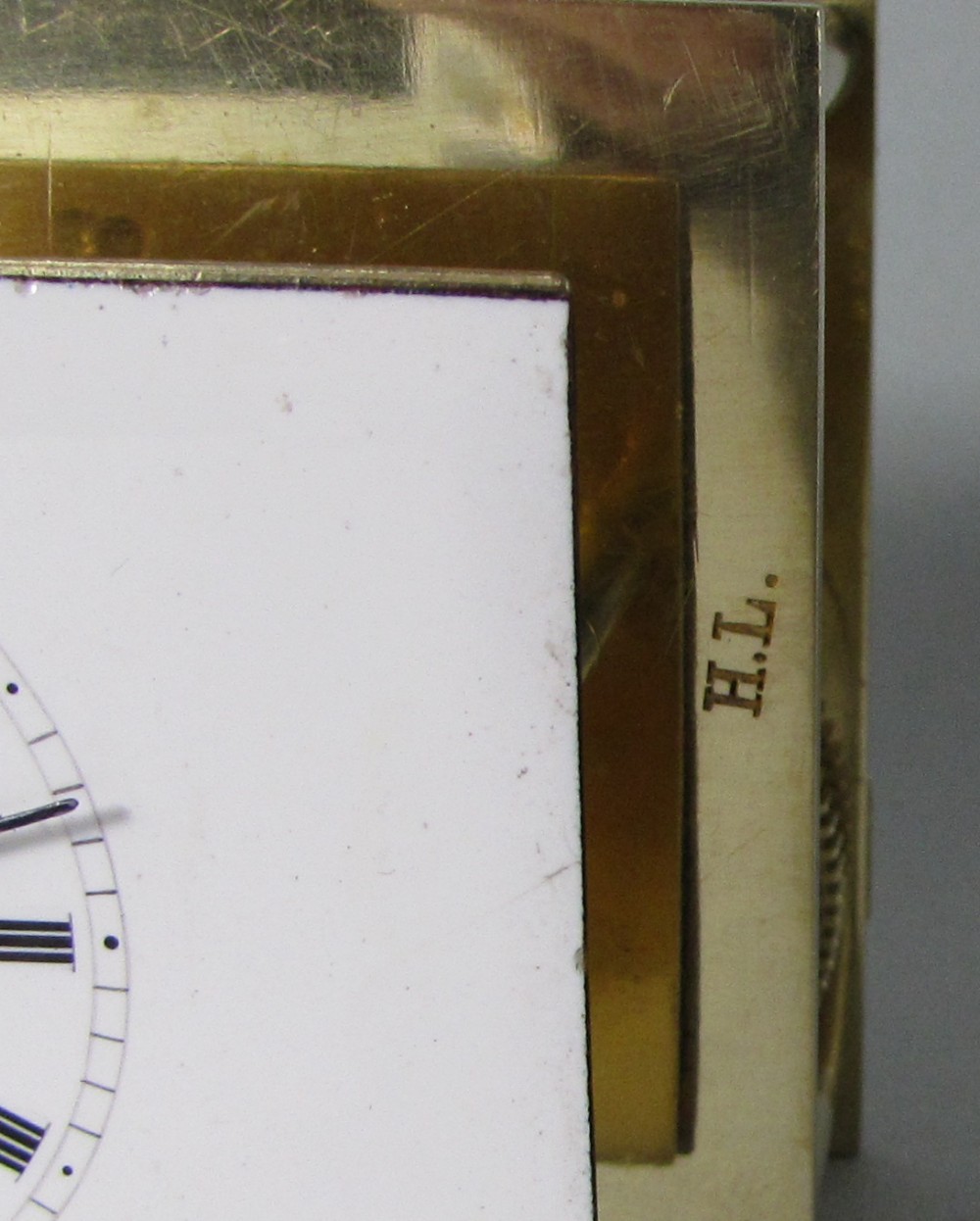
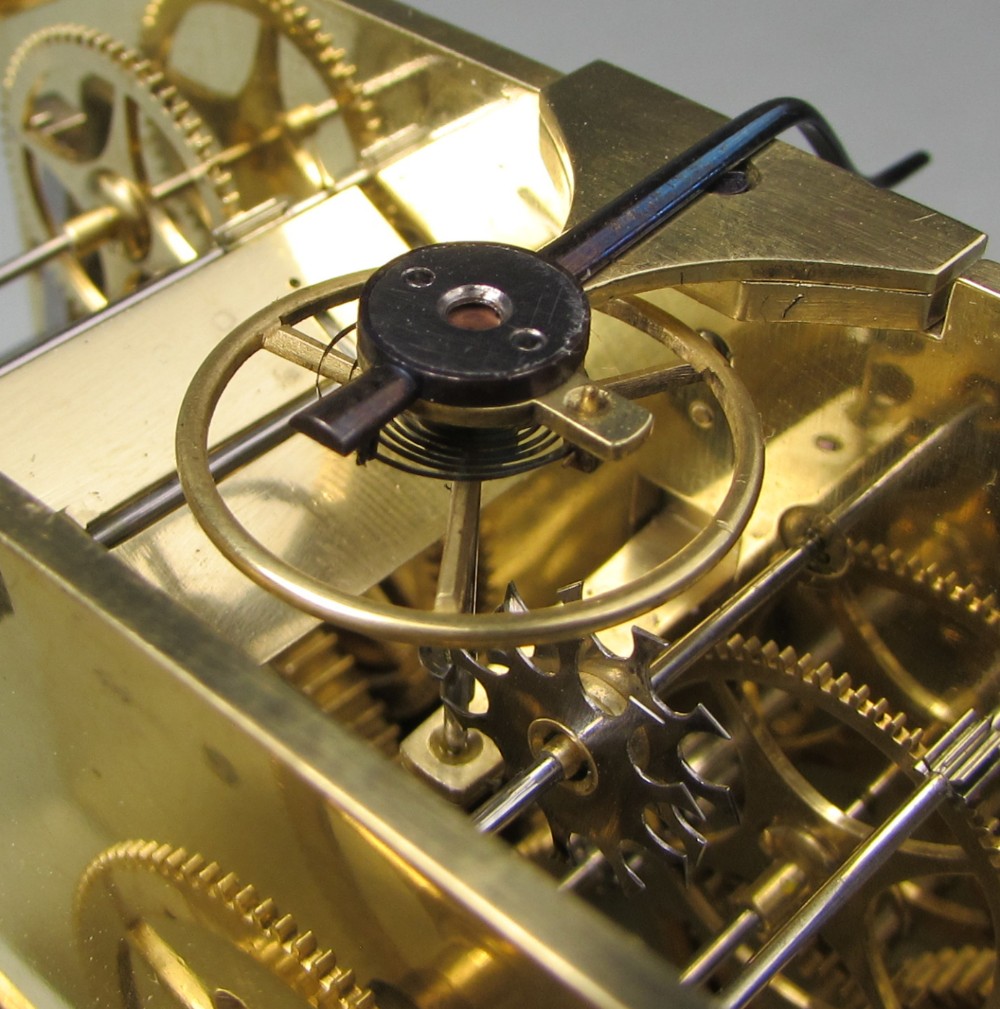
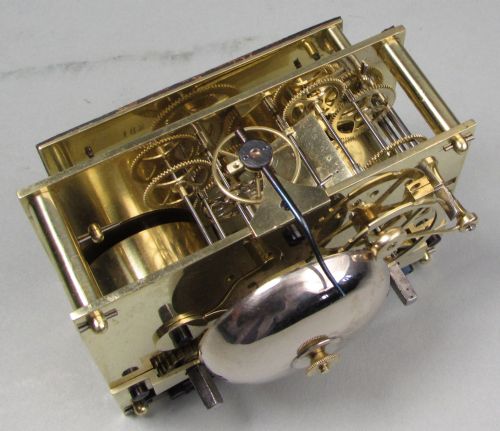
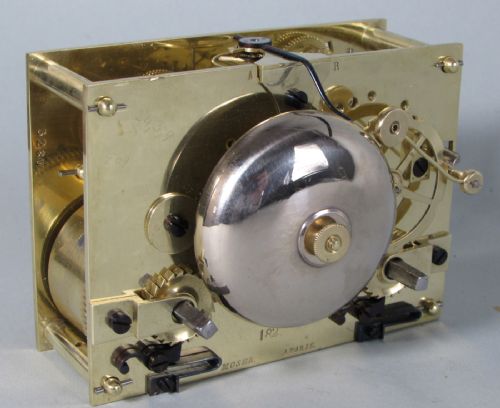
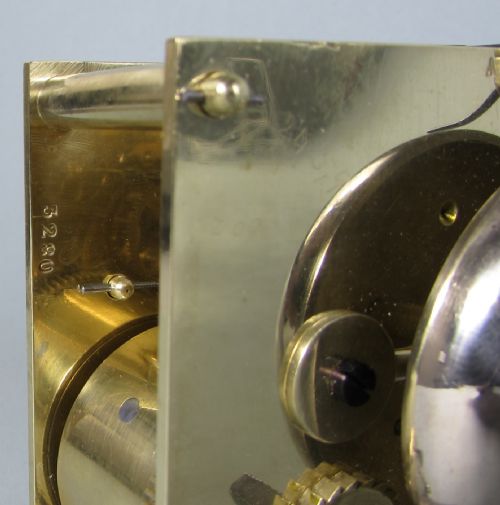
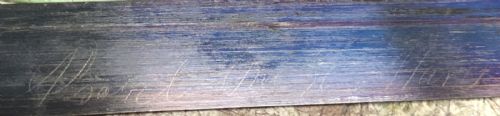
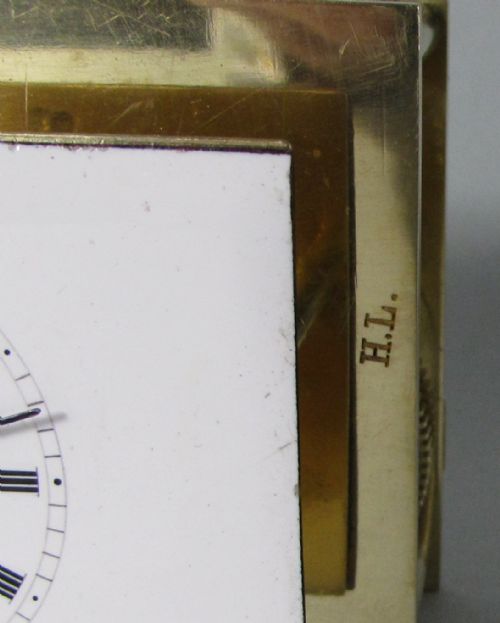
The backplate is signed and numbered Moser à Paris 182 with the frontplate stamped with the initials and serial number H.L. 3280, being those which I have now identified as the blanc-roulant makers Holingue frères, Louis and Jean-Francois from the horological town of Saint Nicolas d'Aliermont near Dieppe in northern France. The Holingue family have a long relationship with both Georges Moser and Paul Garnier and were also an important part of the history of Drocourt. The dated mainspring is scratched with the name of the spring maker Borel jeune Mars 50, being Borel junior March 1850.
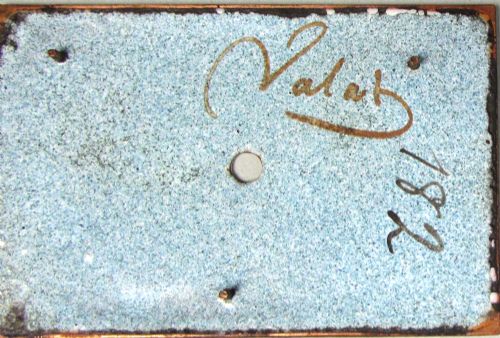
The white enamel dial has black Roman numerals and is signed either side of VI o'clock Moser à Paris with the rear of the dial having written in ink the name of the dialmaker Valat.
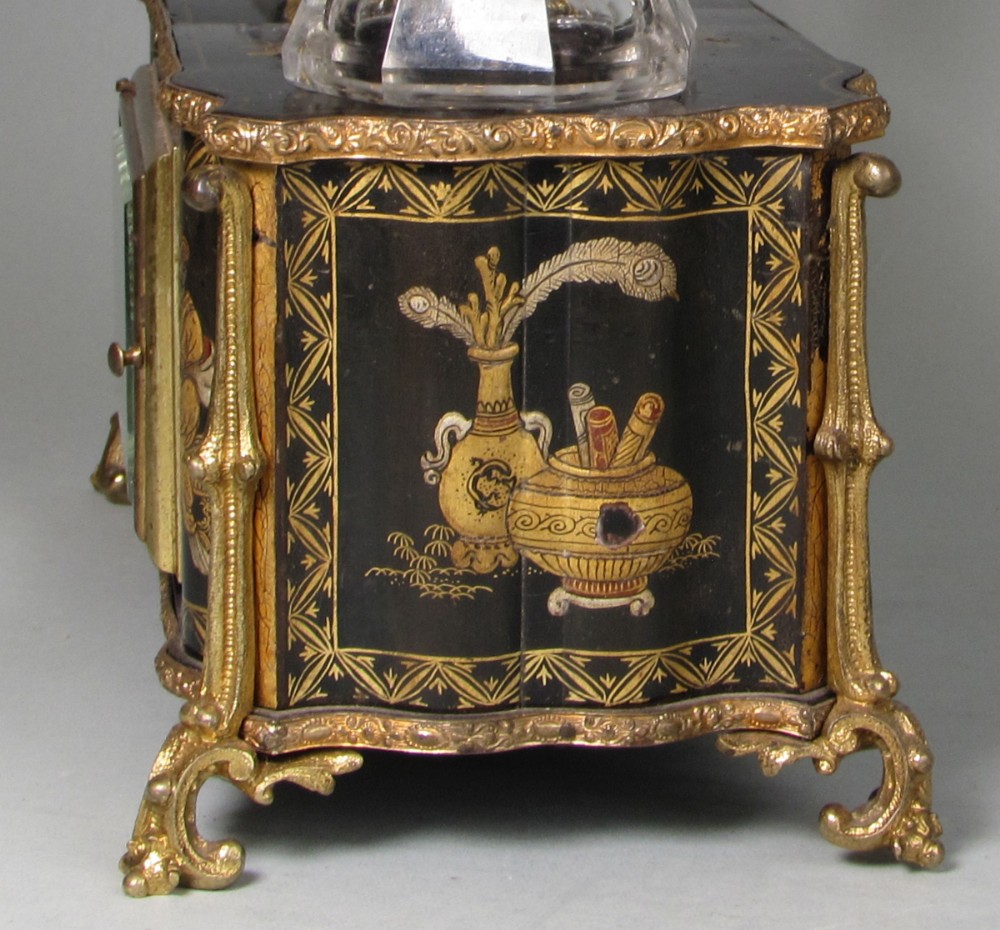
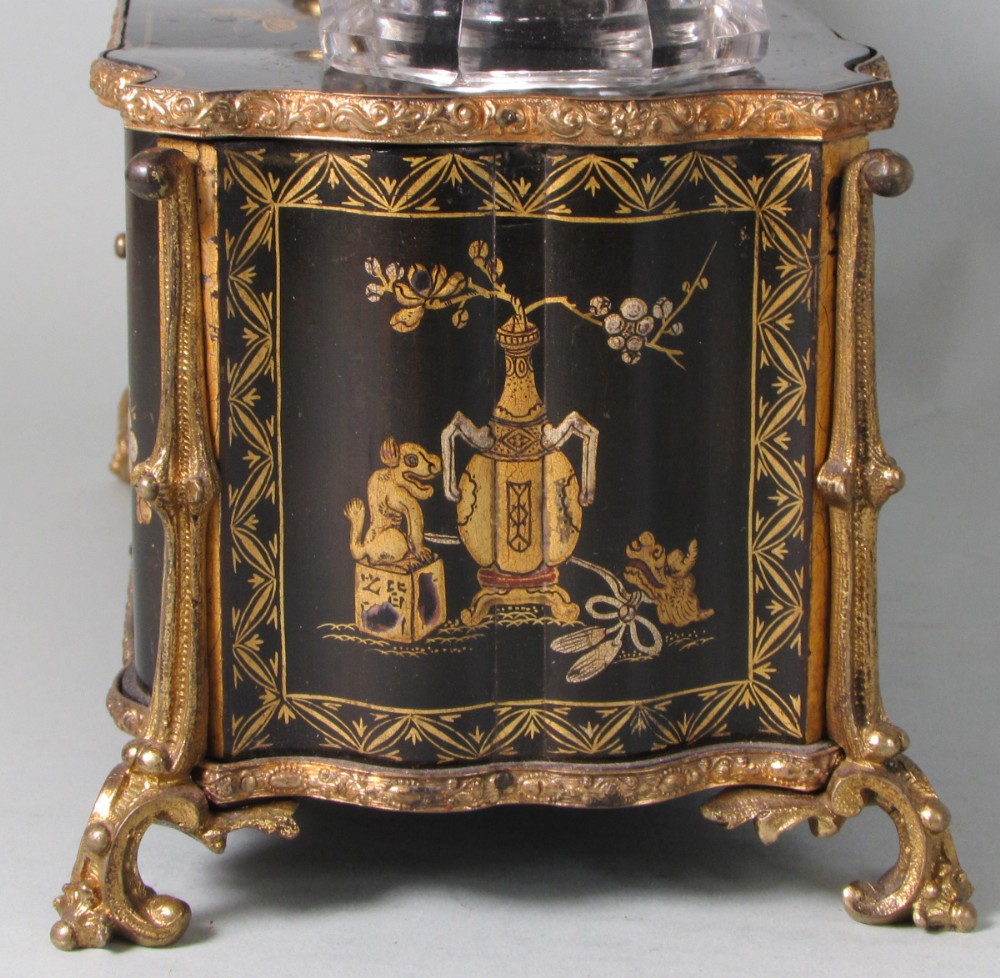
The small black lacquered case, with bow-shaped sides, is finely decorated with Oriental raised chinosiere work and has gilt-metal mounts and feet. The top has glass inwells either side of a gilt-metal urn with opening lid.
Georges Moser was a retailer of both carriage clocks and inkwell clocks.
His entry in the Paris Almanch of 1853 reads:
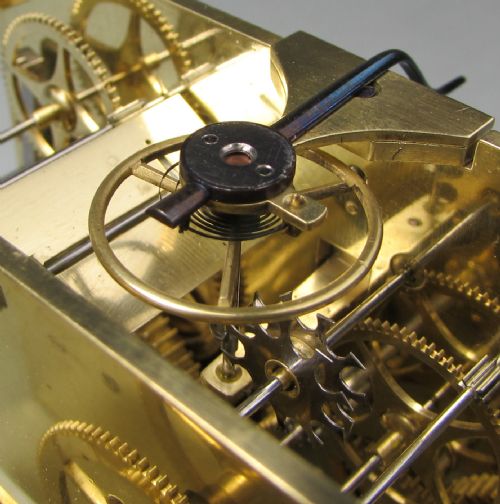
Moser (Georges), fab d'horlogerie, spécialité de pendules de voyage, et inventeur de pendules à écritoire, en bronze, marbre, bois de rose, écaille et ébene, avec mouvement et échappement plus ou moins compliqués, marchant dix jours, balancier circulaire, boul. du Temple, 15.
Translated this reads: '...clockmaker, specialising in carriage clocks, and inventor of writing desk clocks, in bronze, marble, rosewood, tortoiseshell and ebony, with movement and escapement more or less complicated, running ten days, circular balance...'
This is most interesting as both Moser and Drocourt were supplied by Holingue frères at this time and Drocourt's entry in the Almanach of the same year reads:
Drocourt, fab d'horlogerie, spécialité de pendules de voyage, et pendules à écritoire, marbre et bronze, avec quantiemes perpetuals et échappement circulaire.
Translated this reads: '...clockmaker, specialising carriage clocks and writing desk clocks, marble & bronze, with perpetual calendars and circular balance...'
Alfred Drocourt went on to purchase the Holingue business and workshops in Saint Nicolas d'Aliermont in 1874, further information for which is available via the 2013 Drocourt Carriage Clock Exhibition Catalogue on my website.
I have been undertaking research on the clocks, life and family of Georges Moser using source material and which is due for later publication.
In summary he was born in Switzerland in 1798 with his first known Paris address in 1823 being at Grenier St Lazare 18 becoming number 15 in 1825. He then moved to Boulevard du Temple 9 in 1836 where by 1840 he was in partnership with the well-known movement maker Samuel Marti from the horological region of Montbeliard in the south of France. They had a further address at Orleans-Marais 13. This was their registered address until 1843 when Moser is once again recorded working alone at Boulevard du Temple 9, moving in 1846 to number 24 and then again in 1850 to number 15. By 1860 the business was registered as et Cie and by 1863 there is no record of either him or his successor
Leigh Extence Antique Clocks has dated this Antique Chinoiserie Inkstand Clock to the 1860s.
Specialists in fine antique clocks
You can view the stock and full dealer information on the Leigh Extence Antique Clocks Profile Page
Leigh Extence Antique Clocks is a registered member of BADA CINOA
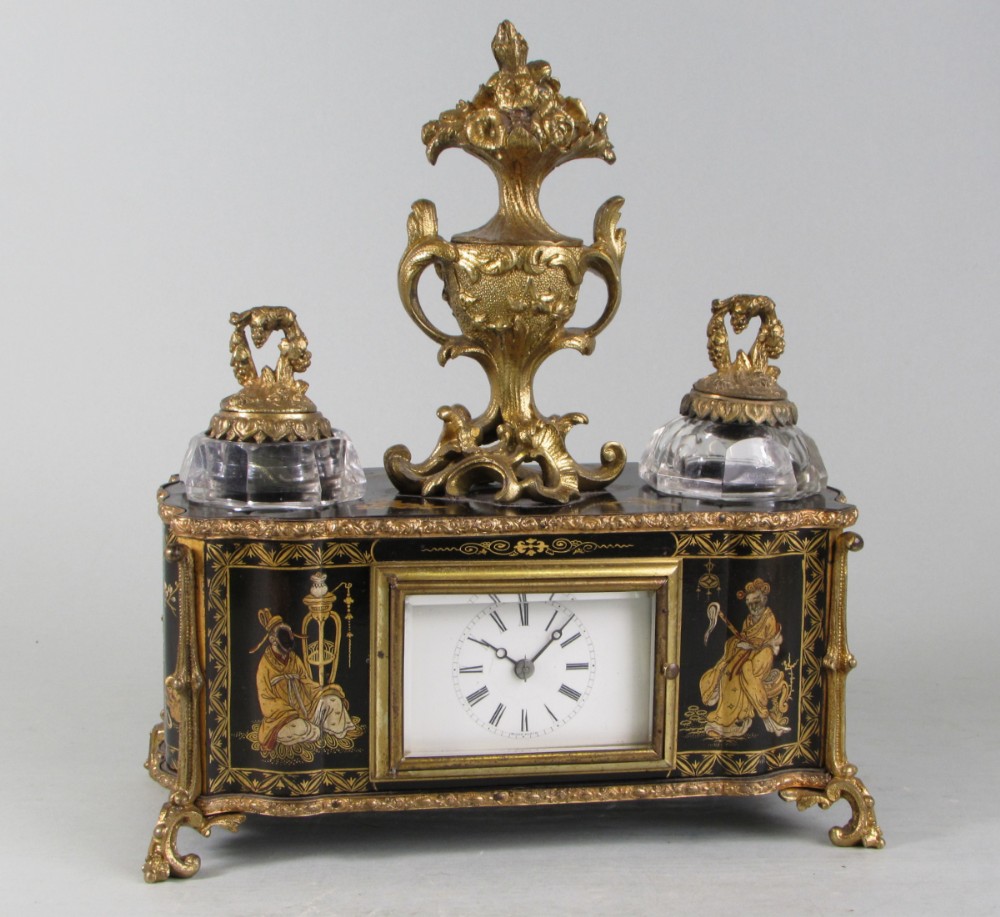
Moser Inkwell Clock with Chaff-cutter Escapement