






Ornate Desk Clock
An ornate desk clock brings nineteenth-century weight and domestic theatre to a surface, combining heavy metalwork with precision escapements.
Ornate Desk Clock
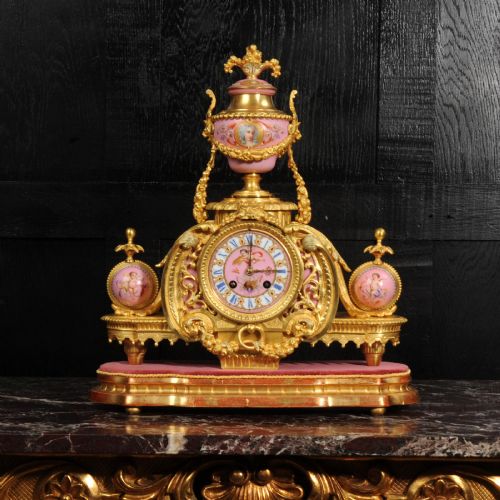
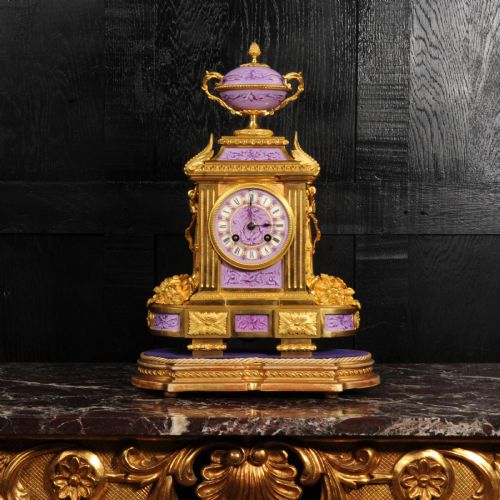
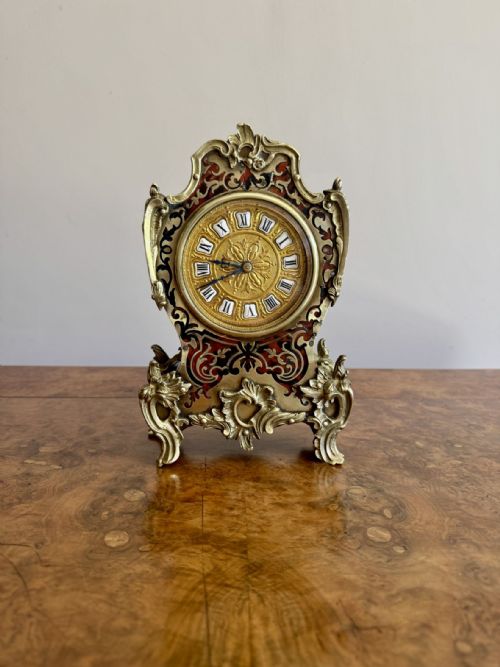
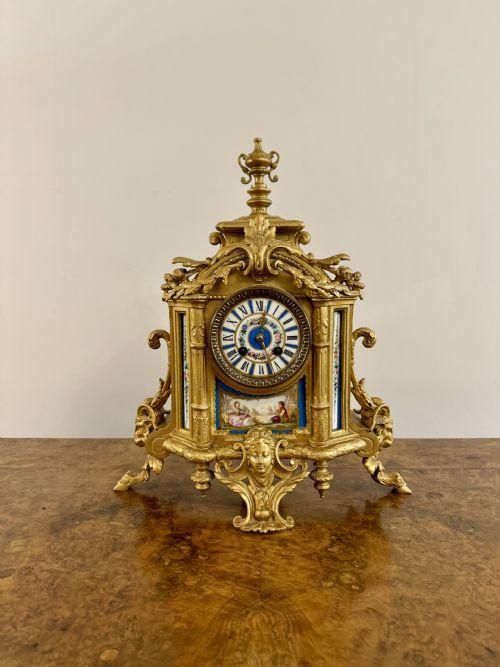
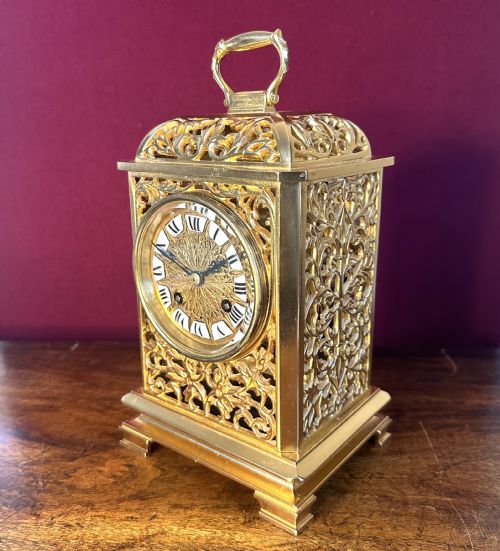
When searching for an ornate desk clock, buyers encounter a dense concentration of nineteenth-century French and Victorian designs alongside travel timepieces. The selection leans heavily toward carriage clocks housed in cast gilt brass cases, alongside larger mantel pieces placed upon domestic writing desks and tables.
The objects span periods from the mid-nineteenth century through the Edwardian era, predominantly pulling from Victorian, Rococo Revival, and Louis styles. Heavy metal casings dominate, frequently paired with porcelain panels, enamel dials, and glass viewing windows.
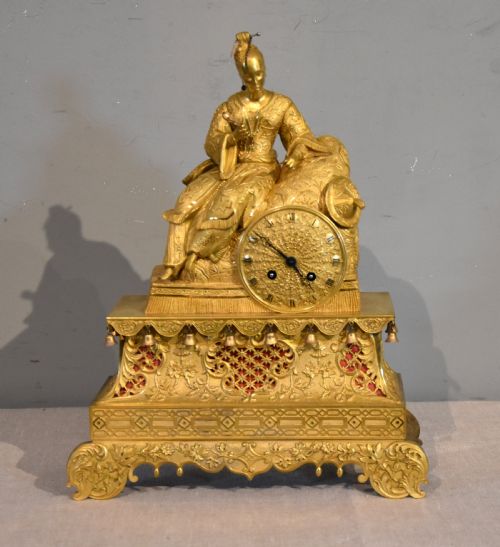
Forms range from miniature brass carriage timepieces to substantial gilt bronze and ormolu clock garniture sets. These pieces were built to command attention in studies, libraries, and drawing rooms rather than sit unnoticed in corners.
How they were made
Gilt bronze, ormolu, and cast brass provide the foundational structure for the majority of these casings, shaped through intricate casting and chasing techniques. Surfaces often receive fire gilding or polished plating to achieve deep metallic lustre.
Glazing and ceramic integration define the visual weight, utilising bevelled glass panes for four-glass styles and hand-painted Sèvres porcelain plaques set into the metal fronts. Dials typically employ white enamel with detailed Roman or Arabic numerals.
Movements rely on mechanical escapements, including platform escapements for portable carriage designs and fusee or pendulum movements for larger bracket and mantel pieces. Engraved brass backplates frequently record the maker and regulatory details.
Listings feature materials spanning gilt brass, marble, enamel, and porcelain across the Victorian and nineteenth-century periods.
What varies in quality
The refinement of the casting and hand-chasing separates standard production from exceptional work, visible in the crispness of acanthus leaf scrolls and figural mounts. Superior pieces retain deep, clean chisel marks rather than soft, rounded cast edges.
Material integration dictates overall calibre, distinguishing painted porcelain panels fired with genuine depth from flat, transfer-printed substitutes. The clarity of bevelled glass and the weight of the solid brass chassis further mark the tier of manufacture.
Movement complexity and signature provenance elevate specific examples, particularly those housing signed mechanisms by established makers. Complete, matching sets with original escapements carry a distinct manufacturing integrity over later assembled pairings.
Achille Brocot·Samuel Marti·William Payne·John Barwise
The Ornate Desk Clock Glossary
- Ormolu
- Gilded bronze produced through a mercury amalgamation process used extensively on French nineteenth-century clock mounts. This technique creates a rich, durable golden surface.
- Fusee
- A conical pulley used within clock movements to maintain even driving force as the mainspring unwinds. It ensures consistent timekeeping accuracy throughout the power reserve.
- Carriage clock
- A small, portable spring-driven timepiece designed for travel, equipped with a folding handle and a platform escapement. They originated in France and frequently feature glass panels.
- Champlevé
- An enamelling technique where troughs are dug into a metal surface, filled with vitreous enamel powder, and fired. The resulting coloured patterns sit flush with the surrounding brass or bronze frame.
- Platform escapement
- A small, self-contained escapement unit mounted on a tiny brass plate within portable clocks. It replaced the traditional pendulum in carriage and desk designs.
Ornate Desk Clock: Frequently Asked Questions
How do I wind a mechanical desk clock?
Most mechanical desk clocks require a specific winding key inserted into the dial or backplate holes to tension the mainspring barrels. Turn the key gently until resistance increases, taking care not to over-wind the mechanism.
Regulate the beat speed using the slow-fast regulator lever on the movement if the timekeeping drifts over a twenty-four-hour period.
Where should I place an ornate desk clock?
Position your clock on a stable, level surface away from direct sunlight, central heating vents, and damp exterior walls. Heavy marble and gilt bronze pieces require sturdy shelving or desk space to support their substantial weight.
Keep them out of high-traffic zones where accidental knocks could dislodge delicate glass panels or surface ornaments.
How do I tell Victorian and French clocks apart?
French clocks from this era frequently utilise sophisticated ormolu castings, Sèvres porcelain plaques, and distinct maker signatures like Samuel Marti on the movement backplates. Their styling often leans heavily into Rococo Revival or Louis XV motifs.
Victorian pieces made in Britain often emphasise heavy brass or marble construction with robust fusee movements, reflecting a preference for sober domestic utility.
What maintenance do these antique movements need?
Antique spring-driven movements require professional cleaning and oiling every few years to prevent dried lubricants from wearing down the brass pivots and gears. Avoid applying domestic oils to the delicate escapement components.
Dust the glass and metal exterior gently with a dry, soft brush to protect fragile fire-gilt and enamel surfaces from abrasive accumulation.