

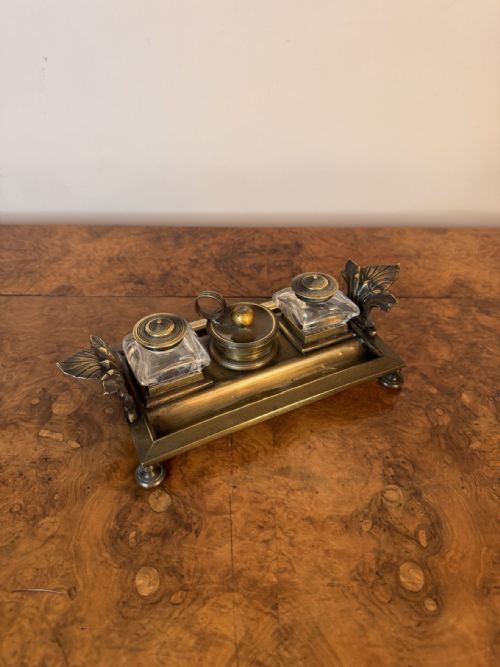


Ornate Brass Desk Set
An ornate brass desk set brings substantial nineteenth-century weight and intricate surface detail to a writing table.
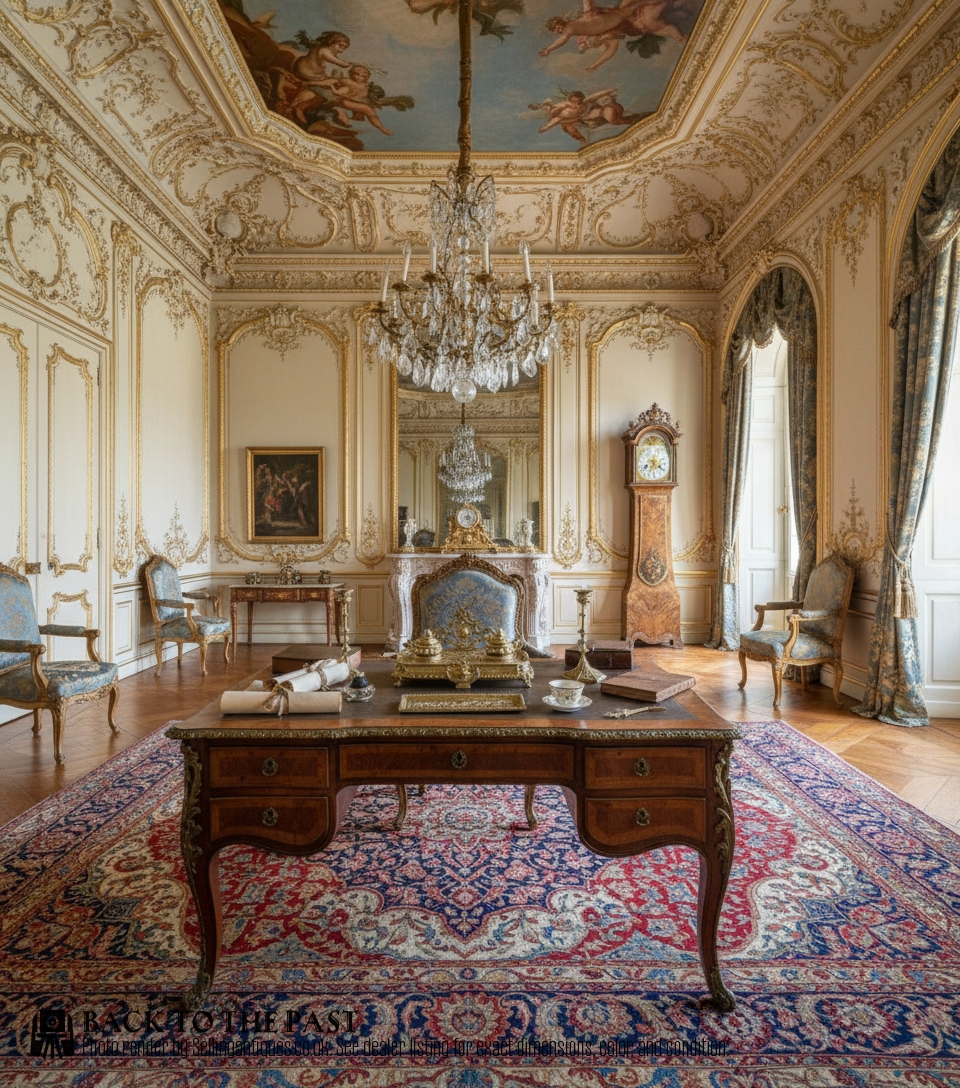
Ornate Brass Desk Set
The versions most commonly met on this page date from the Victorian and Edwardian periods, stretching from the middle of the nineteenth century into the early twentieth century. They frequently draw upon historical design vocabulary such as French Rococo Revival, Napoleon III, and Art Nouveau styles.
Makers and workshops ranged from English firms like James Cartland & Sons and Elkington to continental and American makers including Seth Thomas. Alongside standard brass, pieces often incorporate champlevé enamel, gilt bronze, glass, and wood to create visually layered writing equipment.
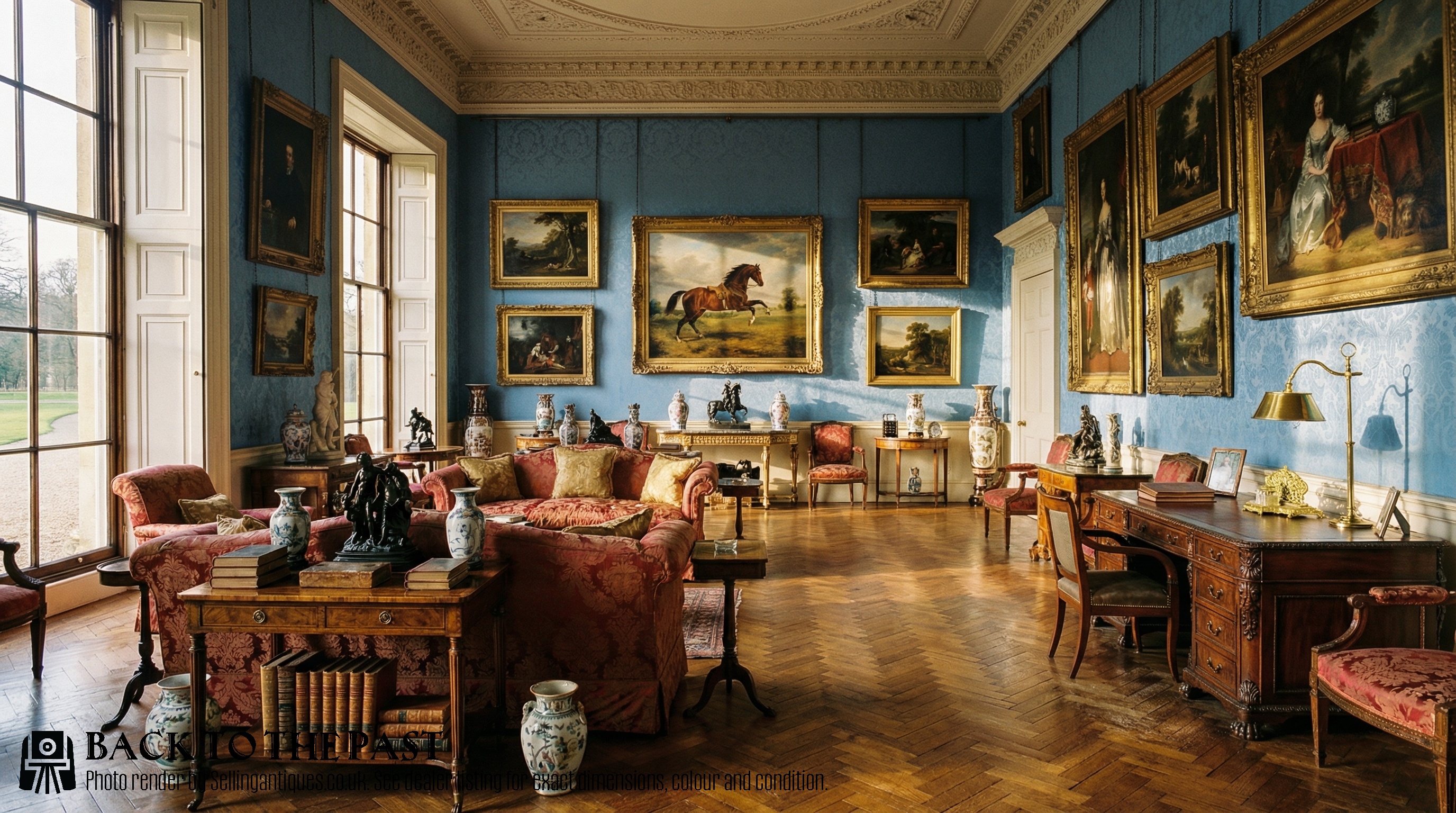
Materials and construction methods
Makers utilised casting techniques to produce heavy brass and cast-brass frames, inkstands, and clock garniture components. Molten metal poured into moulds allowed for high-relief scrolling foliage, figural motifs, and architectural borders characteristic of Victorian and Edwardian taste.
Surface ornamentation frequently combined chased brass with applied champlevé enamel, gilt bronze, and inset glass or ceramic elements. Wood bases and rocker blotters added tactile contrast to the metallic structures while providing a stable platform for daily correspondence.
Ornate Brass Desk Set Retail Price Guide 2026
Typical asking prices for ornate brass desk set among the pieces listed under this phrase on Sellingantiques today, from the lower quarter to the upper quarter. They describe what is for sale here now, not the wider market.
Distinctions in craftsmanship
The standard of an ornate brass desk set rests upon the crispness of the cast detailing and the depth of the chasing work across the metal surface. Superior examples display sharp undercuts and deliberate hand-finishing that distinguish them from softer, mass-produced commercial castings.
Integration of secondary materials such as champlevé enamel, finely ground glass, or select hardwoods defines the upper tier of production. When individual components like inkwells, letter racks, and stands retain their matching mounts and original glass liners, the complete ensemble commands greater regard.
James Cartland & Sons·Seth Thomas·Elkington
The Ornate Brass Desk Set Glossary
- Inkstand
- A fitted tray or stand holding one or more inkwells, pen grooves, and sometimes a sander or bell. These central desk pieces anchored the writing apparatus of the Victorian study.
- Champlevé enamel
- A technique where troughs or cells are hollowed out of the metal surface and filled with vitreous enamel before firing. It adds vibrant colour to French and English desk sets.
- Rocker ink blotter
- A curved wooden or metal block fitted with blotting paper and a handle for rocking across wet ink. They appear frequently in Edwardian desk accessories.
- Ormolu
- Gilt bronze or brass applied to decorative objects, providing a bright gold-coloured finish that resisted tarnishing. The term derives from the French for milled gold.
- Garniture set
- A matching group of ornamental pieces, usually comprising a clock flanked by candlesticks or urns. In desk contexts, these sets coordinate with the primary inkstand.
Ornate Brass Desk Set: Frequently Asked Questions
What pieces belong in a desk set?
A complete desk set typically centres on a heavy inkstand featuring one or two lidded inkwells and a tray for pens. Additional matched components often include letter holders, desk clocks, and rocker blotters.
During the Victorian period, these accessories were cast and chased to form a unified decorative theme on the writing table. Surviving sets frequently keep several of these original matching pieces together.
How do I identify Victorian brass?
Victorian brass work is generally heavier and more substantial than later twentieth-century reproductions, featuring deep sand-cast profiles and hand-chased surface details. Pieces from this era often incorporate styles like French Rococo Revival or incorporate champlevé enamel and glass inserts.
Maker marks, registry lozenges, or signatures from firms such as Elkington and James Cartland & Sons help confirm the period of manufacture.
Were these sets used daily?
These ornate desk accessories were designed for practical use in nineteenth-century offices, libraries, and drawing rooms where correspondence was written with dip pens. The inkwells held liquid ink, while the sanders or blotters dried the handwritten pages.
Despite their decorative appearance with enamel, bronze, and gilt finishes, they were robust working tools built to withstand regular handling.
How do I care for antique brass?
Antique brass requires gentle cleaning with a soft cloth to preserve the aged patina that accumulates over decades of handling. Harsh chemical polishes should be avoided because they strip away the historical darkening in recessed areas.
Enamel, glass, and wood components set into the brass frames need separate, mild care to protect them from moisture and abrasive cleaners.