




Gothic Revival Inkstand
A gothic revival inkstand brings architectural heft and medieval character directly to the writing desk.
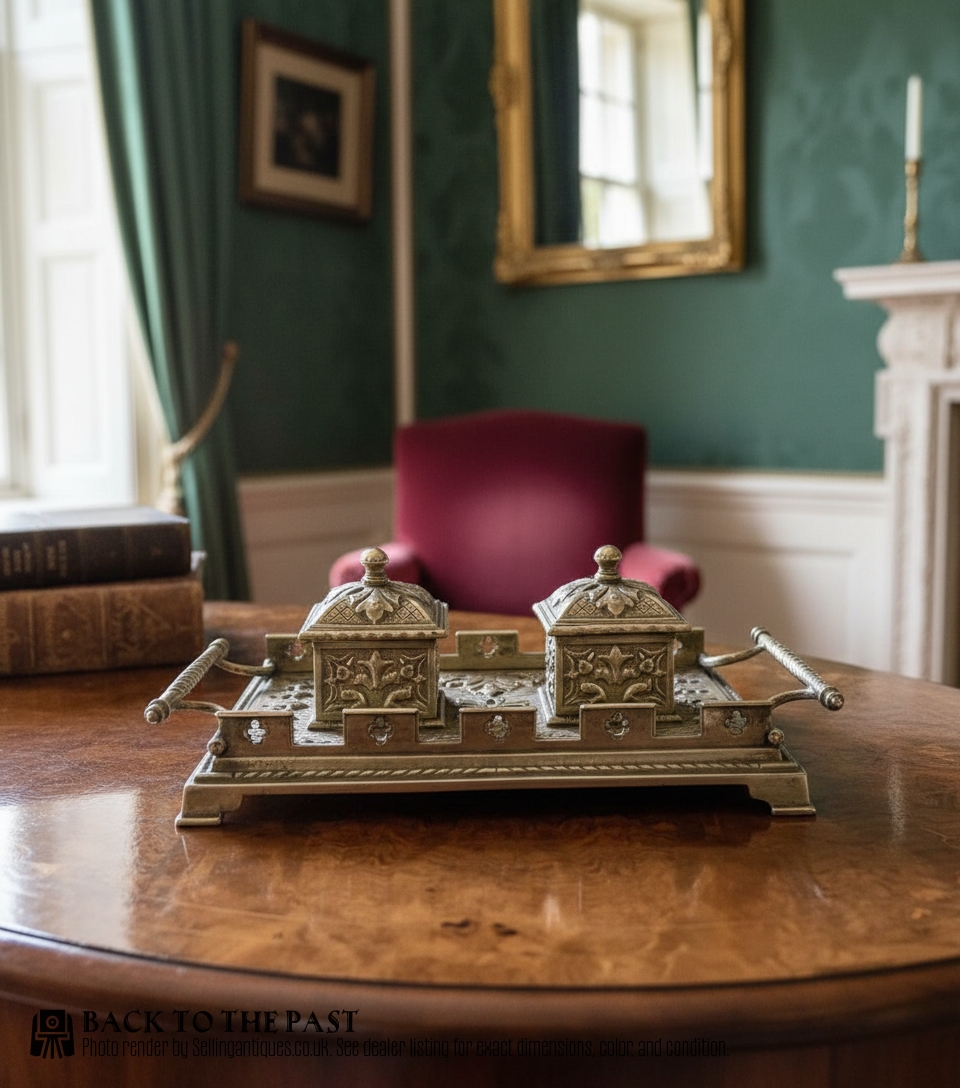
Gothic Revival Inkstand
A gothic revival inkstand is a desk accessory designed to hold writing materials while echoing the dramatic pointed arches and structural forms of medieval architecture. These pieces emerge primarily during the Victorian period, appearing in centuries-spanning iterations across the nineteenth century from roughly eighteen-sixty to eighteen-ninety.
The most likely version to meet on this page combines rich timbers with robust metalwork to create a substantial centrepiece for the library or study. Walnut, coromandel, and oak form the structural foundations, while brass and ormolu provide the necessary mounts and inkwell fittings.
Makers configure these items as desk stands, stationary boxes, and comprehensive desk sets designed to keep ink and paper organised. Each piece reflects nineteenth-century romanticism applied to everyday domestic and professional writing tasks.
How they were made
Craftsmen construct the wooden bodies of these inkstands from dense hardwoods like walnut, coromandel, and oak, often shaping the timber to mimic structural stone or timber framing. These woods provide a dark, weighty backdrop that complements the metallic hardware.
Metal components utilise brass and ormolu, cast and chased with ecclesiastical motifs to match the architectural theme of the woodwork. Glass forms the internal inkwell inserts, while occasional textile elements like silk line the interior compartments.
Joinery and mounting techniques combine cabinet-making with metal-founding, securing heavy brass hinges and mounts to polished timber bases.
Gothic Revival Inkstand Retail Price Guide 2026
Typical asking prices for gothic revival inkstand among the pieces listed under this phrase on Sellingantiques today, from the lower quarter to the upper quarter. They describe what is for sale here now, not the wider market.
Some Victorian writers apparently needed an entire architectural monument just to hold a bottle of ink and a spare nib.
What varies in quality
The distinction between ordinary and superior pieces rests on the choice of timber and the ambition of the metalwork. Exotic hardwoods like coromandel and finely cast ormolu indicate a higher order of manufacture than plain oak and simple brass fittings.
Design complexity separates basic desk accessories from exceptional desk sets, where fitted stationary compartments and integrated handles show greater attention to architectural detail. The integration of materials, ensuring the brass mounts sit flush within the timber body, determines the overall refinement.
The Gothic Revival Inkstand Glossary
- Gothic Revival
- An architectural and decorative style drawing inspiration from medieval forms, featuring pointed arches, trefoils, and heavy structural mass. This aesthetic dominated much of nineteenth-century design.
- Coromandel
- A dense, heavily figured tropical Asian hardwood valued for its rich dark brown colour and contrasting pale streaks. It frequently appears on high-status Victorian desk furniture.
- Ormolu
- Gilt bronze created by applying a finely ground gold-mercury amalgam to a bronze object before firing. It provides a bright golden finish that resists tarnishing.
- Stationary Box
- An upright desk accessory designed to hold envelopes and writing paper in an organised upright position. These often match the materials of the companion inkstand.
- Desk Set
- A coordinated group of writing accessories, typically including an inkstand, pen tray, and sometimes a matching blotter or stationary box. They provide a unified scheme for the desktop.
Gothic Revival Inkstand: Frequently Asked Questions
What is a gothic revival inkstand?
A gothic revival inkstand is a nineteenth-century desk accessory that incorporates medieval architectural motifs into its design. These pieces typically feature pointed arches, heavy timber construction, and metal mounts.
They serve as both functional containers for ink and decorative objects that reflect Victorian romanticism. Common materials include walnut, oak, brass, and ormolu.
How were these inkstands used?
These inkstands held glass inkwells, pens, and sometimes blotting paper or sealing wax on the writing desk. They kept essential writing tools organised and ready for correspondence.
Stationary versions also incorporated slots for paper and envelopes. Wealthy households placed them in libraries, studies, and drawing rooms.
What materials are used in these pieces?
Makers constructed the bodies primarily from hardwoods such as walnut, coromandel, and oak. These timbers offered durability and a suitably dark, rich appearance.
Metal elements like brass, ormolu, and gilt bronze formed the mounts, handles, and inkwell lids. Glass inserts held the liquid ink securely within the wooden framework.
How do you date a Victorian inkstand?
Dating relies on stylistic clues, construction methods, and materials recorded across the nineteenth century. Pieces from around eighteen-sixty often favour simpler oak forms, while later examples incorporate exotic timbers and elaborate metalwork.
Makers marks, if present, can narrow down the decade of production. Overall craftsmanship and the evolution of revival styles help place the piece within the Victorian era.