








Victorian Brass Inkwell
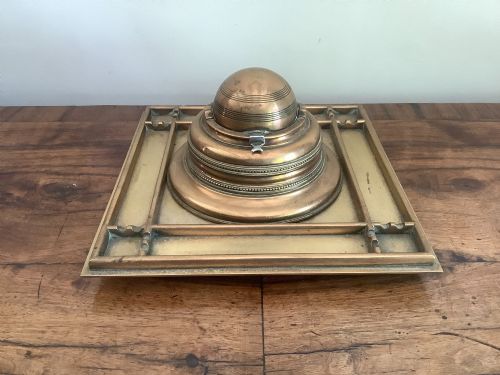
A victorian brass inkwell brings nineteenth-century desk culture to life through heavy cast metal and functional design.
Victorian Brass Inkwell
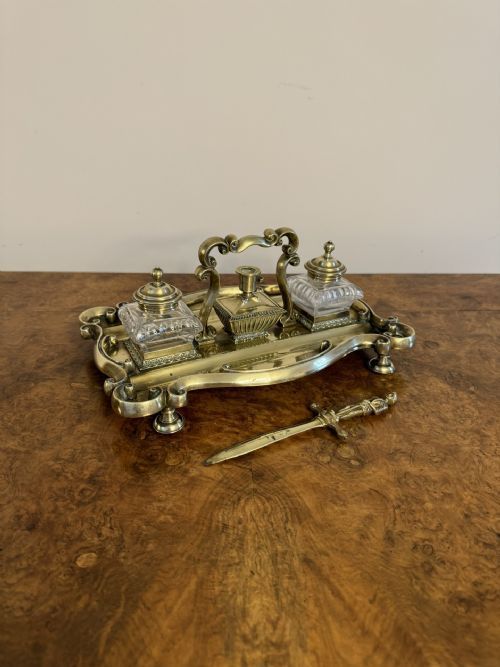
A victorian brass inkwell is a desk accessory designed to hold liquid ink for dipping pens during the nineteenth century. These items appear primarily as standalone vessels or as part of larger desk stands and inkstands.
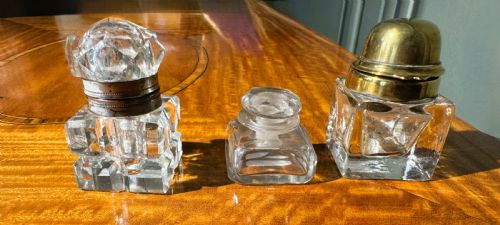
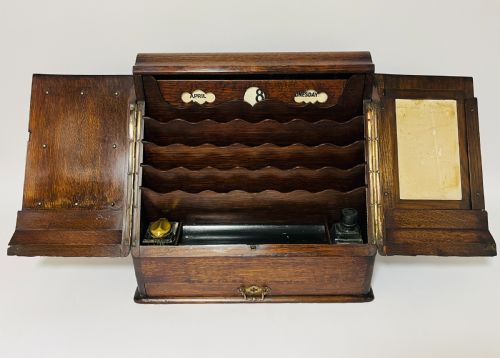
Buyers frequently encounter brass combined with cut glass inserts, oak bases, or coromandel wood foundations. Novelty shapes incorporating animals, reptiles, and architectural motifs also populate the selection.
How they were made
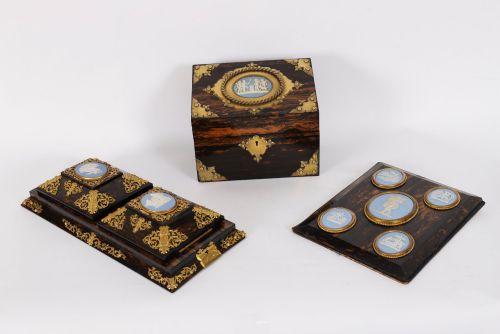
Foundries shaped the primary bodies using brass casting techniques, often combining ormolu, gilt bronze, and cut glass components. Artisans mounted these metal frameworks onto wooden trays made from oak, walnut, or exotic coromandel.
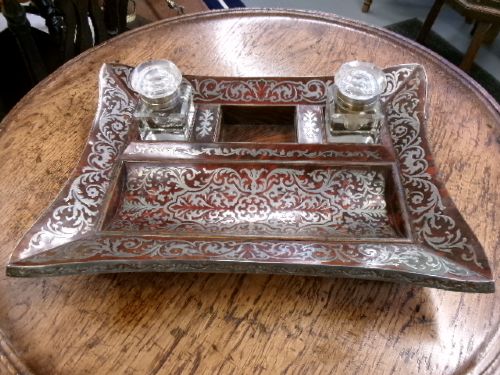
Decorative finishes included chased surface patterns, champleve enamel panels, and inlaid boulle work. Fitted interiors often contained glass ink pots with hinged brass or silver lids.
Victorian Brass Inkwell Retail Price Guide 2026
Typical asking prices for victorian brass inkwell among the pieces listed under this phrase on Sellingantiques today, from the lower quarter to the upper quarter. They describe what is for sale here now, not the wider market.
Desk accessories shaped like lizards, boars' feet, and horses' hooves kept Victorian writers company.
What varies in quality
Quality rests in the crispness of the brass casting and the weight of the overall desk stand. Pieces featuring detailed figural work, such as animals or reptiles, demand higher craftsmanship than plain utility models.
The incorporation of secondary materials like cut glass inserts, marble bases, or mother-of-pearl inlay indicates superior workshop production. Complete sets retaining matching double ink pots and pen rests command greater attention.
James Cartland & Sons·Moser
The Victorian Brass Inkwell Glossary
- Inkstand
- A complete desk tray holding one or more inkwells alongside space for pens and stamps. These portable stands anchored nineteenth-century writing desks.
- Ormolu
- Gilded bronze used widely for decorative mounts on nineteenth-century desk accessories. This technique imparted a rich golden tone to cast metal surfaces.
- Coromandel
- A dense, dark exotic timber featuring dramatic grain patterns. Cabinetmakers utilised this wood for luxury stationery boxes and ink stands.
- Boulle work
- An elaborate marquetry technique using brass and tortoiseshell inlaid into wooden surfaces. This French method appeared on high-end Victorian desk sets.
- Standish
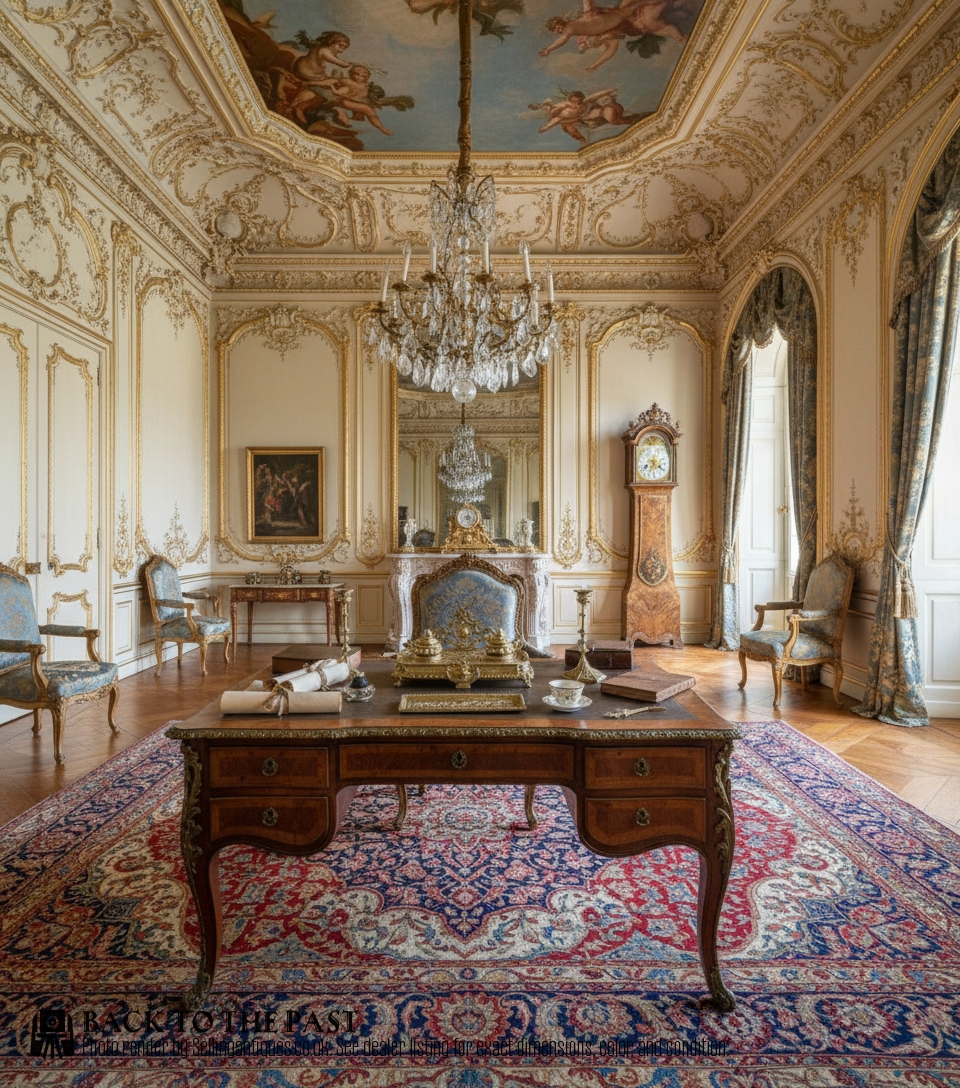
- An alternative historical term for a desk stand or inkstand containing inkwells and writing implements. These items sat centrally on elite library tables.
Victorian Brass Inkwell: Frequently Asked Questions
What is a victorian brass inkwell?
A victorian brass inkwell is a nineteenth-century desk accessory designed to hold liquid writing ink. These items range from simple lidded pots to elaborate desk stands incorporating glass inserts.
They reflect the heavy reliance on handwritten correspondence during the Victorian era. Many feature decorative casting or novelty animal motifs.
How were double inkstands used?
Double inkstands provided reservoirs for two different types of ink, typically black and red. Writers used black ink for standard correspondence and red ink for annotations or bookkeeping.
Stationed on writing desks, these double setups often included integrated pen rests and stamp boxes. They served heavy writing duties in offices and libraries.
How do I spot novelty inkwells?
Novelty inkwells take sculptural forms inspired by animals, everyday objects, or architectural elements. Examples include reptiles, dogs, horses' hooves, and weighted shapes.
These whimsical designs were popular desk adornments in the late nineteenth century. The hinged lids usually formed part of the animal's body or the object's top.
What materials accompany the brass?
Brass inkwells frequently incorporate thick cut glass or crystal inserts to hold the liquid ink safely. Wooden bases made from oak, walnut, or coromandel often support the metal structures.
Some high-end examples add gilt bronze, marble, tortoiseshell, or champleve enamel decoration. These mixed-media pieces represent the height of Victorian desk luxury.