


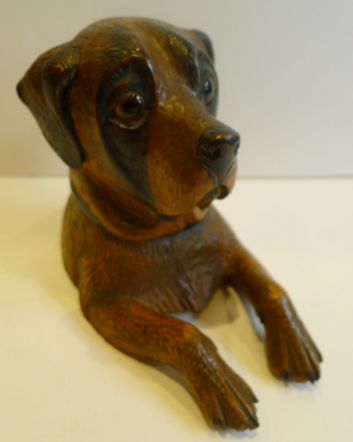


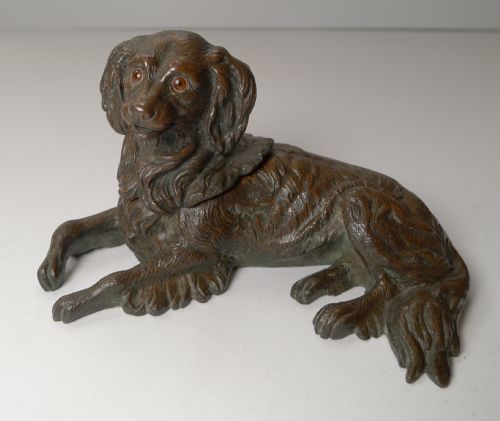

Novelty Animal Inkwell
These novelty animal inkwell pieces bring character to a desk through sculpted brass, wood and crystal formed as owls, dogs and chicks.
Novelty Animal Inkwell
A novelty animal inkwell combines a functional desk accessory with figural sculpture depicting creatures such as owls, dogs and tortoises. These pieces transform a utilitarian desktop object into a playful and decorative ornament.
You will most frequently encounter Victorian examples alongside later Art Deco iterations. The selection spans the period from eighteen-eighty through to nineteen-twenty, reflecting changing tastes in desk ornamentation.
The form typically incorporates a hinged head or body that lifts to reveal a small receptacle for holding ink. Glass and cut crystal inserts often sit within the cast or carved bodies to contain the fluid safely.
How they were made
Maker's workshops utilised traditional carving and casting techniques across organic and metallic media. Linden wood appears carved in the Black Forest style, capturing the textured feathers of birds and the coats of animals.
Metalworkers employed brass, silver plate and gilded bronze to cast figural subjects with high detail. Glass eyes were frequently added to these metal and wooden sculptures to heighten their lifelike presence.
Cut crystal and clear glass served as the material for the inkwells themselves, often fitted directly into the carved wooden or cast bronze housings.
Novelty Animal Inkwell Retail Price Guide 2026
Typical asking prices for novelty animal inkwell among the pieces listed under this phrase on Sellingantiques today, from the lower quarter to the upper quarter. They describe what is for sale here now, not the wider market.
The listings on this site encompass Victorian and Art Deco periods, utilising materials from Linden wood and brass to cut crystal.
What varies in quality
Quality rests in the precision of the carving and the fidelity of the cast. Artisans who spent greater time on anatomical detail produced pieces with lifelike expressions and convincing textures.
The choice of materials dictates the upper tier of the range, where gilded bronze and heavy cut crystal elevate the object beyond simple novelty. Integrated glass eyes that match the scale of the animal rather than appearing oversized also denote superior execution.
The Novelty Animal Inkwell Glossary
- Black Forest
- A style of wood carving originating from the mountainous region of central Europe, known for realistic representations of wildlife and natural subjects. Linden wood is the primary medium for these carved pieces.
- Animalier
- A nineteenth-century artistic movement dedicated to the realistic portrayal of animals in sculpture and decorative arts. This focus informs the lifelike posture of the figural creatures.
- Gilded Bronze
- A metal technique involving the application of a fine layer of gold onto a bronze base, providing a rich and enduring surface finish. It appears on Art Deco desk pieces.
- Cut Crystal
- Glass with high lead content that has been faceted by cutting wheels to refract light brilliantly. It provides the heavy, clear reservoir for the ink.
Novelty Animal Inkwell: Frequently Asked Questions
What are novelty animal inkwells made of?
These desk accessories use a variety of materials depending on the period and style. Linden wood, brass, gilded bronze, silver plate, glass and cut crystal all appear in the construction.
Makers often combined these media, housing glass or crystal ink containers inside carved wooden or cast metal animal figures.
How do you date a novelty animal inkwell?
Dating relies on stylistic markers and material choices associated with specific eras like the Victorian period or the Art Deco movement. Wood-carved Black Forest pieces and brass animalier designs typically point to the late nineteenth century.
Later pieces from the nineteen-twenties adopt streamlined geometric styling alongside gilded bronze and cut crystal.
Were these inkwells used every day?
These pieces served as functional desk accessories in studies, offices and libraries during an era when correspondence required dip pens and liquid ink.
The hinged heads or bodies allowed writers to access the ink reservoir while keeping the fluid covered when not in use to prevent evaporation.
How should I clean a carved wood inkwell?
Wooden surfaces benefit from gentle dusting with a dry, soft cloth to protect the intricate carved details of the Black Forest style. Moisture and harsh cleaning agents should be avoided on both the wood and any vintage metal finishes.
Glass or crystal inserts can usually be removed carefully for washing with warm water if ink residue has built up inside.