


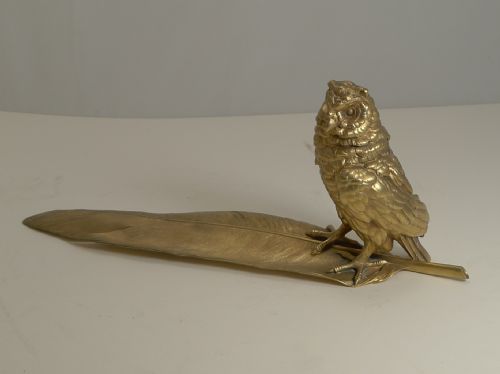


Gilded Bronze Inkwell
These gilded bronze inkwell pieces bring desk accessories of the nineteenth century into modern rooms with weight and presence.
Gilded Bronze Inkwell
A gilded bronze inkwell is a desk accessory designed to hold writing ink while adding sculptural interest to nineteenth-century and early twentieth-century workspaces. You will encounter forms ranging from simple lidded vessels to elaborate figural desk sets featuring animals or busts.
The versions most common on this page date from the Victorian period through to the Art Nouveau and Art Deco eras. Many incorporate glass inserts or marble bases alongside the cast metal work.
How they were made
These items rely on metal casting techniques using bronze, which is then gilded or finished with ormolu to create a bright golden surface. Patinated bronze is often combined with polished metals for contrast.
Casting is frequently paired with natural materials such as marble, onyx, or cut crystal glass to form the inkwells and stands. Glass eyes are also integrated into figural animal subjects like owls, stags, and chicks.
Gilded Bronze Inkwell Retail Price Guide 2026
Typical asking prices for gilded bronze inkwell among the pieces listed under this phrase on Sellingantiques today, from the lower quarter to the upper quarter. They describe what is for sale here now, not the wider market.
The listings span the Victorian period, Art Nouveau, and Art Deco eras, using gilded bronze, marble, and cut crystal.
What varies in quality
The refinement of the casting defines the upper end of these desk accessories, particularly in detailed figural work depicting animals or human busts. Crisp chasing and fine surface texture separate the better foundry pieces from simpler production.
The selection of complementary materials, such as heavy onyx marble bases or cut crystal liners, marks out superior examples. Signature marks from known workshops also indicate higher craftsmanship.
Albert Marionnet·Bergmann·E. Dolivet·Thiébaut Frères
The Gilded Bronze Inkwell Glossary
- Ormolu
- A technique of applying finely ground high-carat gold to a bronze object using a mercury amalgam. This creates a rich golden finish seen on many French desk stands.
- Patinated bronze
- Bronze that has been treated chemically to produce a darkened or coloured surface finish. It often provides contrast to gilded elements on figural pieces.
- Inkstand
- A complete desk set that usually includes one or more inkwells alongside pen rests or candlestands. These assembled pieces formed the centrepiece of a nineteenth-century writing desk.
- Vienna bronze
- Small, cold-painted or gilded bronze sculptures produced in Austrian foundries during the late nineteenth century. They frequently depict realistic animals and novelty subjects.
Gilded Bronze Inkwell: Frequently Asked Questions
Where were these inkwells used?
These pieces sat upon writing desks in libraries, studies, and offices during the nineteenth and early twentieth centuries.
They served as functional vessels for daily correspondence while displaying the owner's taste through decorative metalwork.
How do I care for gilded bronze?
Dust the metal gently with a soft dry cloth and avoid using chemical cleaning agents or metal polishes that can damage the surface.
Keep the pieces away from direct moisture to protect any exposed base materials like marble or crystal.
How are periods told apart?
Victorian and French Empire pieces often rely on classical symmetry and heavy bronze casting.
Art Nouveau and Art Deco designs introduce flowing natural lines, animal figures, and contrasting onyx or crystal elements.
Are the glass inserts original?
Many surviving inkwells retain their original cut crystal or glass liners, which fit snugly inside the metal collars.
Replacements are sometimes found due to the fragility of glass over more than a century of use.